How to Furnish Your Home in Melbourne on an International Student Budget
Moving to Melbourne? A practical guide for international students furnishing a home on a budget — secondhand buying, transport, timing and money-saving tips.
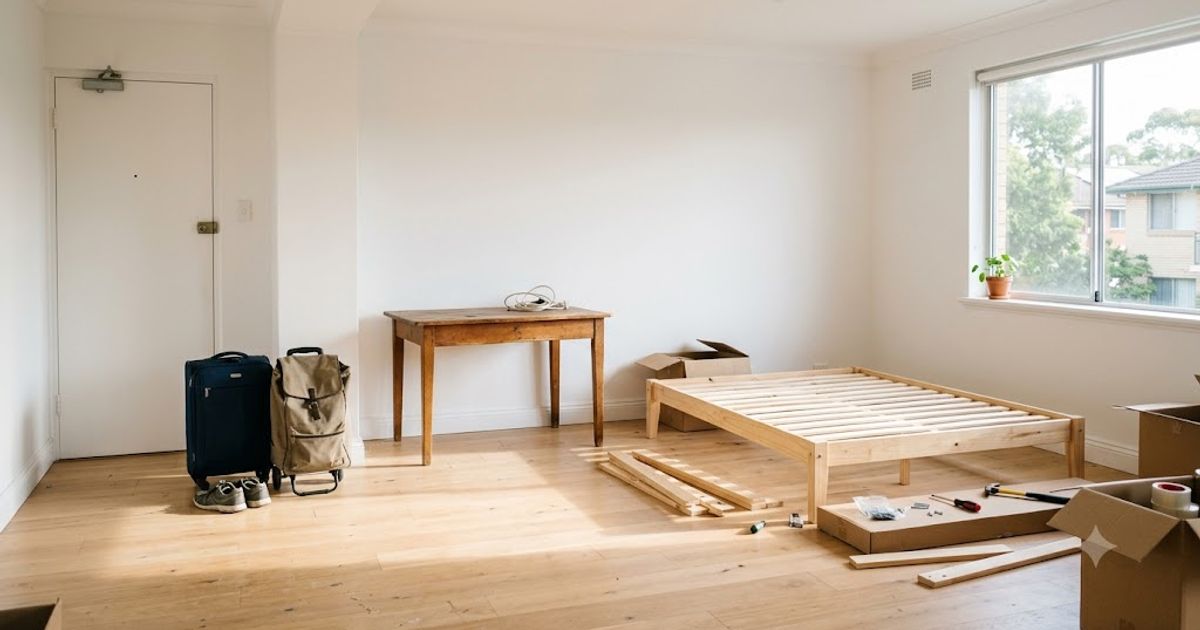
You land with two suitcases, a laptop and a bank card that might not even work yet — and somehow, within a few weeks, you need somewhere to sit, sleep and study. Furnishing your first home in Melbourne from scratch is a strange kind of task: everyone around you seems to already have furniture, and you're starting completely from zero, often without the one thing most people lean on for their first home — family nearby with a garage full of spare pieces. It's expensive too, which is exactly why many international students look for affordable secondhand furniture before buying new.
This guide is for exactly that situation. It won't cover visas or enrolment — just the practical part nobody explains clearly: how to furnish a home in Melbourne on a student budget when you're arriving from overseas with nothing but luggage. Whether you've rented a room in a share house or your own apartment, buying affordable furniture in Melbourne doesn't have to drain your savings — most students mix secondhand and new to get a comfortable home without overspending.
Sort your bank account first — you'll need it sooner than you think
For most international students furnishing a home in Melbourne, the bank account comes before the furniture. Most new arrivals open an Australian bank account in the first week or two, mainly for rent and everyday spending — but it matters for furniture too, because the payment method most local sellers prefer, PayID, only works once you have an Australian bank account linked to it. Most secondhand furniture sellers in Melbourne will accept either PayID or cash, so you're not stuck if the account isn't sorted yet.
PayID isn't a company or an app — it's a feature most Australian banks offer that lets you send money using an email address or phone number instead of a BSB and account number. It's instant, and it leaves a record on both sides, which matters when you're buying from someone you've just met. If you haven't set it up yet, it's usually a few taps inside your new bank's app, and it's worth doing before you start furniture shopping rather than after — cash works too, but PayID is faster to arrange on the day and leaves you with a receipt of the transfer.
Should you buy furniture before you arrive?
In most cases, no. It's tempting to want everything sorted before you land, but waiting until you've actually moved into your accommodation lets you measure the space, see what your room or apartment already comes with, and avoid paying for transport or storage on furniture you haven't even confirmed will fit. Melbourne's secondhand furniture market is large enough that most students find their essentials within a few days of arriving.
The one exception is anything genuinely hard to source quickly — but for standard furniture (a bed, a desk, storage), there's very little upside to buying before you're here and a fair bit of downside if it turns out not to fit or suit the place you end up in.
Time your shopping around semester start
Furniture supply and demand in Melbourne moves with the university calendar, and knowing the pattern works in your favour. Right after each semester ends — late in the year and again around the middle of the year — graduating and relocating students list large amounts of furniture at once, often at low prices because they want it gone. The weeks right before semester starts are the opposite: everyone's furnishing at once, and prices firm up. The biggest swings happen around the major intakes at the University of Melbourne, Monash University, RMIT, Deakin University and Melbourne's other universities, where a huge number of students are moving in or out within the same few weeks.
If your arrival lines up with the start of a semester, you're shopping in the busiest, priciest window — worth knowing so you're not surprised. Our guide to furnishing a share house on a student budget covers this cycle in more depth, including exactly which weeks tend to be best.
What to buy first when you're starting from nothing
The essentials for furnishing on an international student budget in Melbourne are a bed, a desk and somewhere to store your things — everything else can wait. Unlike someone furnishing one room in an already-set-up share house, you may genuinely be starting with an empty room or apartment. Prioritise in this order:
- Bed frame and mattress. Sleep isn't optional, and secondhand is fine for both as long as you check them properly — more on that below.
- Desk and chair. You'll be studying at home from week one.
- Storage. A chest of drawers or a simple wardrobe — living out of a suitcase gets old fast.
- Dining table. A table and a chair or two for eating — doesn't need to be much; needs to exist.
- Everything else — a couch, shelving, extras — as budget and space allow.
For the personal, quick-to-wash layer — pillowcases, a doona cover, sheets and towels — buying new is simplest since they're cheap and there's little reason to hunt secondhand for them. Everything else on this list, including the mattress, is a normal secondhand purchase here — check it properly (no stains, no odour, no sagging, and a good look for bed bugs before it comes inside; our guide on checking secondhand furniture for bed bugs covers exactly what to look for), and our guide to telling if secondhand furniture is good quality covers the broader checks that make a piece worth buying in the first place, rather than assuming new is the only safe option.
No car? Here's how furniture still gets home
Without a car and without family close by to help, transport is the part that worries most new arrivals — and it's more manageable than it looks. Many international students don't own a car in their first year, which makes nearby listings especially valuable: most single pieces of student furniture fit in a regular car with the seats folded, which means a friend with a car, a rideshare with a van option, or asking the seller if they can help are all realistic options; our guide on transporting furniture in a regular car covers what actually fits.
Buying locally matters even more here than for someone with their own car — the closer the seller, the shorter and cheaper any lift or rideshare trip needs to be. On Zirkly, listings are matched to buyers nearby, so the piece you're looking at is often only a few suburbs away rather than across the city.
Buying secondhand isn't a downgrade — it's just how it's done here
If buying used furniture feels unfamiliar or slightly uncomfortable, that's a completely normal reaction — norms around secondhand goods vary a lot between countries, and it can take a few weeks to feel natural. In Melbourne, buying secondhand furniture is mainstream, not a last resort: locals do it to save money, to avoid waste, and because solid older furniture is often better made than a cheap new equivalent. Once your place is properly set up, our guide on mixing secondhand and new furniture without it looking mismatched is worth a look — most student homes end up as exactly that mix, whether by plan or by budget.
Support services exist too if you want a human to ask — the Study Melbourne Hub is a genuine Victorian Government service for international students settling in, and accommodation-related questions (including what to expect from a share house or private rental) are exactly the kind of thing they help with.
One safety note worth taking seriously precisely because everything else is new: our guide on spotting a secondhand furniture scam is worth reading before your first purchase, and it applies just as much to any online marketplace as it does to Zirkly. Being new to a country makes you a more attractive target for the small number of bad actors in any market, and knowing the warning signs in advance costs nothing.
Choose furniture with good resale value, because you'll be selling it too
Here's the mindset shift that saves the most money over your whole course: almost everything you buy now, you'll sell again before you leave. Treat furniture less like a permanent purchase and more like a well-chosen loan to yourself.
That changes what's worth buying for an international student on a budget. Solid, simple, well-made pieces — a plain timber desk, a good chair, honest storage — hold their value and resell easily. Bulky, oddly specific or heavily personalised pieces are harder to move on when your course ends and you're on a deadline. Our guide to what secondhand furniture actually sells covers which pieces hold demand, and our guide to pricing secondhand furniture in Melbourne will keep your buying — and eventual selling — realistic.
Before you fly home: the exit plan
Give yourself real runway before your flight, not the last week of exams. Selling a whole household's worth of furniture takes longer than selling one piece, and a rushed sale in your final days almost always means lower prices and more stress than you need on top of finishing a degree. Many international students finish their course around the same time as each other, which means the local resale market gets crowded right when everyone's trying to sell at once — listing earlier gives you first pick of the buyers before that happens.
Start listing large pieces three to four weeks out and work down to smaller items as the date gets closer — our week-by-week guide to selling furniture before moving house lays out the full timeline, and it applies just as well to flying out as it does to moving across the city. On Zirkly, listing is free and the AI writes each listing from a few photos, which matters when you're juggling final assignments and packing at the same time — our founder's guide to creating a listing that sells covers the rest of the method. Whatever doesn't sell in time, our decision guide on what to do with old furniture in Melbourne covers donating or disposing of it properly rather than leaving it for a housemate or landlord to deal with.
Starting from nothing? Browse secondhand furniture on Zirkly — the AI helps you find what's nearby, and when it's time to go home, listing is free too.
Frequently Asked Questions
Do international students need an Australian bank account before buying furniture?
Not strictly, but it helps — most local sellers accept PayID, which requires an Australian bank account linked to it, and it's usually one of the first things new arrivals set up anyway. Cash works too if your account isn't sorted yet.
What is PayID and do I need it to buy furniture in Melbourne?
PayID is a feature most Australian banks offer that lets you send money using an email or phone number instead of full account details. It's not required, but it's fast, leaves a record of the transfer, and is the payment method most local sellers expect.
Should you buy furniture before arriving in Melbourne?
In most cases, no. Waiting until you've moved into your accommodation lets you measure the space, avoid unnecessary transport costs, and buy only what you actually need — Melbourne's secondhand furniture market is large enough that most essentials can be found within a few days.
Where can international students buy cheap furniture in Melbourne?
Local marketplaces like Zirkly are the most direct option, matching listings with buyers nearby so pickup is simple. University noticeboards, share-house group chats and local op shops are other common sources, though condition and availability vary far more than on a dedicated marketplace.
Is it safe to buy secondhand furniture through online marketplaces?
Yes, with the same basic precautions as any in-person transaction — meet in daylight, trust your instincts, and take payment by PayID rather than cash where you can, since it leaves a record for both sides. Our guide on spotting a secondhand furniture scam covers the specific warning signs, and being new to the country is exactly when it's worth reading in advance.
Is it normal to buy secondhand furniture in Australia?
Yes — it's a mainstream way to furnish a home here, not a sign of struggling financially. Locals buy secondhand furniture to save money, reduce waste, and often to get better-made pieces than an equivalent new one.
Is it worth buying furniture if I'm only studying for one year?
Yes, if you buy the right way. A one-year stay is exactly when secondhand makes the most sense — low upfront cost, and solid, simple pieces resell easily when your course ends. The furniture that's not worth it for a short stay is anything oversized or highly specific that's hard to move on quickly.
How do international students get furniture home without a car?
Most single pieces fit in a regular car, so a friend with a car, a rideshare van option, or asking the seller for help are all realistic. Buying from nearby suburbs also keeps any trip short, which matters more without your own transport.
What should international students do with their furniture before leaving Australia?
Start selling large pieces three to four weeks before you fly, working down to smaller items as the date approaches. A rushed last-minute sale usually means lower prices; starting early gets a fair price and one less thing to worry about during exams.
Adam
Zirkly Team
Adam turns complex secondhand furniture topics into practical advice for Melbourne buyers and sellers — pricing, safety and the decisions that make buying and selling used furniture clearer.