Furnishing a Share House in Melbourne on a Student Budget
Buying everything new makes no sense for a one-year lease. What to buy secondhand, when to shop the semester cycle, and how to sell it all on again.
Share house furniture has a strange economics problem: you need a fully functional home, but you might only live in it for one lease. Buying everything new makes no sense when half of it gets sold again in eleven months. Buying nothing means studying on the floor.
This guide is about furnishing a Melbourne share house with affordable secondhand furniture on a student budget — what to buy secondhand, what to skip, how to handle costs with housemates, and how to buy in a way that makes moving out just as easy as moving in.
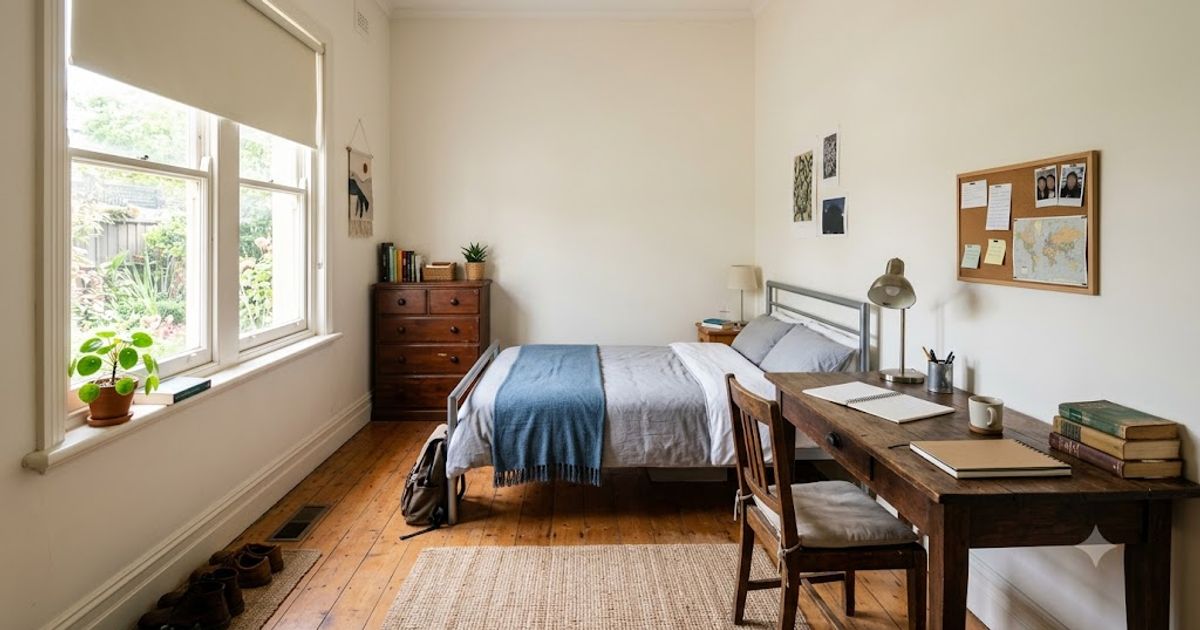
Most students can furnish an entire share house bedroom with quality secondhand furniture for far less than buying everything new. Focus on a bed frame, mattress, desk, chair and storage first — checking each piece properly rather than assuming secondhand means compromise — and shop just after semester ends when supply is highest. The rest of this guide covers each of those decisions properly.
Furnish for how long you'll actually stay
The first decision isn't what to buy — it's how committed to buy. A share house lease you'll renew for three years justifies a proper desk setup. A twelve-month lease before you move closer to campus doesn't.
Be honest about your actual timeline before you spend anything. Furniture bought for "wherever I end up" tends to be furniture that doesn't quite suit anywhere — too big for the next room, the wrong style for whoever you live with next. Furniture bought for the lease in front of you can be exactly right for it, and sold on to the next student when you're done.
What sells secondhand, and what people usually buy new
Almost everything in a share house is a strong secondhand candidate — desks, chairs, bed frames, drawers, bookshelves, small tables, and yes, mattresses, pillows and doonas too. Secondhand pieces are cheaper, and student furniture gets replaced constantly, which means good condition stock is always turning over locally. A secondhand mattress, pillow or doona is normal, common practice, not a compromise — the same as any other upholstered secondhand item, it just deserves a proper check before it comes home: no stains, no odour, no flat or lumpy fill, and a good look for anything living in the seams. Our guide on checking secondhand furniture for bed bugs covers exactly what to look for, and it's worth the ten minutes on anything soft before it comes inside.
The one exception, and it's a small one: pillowcases, a doona cover, sheets and towels are so cheap new that most people don't bother hunting for them secondhand — though nothing stops you if you'd rather, and plenty of people do find them secondhand too. It's a hassle question, not a hygiene rule. A fresh mattress protector over a secondhand mattress is the same idea: optional, inexpensive, not a requirement.
For everything else, our guide to telling if secondhand furniture is good quality covers what to check before you buy, and what to consider before buying secondhand furniture covers the practical fit questions worth asking first.
At a glance:
| Usually secondhand | Usually new (linens are cheap either way) |
|---|---|
| Bed frame | Pillowcases |
| Mattress, pillow and doona — checked carefully | Doona cover |
| Desk | Towels and sheets |
| Chair | |
| Chest of drawers | |
| Bookshelf |
Splitting costs and ownership with housemates
Shared furniture — the couch, the dining table, anything in common areas — needs one conversation before it needs a price tag: who's paying, and what happens when someone moves out.
Two approaches work. Split the cost evenly and agree upfront that whoever keeps the house keeps the furniture, or whoever moves out sells their share back at a fair depreciated price. Or one person buys it outright and the others contribute rent-style for the use of it. Either is fine — what causes actual arguments is never deciding, then discovering everyone assumed a different answer the day someone packs a box.
Write it down somewhere, even informally — a shared notes app is enough. It's also worth knowing what's the landlord's furniture versus the house's: Consumer Affairs Victoria requires a condition report at the start of a tenancy listing the property's own fixtures and furnishings — anything not on that report is yours, and it leaves with you or gets settled with housemates, not left for the bond inspection to sort out.
Essentials for furnishing a share house room
If the budget forces an order, prioritise in roughly this sequence:
- A bed frame and mattress. Sleep isn't optional — secondhand is fine for both, checked properly before you buy.
- A desk and chair. Non-negotiable for actually studying at home rather than only at the library.
- Storage — drawers or a wardrobe. Living out of suitcases gets old by week three.
- A dining or study table, and enough chairs. Doesn't need to be big; needs to exist.
- Everything else — a shared couch, a bookshelf, a coffee table — as the budget and the house's shared kitty allow.
Check the mattress properly before you buy it, the same as anything else upholstered, and the rest follows the same secondhand-first approach.
Skipping down this list rather than buying everything at once, cheaply, keeps the early weeks functional without blowing the whole budget in the first fortnight.
It's also worth resisting the urge to furnish the whole room in one weekend. The first week or two in a new share house is when you actually learn what you need — whether the desk should face the window, whether a bedside table matters more than a second chair, whether the kitchen table is doing enough work that the room doesn't need its own. A slightly slower furnish, spread over the first month, tends to end with a room that fits how you actually live rather than how you guessed you would.
Best time to buy secondhand furniture for university
Melbourne's secondhand furniture market has a rhythm that follows the university year, not the seasons — and it works heavily in your favour if you buy at the right moment.
The weeks after each semester ends are peak supply: graduating students and those moving on list everything at once, often pricing to clear rather than to maximise. Late November through December and again in June are typically the best windows to buy. The weeks before semester starts — late February and early July — are peak demand, when incoming students are furnishing at once and prices firm up. If you can shop the gap between semesters rather than the week before classes start, the same furniture costs less and the choice is wider.
Turnover follows this pattern most strongly around the biggest campuses — a suburb like Clayton, next to Monash, has enough student turnover each semester that the pattern is easy to spot — and student-heavy suburbs like Carlton, Brunswick, Parkville and Bundoora tend to follow the same rhythm, wherever you're studying.
Buy secondhand furniture with good resale value
Here's the move that separates a good student furniture budget from an expensive one: buy furniture that will be easy to sell when you move out, not just easy to buy now.
Solid timber desks, drawers and bed frames hold demand and resell easily. Bulky, dated or highly specific pieces — an oversized entertainment unit, anything heavily personalised — are harder to move on and often end up abandoned in a share house storeroom for the next tenant to deal with. Our guide to what secondhand furniture actually sells breaks down what holds demand and what doesn't — worth a look before you buy, not just before you sell.
When your own lease ends, the cycle repeats in reverse: list what you're not taking, price it to move quickly rather than to maximise, and let the next student get the same good deal you did. If the move itself needs planning, our week-by-week guide to selling furniture before moving house covers the timeline. On Zirkly, listing is free and the AI writes the description from a few photos — useful when you're clearing a room in the same week as exams. Our founder's playbook on selling secondhand furniture faster covers the method, and buyers are usually close by — see what's moving in second hand furniture in Clayton for a feel of a typical student-heavy suburb.
Quick checks before you hand over cash
Budget pressure is exactly when corners get cut, so a few checks are worth the extra five minutes:
- Meet in daylight and check the piece in person before paying — our guide on spotting a secondhand furniture scam covers the warning signs, and they apply just as much to a $40 desk as a $400 one.
- Give anything upholstered a proper look and clean before it comes inside — mattresses especially. Our guide on checking secondhand furniture for bed bugs takes ten minutes and saves a much worse problem later.
- Sort transport before you commit to buying. No ute, no problem — our guide on transporting furniture in a regular car covers what actually fits, and plenty of listings nearby mean a shorter, easier trip either way.
- Pay by PayID where you can. It's instant, and it leaves a record if anything about the transaction is ever disputed.
Looking for affordable furniture near your university? Browse secondhand furniture on Zirkly to find desks, bed frames, storage and study furniture listed by people nearby, or list your own for free when it's time to move out — the AI writes the listing, and the next student is probably a few streets away.
Frequently Asked Questions
How much does it cost to furnish a share house room in Melbourne?
It depends heavily on what you buy new versus secondhand, but secondhand furniture for a single room — bed frame, desk, chair and storage — typically costs a fraction of buying the same pieces new. Buying at the end of semester, when supply is highest, brings the cost down further.
Should I buy new or secondhand furniture for a share house?
Secondhand for almost everything — desks, chairs, bed frames, drawers, tables, mattresses, pillows and doonas all hold up fine and cost far less, provided you check condition properly first. The only things most people don't bother hunting secondhand are pillowcases, doona covers, sheets and towels — cheap enough new that it's rarely worth the search, though there's nothing wrong with buying those secondhand either.
What's the best time of year to buy secondhand furniture for uni?
The weeks right after semester ends, typically late November to December and again in June, when graduating and relocating students list the most furniture. Buying then, rather than in the rush before semester starts, usually means better prices and more choice.
How do share house housemates split the cost of furniture?
Either split shared pieces evenly with an agreed buyback or handover plan for when someone moves out, or have one person buy it and others contribute for its use. The specific arrangement matters less than agreeing on one and writing it down before anyone's moved in.
What furniture is worth buying secondhand for a bedroom on a budget?
A bed frame, mattress, desk, chair and a chest of drawers or wardrobe cover the essentials and are all strong secondhand buys — solid, functional pieces that don't need to be new to work well. The mattress just needs the same careful check as anything else upholstered before it comes home.
Do I need to buy a mattress new or can I get one secondhand?
Secondhand is fine, as long as you check it properly first — no stains, no odour, no sagging, and a good look for bed bugs before it comes inside. Our guide on checking secondhand furniture for bed bugs covers exactly what to look for. Treat a mattress like any other secondhand purchase — inspect carefully, buy with confidence — rather than assuming new is the only safe option. The same goes for pillows and doonas. Really, the only things worth buying new by default are the cheap covers and sheets that go over them.
Can international students buy secondhand furniture in Melbourne?
Yes — secondhand furniture works the same way for international students as for anyone else, and it's often the more practical choice for a stay of one or two years. Buying locally also means no shipping and no need to sell or discard furniture at the end of a course, since the same market that sold it to you will buy it back.
Where can students buy secondhand furniture in Melbourne?
Local marketplaces like Zirkly are the most direct option, matching listings with buyers nearby so pickup is simple. University noticeboards, share-house group chats and local op shops are other common sources, though condition and availability vary far more than on a dedicated marketplace.
Adam
Zirkly Team
Adam turns complex secondhand furniture topics into practical advice for Melbourne buyers and sellers — pricing, safety and the decisions that make buying and selling used furniture clearer.