How to Tell If Secondhand Furniture Is Good Quality — A Melbourne Buyer's Checklist
How do you know if secondhand furniture is worth buying? This Melbourne buyer's checklist covers materials, joinery, structure, upholstery and red flags — so you never pay for a piece that disappoints.
Why quality matters more than price when buying secondhand
A secondhand sofa listed at $80 is not a good deal if the frame sags after three weeks. A dining table at $250 is not a bargain if the surface is veneer that's starting to peel. In the secondhand furniture market, price and quality are not reliably connected — and that gap is where most buyers make mistakes.
As Reperch's secondhand furniture quality guide puts it: saving money up front does not help if the piece needs repairs immediately, feels unstable in daily use, or ends up replaced in a few months. The goal is not the lowest price — it is the best value. And value in secondhand furniture almost always comes down to construction quality, not surface appearance.
The good news: quality leaves clues. After reviewing hundreds of secondhand furniture listings and buyer interactions across Melbourne suburbs, we consistently find that once buyers know what to check, they can distinguish a smart buy from a future headache in under five minutes of inspecting a piece in person. This guide covers every check, in the order you should apply them, for every major furniture category.
Quick answer: how to tell if secondhand furniture is good quality
| Check | What good looks like | What to walk away from |
|---|---|---|
| Structure | Stable, no wobble or twist | Rocks, leans or creaks under pressure |
| Material | Solid timber, heavy for its size | Light, hollow-sounding, MDF edges |
| Joinery | Dovetail or mortise-and-tenon | Staples, cam locks, visible brackets |
| Drawers | Square, slide smoothly | Stick, drag or have thin flexing bottoms |
| Upholstery | Firm frame, supportive cushions | Sagging seat, exposed frame, odour |
| Surface | Minor scratches — fine | Peeling veneer, water damage, swelling |
Five 30-second quality checks — do these before anything else
✓ Lift one corner — solid timber is noticeably heavy. A 1.8m dining table should require two people to move comfortably. If you can lift one end alone easily, it's likely MDF or particle board.
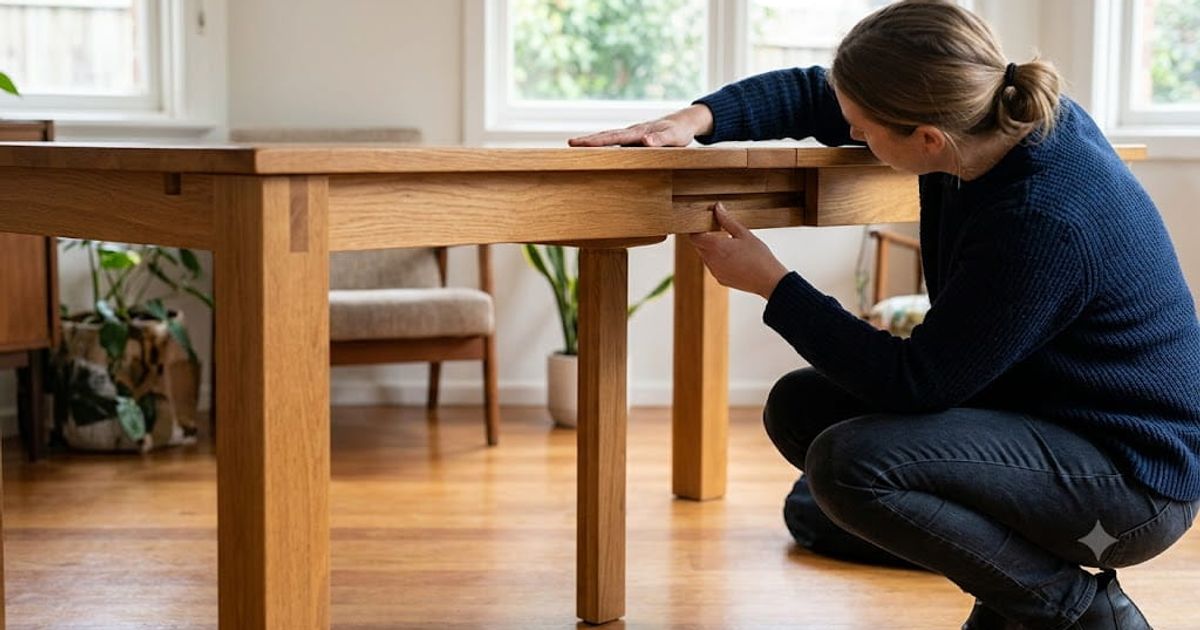
✓ Push opposite corners — push down on diagonally opposite corners of any table or cabinet. A quality piece does not twist or flex. Any movement means weak joints.
✓ Open every drawer — pull each one fully out. They should slide smoothly, sit square and not flex when you push up on the base.
✓ Tap the surface — solid timber produces a dull, dense sound. MDF and particle board produce a hollow resonance. One tap usually tells you everything about the material.
✓ Check underneath — flip chairs over, look at the underside of tables and the back of cabinets. The hidden surfaces reveal the real construction faster than the front ever will.
How to check furniture quality — structure before style
Structure is the foundation of everything else. According to Reperch's quality guide, the first question to ask is: does the piece feel solid? A quality piece should feel stable right away. It should not lean, twist or rock unless the floor itself is uneven. Small cosmetic flaws are normal in secondhand furniture. Structural weakness is not.
How to check structure:
- Push gently on opposite corners of any table or cabinet. A quality piece will not twist or rack. Any flex or movement indicates weak joints or a frame that is not square.
- Sit on chairs and sofas and shift your weight. A quality frame does not creak, flex or feel unstable. A frame that creaks under normal body weight has joint problems that will worsen with use.
- Open and close doors and drawers. They should move smoothly without sticking, catching or wobbling. Misalignment of doors is a common indicator of a frame that is not square.
- Look at the legs. All four legs should contact the floor evenly without rocking. Check that legs are firmly attached — pull gently on each one.
Structure is the one area where problems cannot be hidden by photos and are very difficult to fix cheaply. If the structure is not sound, no amount of sanding, painting or reupholstering changes that.
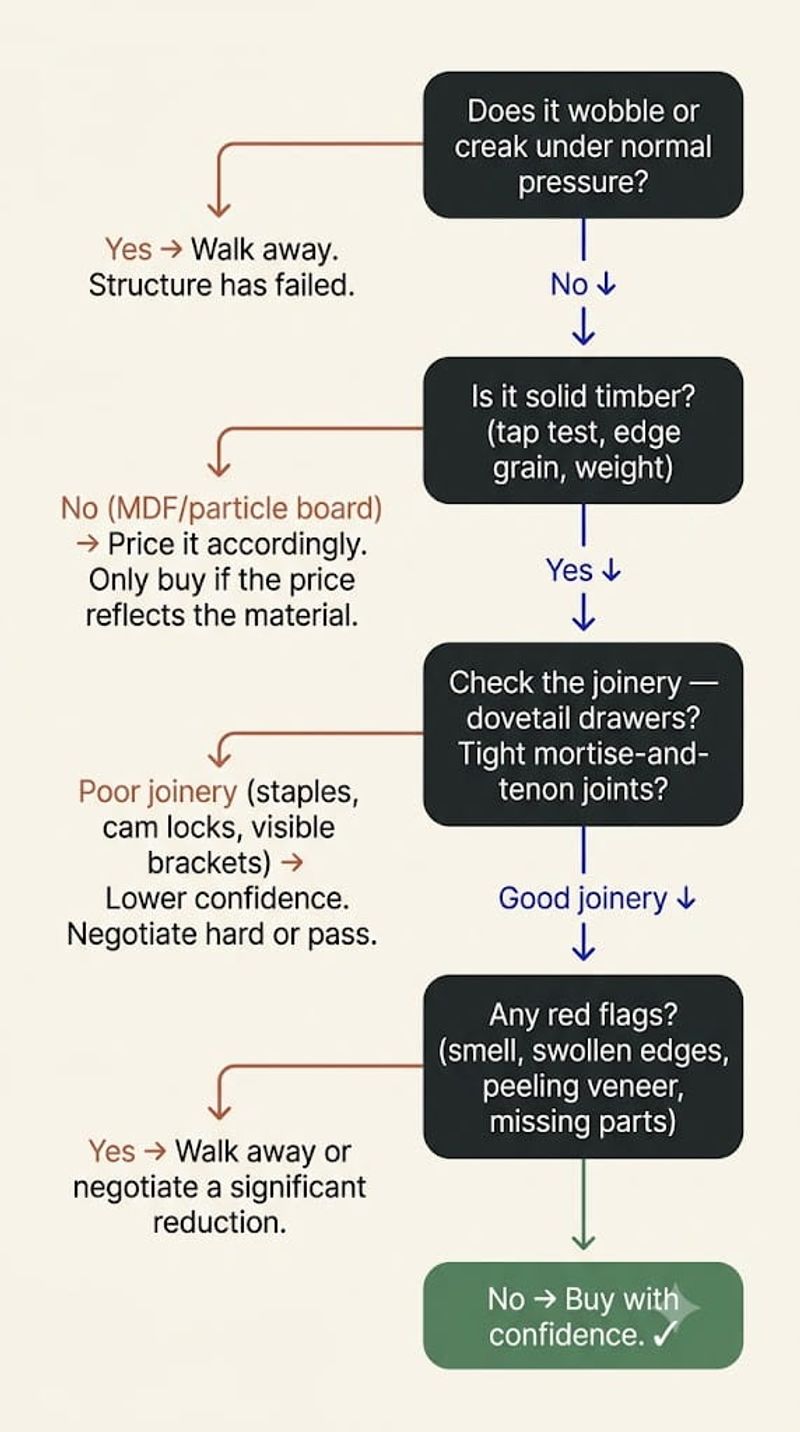
Quick decision tree — should you buy this piece?
How to identify solid wood vs MDF vs veneer — the tests that actually work
Material is the single most important quality indicator in secondhand timber furniture. The difference between solid timber and engineered alternatives affects durability, repairability and resale value significantly.
Many Melbourne apartments contain MDF flat-pack furniture from the boom of affordable retail that arrived in the 2000s and 2010s — pieces that looked good when new but have not aged well.
Many older Melbourne homes contain solid Victorian Ash, Tasmanian Oak or other hardwood furniture that has remained structurally sound for decades. (Victorian Ash and Tasmanian Oak are both dense eucalypt hardwoods — native Australian timbers known for their strength, tight grain and resistance to wear, quite different from the softer imported timbers used in much of today's mass-market furniture.) Estate sales and downsizer listings across Melbourne frequently surface this older hardwood construction at private-seller prices — and knowing how to identify it is the difference between a $150 find and a $150 disappointment.
According to Cedora's solid wood vs veneer vs MDF analysis, the same-looking cabinet can age very differently depending on what is inside it. Solid wood is usually the strongest long-term choice. Veneer can be excellent when it is real wood over a stable core. MDF and particleboard are less forgiving with water damage and difficult to repair.
How to identify each material:
Check the edges. According to Reeva Sethi Home's identification guide, solid timber shows grain continuing naturally through the edge. Veneered pieces reveal a thin surface layer with a different substrate or edge banding visible at the cut. MDF edges are smooth, uniform and have no grain at all.
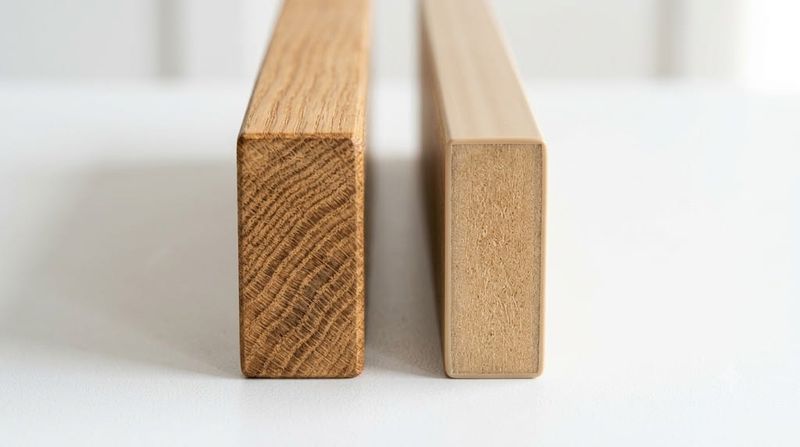
Tap the surface and listen. According to Luxiwood Furniture's solid timber guide, real Australian hardwood furniture is heavy and produces a dull, solid sound when tapped. MDF and particle board produce a hollow resonance. This single test eliminates most uncertainty quickly.
Look at the weight. According to Pinky Furniture's identification guide, engineered wood furniture is often surprisingly light. If a piece seems disproportionately light for its size, it's a clear signal of MDF or particle board construction.
💡 Zirkly tip: Ask the seller to send a photo of the underside or back panel before you travel. These hidden areas often reveal the true construction material and can save you an unnecessary inspection trip across Melbourne.
Check undersides and backs. The underside of a table, the back of a cabinet or the interior of a drawer often reveals the real construction faster than the front. MDF, particleboard and solid timber look different once the decorative surface is no longer visible. A piece that is solid timber on the outside but MDF on the back panels is mixed construction — common and not necessarily a problem, but worth knowing.
Run your hand across the surface. According to Luxiwood Furniture, real timber has a natural, slightly irregular texture. MDF has a perfectly smooth, almost plastic-like finish that feels fundamentally different under the hand.
The practical takeaway for Melbourne buyers:
Solid timber is always preferable for pieces that take daily wear — dining tables, bed frames, dining chairs, sideboards. Veneer over stable plywood is acceptable for large panels (cabinet doors, wardrobe sides) where solid timber would warp. MDF and particleboard are acceptable only for pieces under minimal stress — shelving inserts, cabinet backs, drawer bottoms — and should be priced accordingly. A solid timber dining table for $200 is almost always a better buy than a new MDF dining table for $400.
Material comparison — what you're actually buying:
| Material | Lifespan | Repairable | Water resistance | Resale value |
|---|---|---|---|---|
| Solid timber | Excellent — decades | Excellent — sand, re-oil, refinish | High | Excellent |
| Veneer over plywood | Good | Moderate — surface only | Moderate | Good |
| Veneer over MDF | Fair | Poor — veneer lifts | Low | Low |
| MDF | Poor — 3–8 years | Poor | Very low — swells permanently | Very low |
| Particle board | Poor | Poor | Very poor | Very low |
If you're unsure whether paying more for a solid timber piece is worthwhile over a new MDF alternative, see our guide on secondhand vs new furniture — the quality and value gap is often larger than buyers expect.
Quality secondhand furniture vs new budget furniture — what you're actually comparing:
| New budget furniture | Quality secondhand furniture | |
|---|---|---|
| Material | Often MDF or particle board | Often solid timber |
| Assembly | Cam-lock flat-pack | Traditional joinery |
| Repairability | Limited — cannot sand or refinish | Can be sanded, re-oiled, repaired |
| Lifespan | 3–8 years typical | Decades — many pieces already proven |
| Resale value | Very low depreciation on purchase | Better value retention |
| Environmental impact | New manufacturing footprint | No new manufacturing required |
Looking specifically for solid timber furniture in Melbourne? Browse used furniture in Melbourne — filter by suburb and message sellers directly to ask about materials before you travel.
Furniture joinery — what the joints tell you about construction quality
Joinery is where furniture tells the truth about how it was made. According to Spolia Magazine's furniture quality guide, a glossy finish can make weak construction look impressive for a while — but the joints decide how a piece handles weight, movement and time.
The joints to look for:
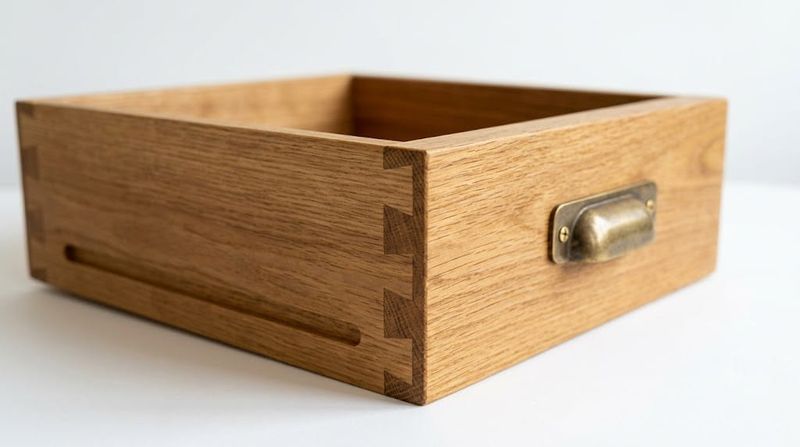
Dovetail joints on drawers — interlocking finger joints visible when you pull a drawer fully out. Dovetails are the gold standard of drawer construction. They are strong, they do not rely on adhesive alone and they are a reliable indicator of quality craftsmanship. A piece with dovetail drawers was built to last.
Mortise-and-tenon joints on chair and table frames — a traditional joint where a projecting tenon fits into a matching mortise hole. More commonly found in older quality pieces, and a strong indicator of durable frame construction in chairs and tables.
Corner blocks inside cabinet and chair frames — triangular wooden or metal blocks glued and screwed into interior corners. They reinforce the frame against racking and are a sign that the maker invested in structural integrity beyond the visible surface.
What poor joinery looks like: staples holding fabric to frames, cam-lock fittings (the barrel nuts and bolts used in flat-pack furniture), visible metal brackets at corners, and joints with obvious gaps or misalignment.
Why older furniture is often better built
At Zirkly, we consistently find in reviewing listings and buyer interactions that many pre-1990 solid timber pieces tend to perform better across common quality checks than comparable budget furniture produced more recently. The reasons are structural:
- Thicker timber. Older furniture used thicker, heavier timber sections — often 25–40mm where modern equivalents use 15–18mm or engineered board.
- Slower-grown hardwood. Timber from slower-growing trees has tighter grain, greater density and higher strength. Much of the Victorian Ash and Tasmanian Oak furniture in Melbourne's older homes was milled from old-growth or slow-growth timber that is not commercially available today.
- Traditional joinery. Dovetails, mortise-and-tenon and wooden dowels were standard because they worked — not because they were cheap. Modern production replaced these with cam-locks and staples to reduce assembly time and cost.
- Repairable construction. Older pieces were built assuming they would be repaired. Modern flat-pack furniture is designed to be replaced.
This is not nostalgia. It is a practical observation: a solid timber dining table from the 1970s that has already lasted 50 years is often more likely to outlast a new MDF table built to a $400 price point because its durability has already been demonstrated over decades of use.
How to inspect drawers, doors and moving parts
Drawers and doors are the most-used components of any storage furniture — and the most revealing indicators of construction quality.
For drawers:
- Pull each drawer fully out and inspect the box itself. According to Spolia Magazine, solid or well-made plywood drawer boxes are usually stronger than very thin bottoms that flex under light pressure.
- Check that the drawer slides smoothly without catching, sticking or requiring force. Stiff drawers can be fixed with wax, but drawers that are misaligned indicate a frame that is not square — a more significant problem.
- Push up on the base of the drawer. A quality drawer bottom should not flex. If it bends under light pressure, it is too thin to hold weight reliably.
- Look for dovetail joints at the corners of the drawer box — a sign of quality construction.
For doors:
- Open and close each door. It should swing smoothly, close flush and stay closed without swinging open on its own.
- Check the gap around the door frame — it should be even on all sides. Uneven gaps indicate a frame that is not square or hinges that have shifted.
- Check hinges for security. A hinge that wobbles or allows the door to sag has either loose screws or a frame that is deteriorating around the fixing point.
For extending mechanisms (dining tables, sofa beds):
- Test the mechanism fully. Extend it completely, check that all legs are level and the join between sections is flush.
- Check for rust on metal components and smooth operation of any slides or hinges.
How to inspect upholstered furniture — sofas, armchairs and dining chairs
Upholstered furniture — sofas, armchairs, dining chairs with padded seats — requires a different inspection approach because the quality that matters most is hidden under the fabric.
According to Reperch's quality guide, do not judge a chair or sofa only by its fabric. The frame matters more. A quality upholstered piece should feel supportive and stable. If the seat sinks too deeply, feels uneven or exposes the frame underneath, that is a problem.
How to assess an upholstered piece:
Sit on it and shift your weight. Spend at least a minute or two sitting and moving. Notice how the piece responds. A quality frame does not creak, flex or allow you to feel the frame through the cushioning. If you can feel hard edges or frame components through the seat, the cushioning has compressed beyond usefulness or the frame is poorly padded.
Push down on the seat cushions. They should spring back with some resistance. Cushions that compress flat and stay flat have lost their support and will not recover.
Check the frame through the fabric. Run your hands along the arms, back and sides. You should feel solid, consistent resistance — not soft spots that indicate hollow sections or frame gaps.
Look underneath. The underside of a sofa or armchair often reveals the frame construction directly. Solid timber framing is the best indicator of quality. Check that the dust cover (the fabric on the underside) is intact and not pulling away — a sign of how well the piece has been maintained.
Smell it. Pet odour, smoke and damp are very difficult to remove from upholstered furniture. A piece that smells in the seller's home will smell in yours. Before buying any sofa or upholstered chair, use our secondhand furniture bed bug inspection guide to ensure you aren't bringing unwanted pests into your home.
See local sofas near you. Browse secondhand sofas in Melbourne and use this checklist during your inspection visit.
How to inspect furniture surfaces — what matters and what doesn't
Surface condition is the most visible aspect of secondhand furniture — and the one that matters least for quality assessment, as long as you can distinguish between cosmetic issues and structural ones.
Cosmetic issues — acceptable:
- Light scratches and scuffs on timber surfaces. These can be sanded and re-oiled. Our upcycling guide covers exactly how.
- Minor water rings on timber. These can usually be addressed with sanding and refinishing.
- Small chips in paint or lacquer. Touch-up paint is inexpensive and effective.
- Faded upholstery colour. Not a structural problem.
Structural issues — walk away:
- Swollen or delaminating MDF. MDF that has swollen from moisture exposure cannot be repaired. Edges that are bubbling or lifting mean the piece has water damage and will continue to deteriorate.
- Peeling veneer. Once veneer starts peeling, it is very difficult to re-adhere cleanly. Peeling across a large surface area is a sign that the piece is near the end of its useful life.
- Deep gouges in timber that affect structural integrity. A deep gouge across a tabletop can be sanded — a crack or split in a structural component (leg joint, frame member) is a different problem.
According to Spolia Magazine, run your hand across the surface. It should feel smooth, not sticky, gritty or patchy. On timber furniture, look for even colour, natural grain continuity and no bubbling veneer. On painted furniture, check corners and high-touch areas where thin paint chips first.
Used furniture red flags — when to walk away
Some issues are fixable. These are not:
Structural wobble that cannot be tightened. If the piece wobbles and there are no loose screws or joints that can be re-glued, the frame itself is failing.
Swollen MDF edges. Water has already done permanent damage. The swelling will continue.
Smoke or pet odour in upholstered pieces. These are near-impossible to fully remove from fabric and foam.
Rust on structural metal components. Surface rust on decorative elements is cosmetic. Rust on structural brackets or legs indicates the metal is compromised.
Missing structural components. A missing leg, a broken drawer runner that cannot be sourced, a mechanism that is stuck. Always ask if replacement parts are available before committing.
Bed bugs. Non-negotiable. See our full inspection guide for what to check on any upholstered piece.
Furniture quality by era — what age tells you about construction
Not all old furniture is good and not all new furniture is bad — but age is one of the most reliable proxies for construction quality in the secondhand market. Here is what different eras typically mean:
| Era | Typical construction | What to expect |
|---|---|---|
| Pre-1970 | Solid hardwood throughout, traditional joinery, repairable | Often excellent quality. Heavy, built to last generations. Dovetails standard. |
| 1970–1990 | Solid timber common, some veneer, quality varies by price point | Generally good. Solid Victorian Ash, Tasmanian Oak common in Melbourne homes. |
| 1990–2010 | Mixed — solid timber at higher price points, increasing veneer and MDF at budget end | Variable. Inspect carefully. Good pieces exist but so do poor ones. |
| 2010–present (budget) | MDF, particle board, cam-lock assembly dominant at lower price points | Generally poor longevity. Price should reflect this significantly. |
| 2010–present (premium) | High-quality solid timber or engineered hardwood with quality joinery | Can be excellent. Inspect as carefully as older pieces. |
The most reliable approach for Melbourne buyers: pieces from pre-1990 households — estate sales, downsizer listings, older suburbs — are in our experience more likely to be solid timber with quality joinery than equivalent-looking pieces made after 2000. The older the piece and the heavier it is, the more likely it was built to last.
Five mistakes buyers make when inspecting secondhand furniture
1. Buying based on appearance alone. A fresh coat of paint or a clean fabric cover hides a lot. The most important quality indicators — material, joinery, structure — are almost never visible in listing photos. Inspect in person before committing.
2. Ignoring wobble. A wobbly table, chair or cabinet is the clearest signal of structural failure in secondhand furniture. Buyers often assume it can be fixed cheaply. In most cases, a piece that wobbles under light pressure has joint failure that will worsen with use, not improve.
3. Not opening every drawer. One smooth drawer does not mean the others are fine. Open every drawer fully, push up on the base, and check the corners for dovetail construction. A set of drawers where one sticks and one is square tells you the frame is not square.
4. Ignoring smell. Smoke and pet odour are essentially permanent in upholstered furniture. Buyers who overlook a smell at inspection regret it every day the piece is in their home. Smell closely — cushions, seams, underneath.
5. Not checking underneath. The underside and back of a piece of furniture tells you more about its quality than the front. Flip chairs. Look at the cabinet back. Check the underside of tables. This is where construction quality is impossible to disguise.
Bonus Melbourne-specific mistake: not checking whether it fits your transport before you travel.
A solid timber dining table is an excellent deal at $150 — less so if it doesn't fit in your SUV and requires a $100–$150 Airtasker job to move. Before you commit to a piece, check the dimensions against your boot space or confirm whether you need to book a van. Our guide to transporting furniture without a ute covers exactly how to get most pieces home in a regular car — but for larger solid timber pieces, especially if you're navigating a tight stairwell in a Brunswick or South Yarra apartment, factor in the logistics before you fall in love with the piece.
A quick-reference quality checklist by furniture category
Sofas and armchairs
- ☐ Frame does not creak or flex when you sit and shift weight
- ☐ All four legs are solid and even
- ☐ Cushions spring back when compressed
- ☐ No odour (smoke, pet, damp)
- ☐ No visible sagging in the seat base
- ☐ Dust cover intact underneath
- ☐ Check seams and piping for condition issues
Dining tables
- ☐ Does not wobble when pushed at corners
- ☐ Legs are firmly attached
- ☐ Surface is solid timber (check edges for grain continuity)
- ☐ No deep cracks or splits in structural components
- ☐ Extension mechanism works fully (if applicable)
Dining chairs
- ☐ Sits level on all four legs
- ☐ Frame does not creak under body weight
- ☐ Joints are tight — no movement at leg-to-seat connections
- ☐ Seat pad has adequate cushioning
Sideboards, bookshelves and storage
- ☐ Stands level without rocking
- ☐ Doors align evenly and close flush
- ☐ Drawers slide smoothly and sit square
- ☐ Shelves are solid, not bowing
- ☐ Check underside and back panels for MDF vs timber
- ☐ No water damage or swelling on MDF edges
Bed frames
- ☐ All joints are tight — check head and foot board connections
- ☐ Slats are present and evenly spaced (or centre support for queen/king)
- ☐ No creak when pressure is applied
- ☐ Hardware is complete and functional
Desks and office furniture
- ☐ Surface is level
- ☐ Drawers work smoothly
- ☐ Any height adjustment mechanism works correctly
- ☐ Cable management components present if originally included
Find quality secondhand furniture in Melbourne
Every item on this checklist is easier to apply in person — which is why Zirkly connects buyers directly with local Melbourne sellers so you can inspect before you pay.
Before arranging a pickup, message the seller and ask for:
- A close-up photo of one drawer corner (reveals joinery)
- A photo of the underside or back panel (reveals true material)
- Confirmation that it doesn't wobble
- The material — solid timber, veneer or MDF
- The dimensions
Browse secondhand furniture in Melbourne, Bentleigh East or Carnegie — and take this checklist with you when you go.
Related Zirkly guides
Frequently Asked Questions
How do you tell if secondhand furniture is good quality?
Check structure first — the piece should not wobble, creak or flex under normal use. Then check material — solid timber is heavier, has grain continuity through edges and sounds dull when tapped, while MDF is lighter, smooth-edged and hollow-sounding. Check joinery — dovetail drawers and mortise-and-tenon frames indicate quality construction. Finally check moving parts — drawers and doors should work smoothly without sticking or misalignment.
What is the best material for secondhand furniture?
Solid timber is the best material for secondhand furniture — it can be sanded, refinished and repaired, and it holds value over time. Quality veneer over stable plywood is acceptable for large panels. MDF and particle board are acceptable for low-stress applications but cannot be refinished and deteriorate quickly with moisture exposure. For pieces that take daily wear — dining tables, bed frames, dining chairs — always look for solid timber.
How can you tell if furniture is solid wood vs MDF?
Check the edges — solid timber shows grain continuing through the edge, while veneer shows a thin face layer and MDF shows a smooth, uniform edge with no grain. Tap the surface — solid timber sounds dull and dense, MDF sounds hollow. Check the weight — solid timber is noticeably heavier than engineered alternatives. Look at undersides and backs where the decorative surface gives way to the real construction.
What are red flags when buying secondhand furniture?
Walk away from: swollen or delaminating MDF (water damage that cannot be repaired); peeling veneer across large surfaces; smoke or pet odour in upholstered pieces; structural wobble that cannot be tightened; rust on structural metal components; missing structural parts that cannot be sourced; and any signs of bed bugs.
Is veneer furniture worth buying secondhand?
It depends on the piece. Quality veneer — a thin layer of real timber over stable plywood — is a legitimate construction method used by many premium furniture brands and is worth buying if the veneer is intact and the core is sound. Veneer over MDF is a lower-quality combination that cannot be sanded or repaired if the veneer lifts or scratches through. The key check: look at edges and undersides to identify what the core material is, and inspect the veneer surface carefully for any bubbling, peeling or lifting before committing.
What makes a sofa good quality secondhand?
A quality secondhand sofa has a solid frame that does not creak or flex when you sit and shift weight, cushions that spring back when compressed rather than compressing flat and staying flat, no odour (smoke, pet or damp), legs that sit evenly on all four points, and intact seams and piping. The frame matters more than the fabric — fabric can be cleaned, reupholstered or worked around, but a failing frame cannot be economically repaired.
How do you check joinery on secondhand furniture?
Pull drawers fully out and look at the corners of the drawer box — dovetail joints (interlocking finger joints) are the quality indicator. Check chair and table frames for mortise-and-tenon construction at leg connections. Look inside cabinet corners for wooden corner blocks. Walk away from pieces held together with staples, cam-lock fittings, or visible metal brackets at structural joints — these indicate flat-pack construction that does not hold up to long-term use.
Is old furniture better quality than new furniture?
Often yes — particularly pre-1990 solid timber pieces. Older furniture commonly used thicker timber sections, slower-grown hardwood with tighter grain, traditional joinery (dovetails, mortise-and-tenon) and repairable construction. Many Melbourne homes contain Victorian Ash and Tasmanian Oak furniture from the 1960s and 1970s that is still structurally sound after 50 to 60 years of use. The key is identifying genuine solid timber construction — not all old furniture is good quality, but genuinely solid timber pieces from before the flat-pack era are frequently better built than new furniture at equivalent price points.
Is heavy furniture always better quality?
Weight is a useful first indicator but not an absolute rule. Solid timber is genuinely heavier than MDF and particle board at equivalent sizes — a 1.8m solid timber dining table typically requires two people to move comfortably, while a flat-pack equivalent can be lifted by one. However, some furniture uses heavy hardware or thick veneers over MDF cores that add weight without structural quality. Use weight as a first indicator, then confirm with the tap test, edge grain check and joinery inspection.
Can swollen MDF be repaired?
No. MDF that has swollen from moisture exposure cannot be restored to its original condition. The fibres have absorbed water and expanded permanently — the material will continue to deteriorate and the swelling cannot be reversed by drying. Swollen MDF edges on a sideboard, bookshelf or cabinet are a definitive red flag. Walk away or negotiate a price that reflects the piece has a very limited remaining lifespan.
Is flat-pack furniture worth buying secondhand?
It depends on the piece and the price. Flat-pack furniture from budget retailers depreciates quickly — most pieces are worth 20 to 40% of retail price secondhand. Some ranges from quality retailers use solid wood construction and are worth buying at the right price. Budget flat-pack ranges use particle board and are generally not worth buying secondhand unless the price is very low and the condition is perfect. The key check: look up the original product range and confirm whether it is solid wood or particle board before paying. If the seller doesn't know the material, apply the tap test and edge grain check from this guide before committing.
How can you tell if veneer is real wood?
Real wood veneer is a thin layer of genuine timber — it has visible grain, natural colour variation and a wood texture under the hand. The tell is at the edges and corners: real veneer has a thin but visible timber layer at the edge, often with a different grain direction than the face. Fake veneer (printed wood-effect paper or foil over MDF) has a repeated pattern, no grain variation and a slightly plastic feel. Real veneer over stable plywood is acceptable. Printed foil over MDF is not worth buying at any significant price.
Adam
Zirkly Team
Adam focuses on turning complex secondhand furniture topics into practical, actionable advice for Melbourne buyers and sellers. He writes about used furniture pricing, buying guides, marketplace safety, and buying decisions, with a focus on the details that make buying and selling secondhand furniture clearer and more reliable. His guides are built for buyers and sellers who want clear answers, not jargon.