How to Negotiate Secondhand Furniture Prices in Melbourne (Buyer's Guide)
Learn how to negotiate secondhand furniture prices in Melbourne. Discover fair offer amounts, negotiation scripts, and tips for buying used furniture without awkward conversations.
Why negotiating secondhand furniture feels awkward — and why it shouldn't
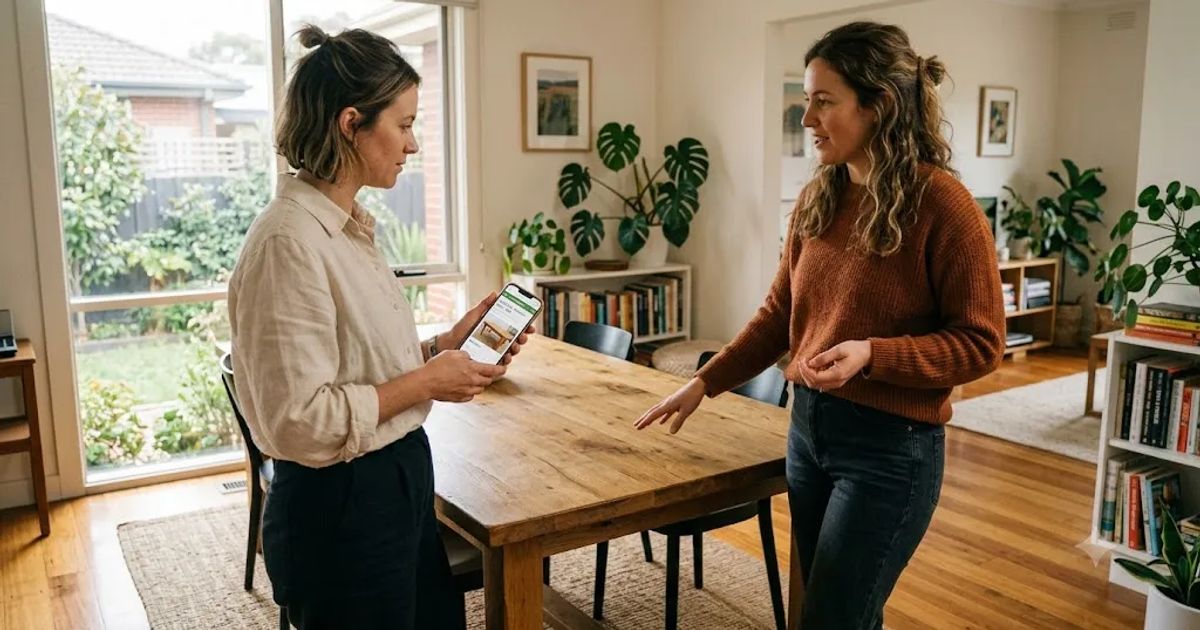
Most Australians feel uncomfortable negotiating. It's a cultural thing — we don't want to seem cheap, we don't want to offend the seller, and we're not sure what's appropriate to ask for. So we either pay the asking price without a word, or we lowball and feel bad about it either way.
Here is the reality: negotiating secondhand furniture is expected. In Melbourne's peer-to-peer furniture market, most sellers price with some room already built in — they expect a conversation, not a silent transaction. Retail furniture prices include costs beyond the item itself — such as rent, staff, logistics, and margin — while private sellers are usually focused on moving a piece quickly. Used furniture sellers have none of that — which means there is far less room to be stubborn about price, and far more reason to accept a fair offer quickly.
When you message a private seller in Melbourne and ask "is there any flexibility on the price?" you are not being rude. You are participating in exactly the kind of transaction the seller expected when they listed the piece. Whether you are buying cheap furniture in Melbourne for a first apartment or hunting for a vintage find, the awkwardness is not in the negotiation — it's in not knowing how to do it. This guide removes that uncertainty entirely.
Quick answer: How much should you negotiate on used furniture?
| Situation | Offer |
|---|---|
| Good condition, fair price | 10–15% below asking |
| Minor damage or condition issues | 20–25% below asking |
| Overpriced relative to market | Offer at market value (~30% off) |
| Rare or genuine vintage bargain | Don't negotiate aggressively — buy it |
Before you negotiate — do this first
Negotiating without preparation is the fastest way to either overpay or cause offence. Two things you must do before making any offer:
1. Know the market value
Search for comparable pieces on Zirkly's Melbourne furniture listings, Gumtree, and Facebook Marketplace. Find five to ten similar listings in similar condition. The cluster of prices in the middle is the real market value. This is your anchor — everything else flows from it.
If the piece is priced at market value, your negotiating room is narrow. If it's priced above market value, you have more leverage. If it's priced below market value, don't negotiate — buy it immediately before someone else does.
Our full guide on how to price secondhand furniture in Melbourne covers market valuation in detail.
2. Inspect before you offer
Never make a price offer before you have inspected the piece in person. In a peer-to-peer transaction, you have no recourse after the money changes hands — so inspection is both a safety check and a negotiating tool. If repairs are simple — tightening a screw, reupholstering a cushion — factor that into your negotiation. If restoration costs exceed the savings, walk away.
Inspection gives you two things: confirmation that the piece is what you want, and legitimate grounds for negotiation if there are condition issues you can reference. A buyer who offers a lower price without having seen the piece is guessing. A buyer who says "I noticed the left rear leg has a small crack — would you consider $X?" is negotiating with evidence.
How to use condition issues to negotiate fairly
Condition is the most legitimate and most effective basis for negotiation in the secondhand furniture market — but only when used honestly.
Before you make any offer, inspect thoroughly.
What constitutes legitimate condition-based negotiation:
- Visible scratches, scuffs, or surface damage not disclosed in the listing
- Structural issues: loose joints, wobbly legs, stiff drawers
- Upholstery staining or fabric wear beyond what photos showed
- Missing hardware: handles, hinges, drawer runners
- Odour issues: smoke, pet, or damp smell detected on inspection
For each issue, estimate the real cost of addressing it. A professional re-oil of a scratched timber surface costs $30–$60 in materials. Reupholstering a dining chair seat costs $30–$80 per chair. New handles from Bunnings cost $15–$40. Use these as the basis for your reduction — not an arbitrary percentage.
What is not a legitimate basis for negotiation:
- Normal age-appropriate wear on a piece priced as "good condition"
- A style you don't love as much as you thought
- Simply wanting a lower price without a specific reason
Condition-based negotiation works because it is fair and transparent. Sellers who know their piece has an issue will often accept a reasonable reduction without discussion. Sellers who believe their piece is fairly priced and fairly described will push back on vague price requests but respond better to specific, evidenced ones.
How much to offer — the numbers that work
The most common buyer mistake is not knowing what percentage to offer. Too low and you cause offence. Too close to asking price and you leave money on the table. Here is the framework grounded in how Melbourne's used furniture market actually works:
| Condition / Scenario | Recommended discount | Example |
|---|---|---|
| Good condition — at market value | 10 to 15% off | $280 sofa → offer $240–$250 |
| Minor condition issues (scratches, stains) | 20 to 25% off | $320 table with water ring → offer $240–$260 |
| Overpriced — above market value | ~30% off | $150 bookshelf vs $90–$100 market → offer $100 |
The 10 to 15 per cent rule — for pieces at or near market value
For a piece priced at or near market value in good condition, an offer of 10 to 15 per cent below the asking price is both fair and expected. Many private sellers leave some room for negotiation — often around 10 to 15 per cent, though this varies by item, urgency, and seller. Your offer in this range gives the seller a reasonable decision to make without feeling insulted.
Example: Sofa listed at $280. Offer $240–$250. This is fair, non-offensive, and gives the seller a reasonable decision to make.
The 20 to 25 per cent rule — for pieces with condition issues
If the inspection reveals legitimate condition issues — minor scratches, a loose joint, a small stain on the fabric — a 20 to 25 per cent reduction from asking price is reasonable and justified. Reference the specific issue when you make the offer. You are not lowballing — you are adjusting for real remediation cost.
Example: Dining table listed at $320 with a visible water ring on the surface. Offer $240–$260, mentioning the water stain and the cost of sanding and re-oiling to address it.
The 30 per cent rule — for pieces that are overpriced relative to market
If your market research shows the piece is priced significantly above what comparable items are selling for in Melbourne, a 30 per cent reduction brings it to market value — which is entirely reasonable. Frame it as "based on what similar pieces are selling for locally" rather than as a personal criticism of their pricing.
Example: Bookshelf listed at $150 when comparable pieces are listing at $80–$100 in Melbourne. Offer $100, noting that similar pieces are currently listed at that price locally.
What never to do on price
Do not offer 50 per cent or less of the asking price unless the piece is in genuinely poor condition. A reasonable opening offer is around two-thirds of asking — 33 per cent off, not 50. Offering half the asking price on a fairly priced piece signals either that you don't know the market or that you don't respect the seller's time. Both kill the negotiation.
What to say — exact scripts for every situation
The words matter. Here are tested phrases for every negotiating scenario in Melbourne's secondhand furniture market.
Opening a negotiation — online message before pickup
"Hi [name], thanks for listing this — it looks great. Would you consider [price] for it? Happy to come and collect this week."
This works because it is specific, polite, and immediately offers a resolution (fast pickup). Private sellers value quick, hassle-free transactions. Offering to collect quickly is genuine leverage.
Facebook Marketplace opening message
"Hi, is this still available? I can pick up today. Would you consider $[price]?"
Three sentences. Availability check, logistics commitment, price offer — all in one message. This format works specifically well on Facebook Marketplace where sellers receive many low-effort enquiries. Standing out as a serious, ready buyer is half the negotiation.
Negotiating in person after inspection — no condition issues
"I really like it — it's exactly what I'm looking for. Is there any flexibility on the price? I was thinking [price]."
Keep it brief and friendly. A long explanation signals anxiety, which weakens your position. The shorter and more confident your offer, the more seriously it is taken.
Negotiating in person after inspection — condition issues found
"I noticed [specific issue] — I'd need to [address it] which would cost around [amount]. Would you consider [price] to account for that?"
This is the most powerful negotiating position. You have evidence, specificity, and transparency. Most sellers respond well because it is honest and fair.
Bundle negotiation — buying two pieces from the same seller
"I'm interested in both pieces. Would you consider $[price] for the pair?"
Bundle negotiation is the single most effective approach with both private sellers and vintage dealers. Sellers are far more receptive to reducing total spend on a two-piece sale than discounting either item individually. The logistics saving alone — one pickup instead of two — is worth something to the seller.
Responding to a counter-offer
"I understand — could we meet in the middle at [price]? I can come and collect today if that works."
The "meet in the middle" framing is psychologically comfortable for both parties. Same-day collection sweetens the deal for the seller without costing you anything.
When the seller says the price is firm
"No problem at all — I'll have a think and come back to you if I'd like to proceed."
Never accept "firm" as the final word. Politely stepping back gives the seller time to reconsider — many will follow up within 24 to 48 hours if the piece hasn't sold.
What we see on Zirkly Melbourne listings
Running Melbourne's dedicated secondhand furniture marketplace gives us a unique view of how buyers and sellers negotiate.
One pattern is consistent across thousands of transactions: the most successful negotiations are rarely about demanding a discount. They happen when buyers offer convenience — a quick pickup, polite communication, and a realistic price that respects what the seller has.
Sellers who list on Zirkly are Melbourne locals who want their piece gone. They are not retailers with fixed margins to protect. A buyer who messages promptly, is specific about what they want to pay, and offers to collect this weekend will almost always get a better outcome than a buyer who haggles over email for three days.
The listings that attract the most negotiation are pieces priced 20 to 40 per cent above comparable Melbourne listings — sellers who have set an aspirational price rather than a market price. These sellers almost always accept a reasonable, evidenced counter. The listings that attract the least negotiation are pieces already priced at or below market value — because buyers who know the market recognise a fair price when they see one and move quickly.
Where Melbourne buyers have the most negotiating power
Not all buying channels are equal when it comes to negotiating. Here is where Melbourne buyers consistently get the best results — and which suburbs tend to have the most negotiation-friendly sellers.
Best platforms for negotiating used furniture in Melbourne:
Zirkly — Melbourne's dedicated peer-to-peer furniture marketplace. Every seller is local, every listing is furniture, and sellers are motivated to move pieces quickly. Browse secondhand furniture in Melbourne and message sellers directly. This is where the most flexible pricing happens because sellers have zero overhead and simply want their piece gone.
Facebook Marketplace — high volume, high negotiating room, but also higher scam risk. Use it for broad browsing and cross-checking prices, then negotiate carefully. Always inspect before you pay.
Gumtree — Australia's original classifieds platform still carries a large volume of used furniture listings. Sellers on Gumtree tend to have their pieces listed for longer, which means more urgency and more room to negotiate — particularly on listings that have been up for more than two weeks.
Sunday markets — Camberwell Sunday Market and Bentleigh Sunday Market are Melbourne's most negotiation-friendly physical environments. Stall holders expect to haggle.
Op shops — Salvos, Vinnies, Savers. Least negotiating room but often already below market value.
Vintage dealers — Grandfather's Axe in Collingwood, 20th Century Scandinavia in Brunswick East. Most resistant to negotiation on individual pieces but open to bundle deals.
Melbourne suburbs where negotiating power is highest:
Sellers in established owner-occupier suburbs — Bentleigh, Carnegie, Clayton, Ormond, Moorabbin — are often downsizing or clearing space and priced to move. These are your best opportunities to negotiate on solid timber furniture, dining sets, and bedroom pieces.
In design-forward inner suburbs — Fitzroy, Richmond, Brunswick, Preston — you'll find more design-literate sellers with better-quality pieces, but also sellers who know what they have. Negotiating room exists but the sellers are savvier. Come prepared with market research from Zirkly's Melbourne listings.
When to walk away — and how to do it gracefully
Not every negotiation succeeds. Knowing when to walk away — and doing it well — is as important as knowing how to negotiate.
Walk away when: the seller's floor price is above what the piece is genuinely worth based on your market research. No negotiation technique can bridge a fundamental gap between what a seller believes their piece is worth and what the market will actually pay.
Walk away when: the inspection reveals condition issues that make the piece uneconomical even at a reduced price. A piece that requires $150 in repairs to be usable, priced at $180 asking, does not become a good deal at $130.
How to walk away gracefully:
"Thanks so much for showing me — it's a lovely piece. I'm going to keep looking at the moment, but I'll come back to you if I change my mind."
This leaves the door open. Many Melbourne sellers will message you within 24 to 48 hours if their piece hasn't sold. "I'm happy to take [your offer] if you're still interested" is a common follow-up — and it happens more often than buyers expect.
Never burn the bridge. Melbourne's secondhand furniture community is local and increasingly connected. A gracious walkaway today may lead to the seller recommending you to a friend who has exactly the piece you want.
Find secondhand furniture to negotiate on in Melbourne
Ready to put these negotiation tips into practice? Browse local secondhand furniture listings on Zirkly and message Melbourne sellers directly — every listing shows the seller's suburb so you know exactly who you're dealing with before you make contact.
Whether you're hunting for secondhand furniture in Bentleigh East, scouting used furniture in Carnegie, or browsing all secondhand furniture across Melbourne, private sellers on Zirkly are local, real, and most are open to a fair conversation about price.
Before you go — useful guides from Zirkly:
Buyer guides:
- How to inspect secondhand furniture before you buy — what to check before you commit
- How to spot a secondhand furniture scam in Australia — protect yourself before you pay
- Where to buy secondhand furniture in Melbourne — every channel compared
Seller guides:
- How to price secondhand furniture in Melbourne — understand what sellers are thinking
- How to write a furniture listing that gets replies — see the listing through the seller's eyes
- Best time to sell secondhand furniture in Melbourne — understand seller urgency by season
- How to photograph secondhand furniture to sell fast — why some listings attract buyers instantly
Frequently Asked Questions
Is it acceptable to negotiate the price of secondhand furniture in Melbourne?
Yes — it is expected. Private sellers almost always price with negotiating room built in, particularly those who add "OBO" to their listing. A polite, specific offer is standard practice. Most sellers would rather accept a reasonable offer than wait for a buyer who pays full price.
How much should I offer below the asking price for secondhand furniture?
10 to 15 per cent below asking for a fairly priced piece in good condition. 20 to 25 per cent if you found specific condition issues during inspection. Up to 30 per cent if the piece is priced above comparable Melbourne market listings. Never offer 50 per cent or less on a fairly priced piece.
What is the best way to negotiate secondhand furniture price online?
Keep it brief. Message the seller with one offer, one reason if relevant, and a pickup commitment: "Would you consider $X? Happy to collect this week." Avoid long justifications. A short, confident message is taken more seriously than a lengthy explanation.
Can I negotiate at op shops in Melbourne?
Rarely. Op shops (Salvos, Vinnies, Savers) price for charity and have limited flexibility. Pieces are often already below market value. The exception: pieces marked down and sitting unsold for weeks — ask near closing time on Saturday.
What should I say when the seller says the price is firm?
"No problem — I'll have a think and come back to you." Do not accept "firm" as final. Many sellers follow up within 24 to 48 hours if the piece hasn't sold. Walk away politely and leave the door open.
How do I negotiate at Sunday markets in Melbourne?
Arrive early to spot pieces, but negotiate late. After 11:00 am at Camberwell and 11:30 am at Bentleigh, sellers are motivated to sell rather than pack up. Browse first without showing too much enthusiasm, then return with a specific offer.
Is it rude to negotiate secondhand furniture price?
No — as long as you are polite, specific, and realistic. What reads as rude is aggressive lowballing, criticising the piece to justify a lower offer, or renegotiating at the point of payment. A respectful, evidenced offer is not rude — it is expected.
How do I negotiate if I find a condition issue during inspection?
Reference the specific issue and the cost to fix it: "I noticed a crack in the rear leg — a repair would cost around $40–$60. Would you consider $[price]?" Specific, costed issues give the seller a clear reason to reduce. Vague complaints don't.
Adam
Zirkly Team
Adam focuses on turning complex secondhand furniture topics into practical, actionable advice for Melbourne buyers and sellers. He writes about used furniture pricing, buying guides, marketplace safety, and buying decisions, with a focus on the details that make buying and selling secondhand furniture clearer and more reliable. His guides are built for buyers and sellers who want clear answers, not jargon.