Upcycling Secondhand Furniture — Easy DIY Fixes That Add Real Value Before You Sell
A few hours and under $50 can double what your secondhand furniture sells for. Here are the DIY upcycling fixes that add real value — sanding, painting, re-oiling, and hardware swaps — for Melbourne sellers in 2026.
Why upcycling before you sell makes financial sense
Australia disposes of an average of 24kg of wooden furniture per household annually — and according to Austate's furniture waste research, approximately 85% of cheap, mass-produced furniture ends up directly in landfill. The same research notes a positive shift: around 75% of Australians are now choosing to reuse furniture rather than dispose of it — a trend backed by Gumtree data showing strong growth in secondhand trading.
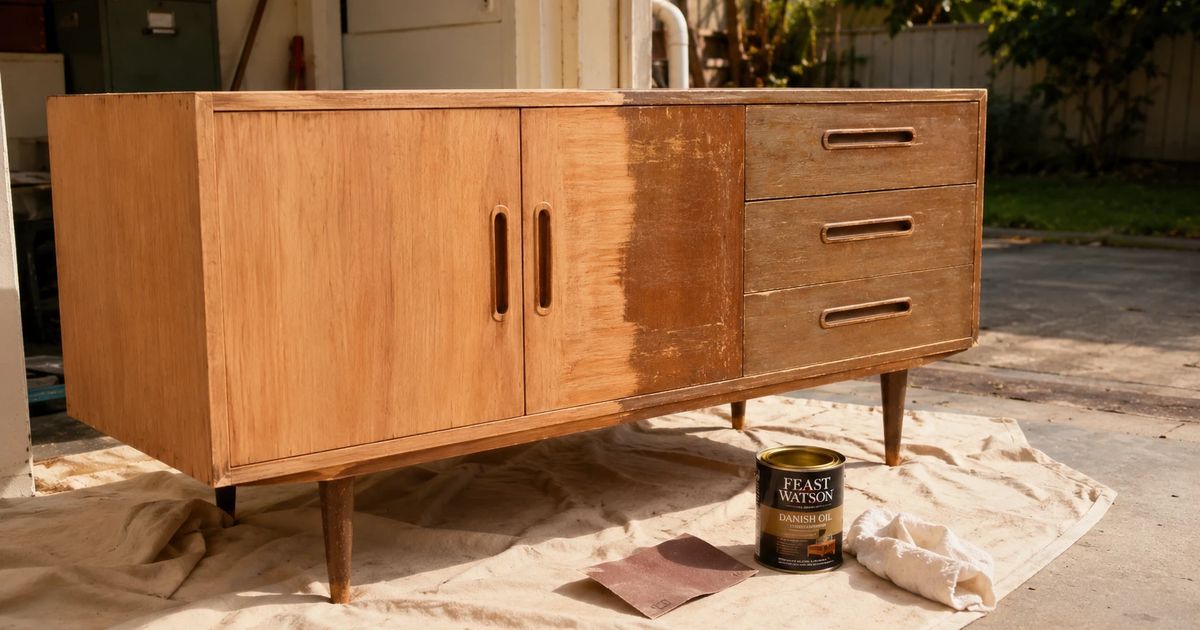
The financial case for upcycling before selling is straightforward. A tired timber sideboard with scratched surfaces and dated brass handles might sell for $80 as-is. Sand it back, apply a fresh coat of Feast Watson oil, and swap the handles for $15 worth of brushed nickel from Bunnings — and the same piece sells for $250. The investment was $40 in materials and three hours on a Saturday afternoon.
According to IMARC Group's 2026 Australia Home Furniture Market report, sustainability awareness is now a key purchase driver for Australian furniture buyers, with consumers increasingly choosing furniture made from reclaimed wood, responsibly sourced timber, and upcycled pieces. Buyers in 2026 are not just tolerating upcycled furniture — they are actively seeking it.
This guide covers five DIY fixes that reliably add sale value to secondhand furniture in Melbourne. None require specialist skills. All can be done with materials available at Bunnings or Mitre 10. Each fix is ranked by effort versus return.
Fix 1 — Sand and re-oil tired timber
Effort: Medium Cost: $20–$40 Value added: High — often doubles the sale price of solid timber pieces
This is the single highest-return upcycling fix for solid timber furniture. Teak sideboards, oak dining tables, hardwood bookshelves — all of them respond dramatically to a sand and re-oil treatment that removes surface stains, scratches, and the dull oxidised look that timber develops over years of use.
What you need:
- Orbital sander (hire from Bunnings Tool Hire for approximately $35/day, or use a sanding block for smaller pieces)
- Sandpaper: 80 grit, 120 grit, 240 grit
- Feast Watson Scandinavian Oil or Organoil Australian-made finishing oil (available at Bunnings)
- Clean cloths
How to do it:
As documented by Al + Imo's DIY restoration guide, start with 80-grit sandpaper to remove old finishes and deep stains, always sanding in the direction of the timber grain. Move to 120 grit to smooth the surface, then finish with 240 grit for a fine, paint-ready surface. Wipe down with a damp cloth to remove all dust before applying oil.
Apply the finishing oil with a clean cloth in the direction of the grain. Allow it to penetrate for 15–20 minutes, then wipe off the excess. A second coat after 24 hours brings out the full warmth of the timber. The result is a piece that looks close to new — with the character and patina of age that buyers of genuine timber actively value.
What it does to your listing: A solid timber dining table that photographs flat and dull will list for $150–$200. The same table photographed after a sand and re-oil — warm grain, clean surface, rich colour — will list for $300–$450. The photos do the work.
Best for: teak, oak, hardwood, pine, blackwood — any solid timber with surface scratches, stains, or dullness. Not suitable for veneer or MDF — sanding through veneer destroys the piece.
Fix 2 — Paint it
Effort: Medium to high Cost: $30–$80 Value added: Medium to high — transforms unloved pieces into desirable ones
Paint is the most versatile upcycling tool. According to Dulux Australia's upcycling guide, wooden items such as side tables, coffee tables, tallboys, and desks are the ideal starting point — the finish is achievable and the transformation is significant.
The critical insight for sellers: paint a piece in a colour that is currently selling well in Melbourne's market. In 2026, according to Upcycled by Nicci's trend forecast, the dominant finishes are raw, organic, and matte — limewash, waxed timber tones, soft whites, and warm neutrals. Bold colours date quickly and reduce buyer appeal. Stick to timeless neutral palettes for maximum resale value.
What you need:
- 80-grit and 120-grit sandpaper
- Primer (Dulux 1 Step or equivalent)
- Water-based paint in your chosen colour — Dulux Wash&Wear for durability, or Haymes Artisan Soft Chalk for a matte furniture finish
- Quality nylon bristle brush (2–3 inches) and a small roller for flat surfaces
- Clear topcoat or sealant
How to do it:
According to Bunnings' step-by-step upcycling guide, begin by removing all hardware — handles, hinges, knobs — and setting them aside. Sand the surface with 80-grit sandpaper to remove old finishes and create adhesion for the primer. Fill any holes or dents with timber filler, allow to dry, then sand smooth. Wipe down with a damp cloth to remove all dust.
Apply primer evenly with a brush on edges and corners, roller on flat surfaces. Allow to dry completely — at least two hours. Apply the first coat of paint following the timber grain for a seamless finish. Allow to dry, then apply a second coat. Once fully dry, apply a clear sealant for durability. Reattach hardware — or replace it (see Fix 3).
As Home Beautiful's upcycling experts note: "If you don't like the way something turns out, it's just paint — you can always change it." The barrier to starting is lower than most people think.
What colours sell in Melbourne right now:
- Soft white and warm off-white — the most universally appealing, photographs beautifully
- Sage green — strong demand in Melbourne's inner suburbs
- Charcoal and deep navy — works on statement pieces like sideboards and bookshelves
- Natural timber tones via stain — keeps the material honest while refreshing the look
Best for: solid timber pieces with dated finishes, MDF cabinetry with worn laminate, metal frames, plastic chairs. Not recommended for pieces where the natural timber grain is the selling point — use Fix 1 for those.
Fix 3 — Swap the hardware
Effort: Low Cost: $10–$40 Value added: Disproportionately high — one of the best effort-to-return fixes available
Hardware is what buyers notice first when they look at a chest of drawers, a sideboard, or a cabinet. Dated brass pulls from the 1990s make a solid piece look old in the wrong way. Replacing them with simple, contemporary handles takes 20 minutes and costs $15–$40 — and the listing photos look completely different.
As Home Beautiful's upcycling guide confirms, hardware sourcing is a core part of the Australian upcycling process, with popular options including Kethy, Passio, Hepburn, Etsy, Amazon, and Kmart's DIY range. Bunnings carries a solid range of contemporary handles and knobs at accessible price points.
What works for resale in Melbourne in 2026:
- Brushed nickel or matte black bar handles — clean, contemporary, pairs with most pieces
- Ceramic knobs — suits painted pieces, cottage and Scandi aesthetics popular in Melbourne's inner suburbs
- Brass or antique brass — works on genuinely vintage pieces where the brass fits the era; looks wrong on modern flat-pack
How to do it: Remove existing hardware with a screwdriver. If the new handles have the same hole spacing, replacement is direct. If the spacing differs, fill the old holes with timber filler, allow to dry, sand smooth, touch up with paint, then drill new holes at the correct spacing. Attach new hardware. Done.
Best for: any piece with doors, drawers, or cabinet fronts. The highest return-on-effort fix in the entire upcycling toolkit for the right piece.
Fix 4 — Tighten, fill, and repair
Effort: Low to medium Cost: $10–$25 Value added: Medium — prevents a sale falling through at inspection
A structurally sound piece sells. A wobbly table or a chair with a loose joint fails the in-person inspection every time, regardless of how good the photos are. Most structural issues in solid timber furniture are simple to fix.
Wobbly joints: Apply wood glue (Selleys Liquid Nails or PVA wood glue from Bunnings) into the joint, clamp firmly, and allow 24 hours to cure. For chair and table legs, remove the leg entirely, clean off old glue, apply fresh glue, reattach, and clamp overnight. The result is a joint that is often stronger than the original.
Surface scratches and gouges: Apply timber filler to deeper scratches, allow to dry, sand flush with 120-grit sandpaper, then spot-treat with matching stain or oil. For painted pieces, fill, sand, and touch up with the same paint colour.
Drawer runners: Sticky or stiff drawers are almost always caused by old wax or grime on the runner. Remove the drawer, clean the runner with a damp cloth, allow to dry, then rub a white candle or a bar of soap along the runner. The drawer will slide smoothly.
Hinges: Squeaky or stiff hinges on cabinet doors respond immediately to a spray of WD-40 or a drop of machine oil. Bent or damaged hinges should be replaced — matching hinges are available at Bunnings for under $5 per pair.
Best for: any piece with structural issues that would fail an in-person inspection. Fix these before listing — a buyer who drives to your suburb and finds a wobbly chair will not buy it and will not leave a positive review.
Fix 5 — Clean it properly
Effort: Low Cost: Under $10 Value added: High — the single most underused fix
Most secondhand furniture being prepared for sale in Melbourne has never been cleaned properly. Years of dust in corners, grime on surfaces, sticky residue on drawers, and built-up wax on timber legs. A thorough clean takes two to three hours and costs almost nothing — but the difference in listing photos and in-person impression is enormous.
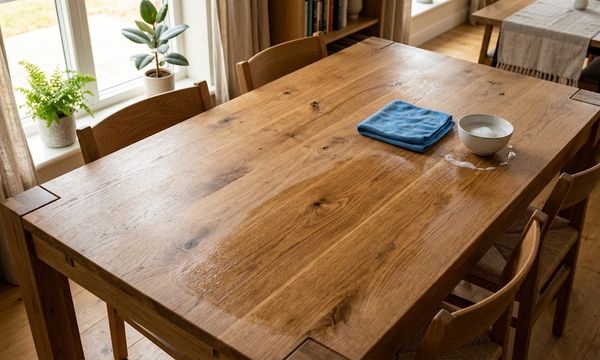
Timber furniture: Wipe down all surfaces with a slightly damp cloth to remove dust and surface grime. For built-up residue, use a mild solution of dish soap and water — never soak timber. Dry immediately with a clean cloth. Apply a small amount of furniture wax or timber oil after cleaning to restore sheen.
Upholstered pieces: Vacuum all surfaces, seams, and crevices thoroughly. For fabric upholstery, a light spray of fabric refresher removes odours. For light stains on fabric, use upholstery cleaner (Scotchgard Fabric and Upholstery Cleaner, available at Bunnings). For leather, use a leather cleaner and conditioner to restore suppleness and sheen.
Glass surfaces: Clean with glass cleaner and a microfibre cloth. No streaks — streaks photograph badly.
Metal frames and legs: Remove rust spots with fine steel wool, wipe down with a clean cloth, and apply a light coat of WD-40 for metal legs. For painted metal, touch up chips with matching spray paint.
The smell test: Before listing any upholstered piece, smell it. Sit close. Smell the cushions. Pet odour and smoke are deal-killers at inspection — no amount of fabric refresher fully removes deep-set odour. If the piece has a significant odour problem, price it accordingly and disclose it.
What not to upcycle — when to leave it alone
Not every piece benefits from upcycling before selling. There are two situations where intervention reduces value rather than adding it.
Genuine vintage pieces with original finishes. As noted in our guide on vintage vs secondhand furniture, buyers of genuine mid-century Scandinavian, Victorian, or Australian craftsman furniture typically prefer original surfaces — even with age and patina — over refinished pieces. A 1960s Danish teak sideboard with its original oil finish, slightly worn, is more valuable than the same piece that's been sanded and lacquered. Before you sand anything that looks genuinely old, research it. If it might be vintage, leave the finish alone.
Pieces beyond economic repair. If the structural damage requires more time and materials than the finished piece will sell for, the maths don't work. A water-damaged MDF sideboard with swollen edges and delaminating veneer will cost $80 in materials and a full weekend to make presentable — and still sell for $60. Know when to pass.
MDF and particle board with surface damage. Unlike solid timber, MDF cannot be sanded through to bare wood and refinished. Once the surface layer of MDF is damaged or delaminated, the only option is paint — and even then, swollen edges and bubbling surfaces are very difficult to disguise convincingly.
What it actually costs — a realistic budget
All products referenced are available at Bunnings, Mitre 10, or major hardware stores across Melbourne.
| Fix | Products Needed | Approximate cost |
|---|---|---|
| Sand and re-oil | Sandpaper (3 grades), Feast Watson Scandinavian Oil | $25–$40 |
| Paint | Primer, Dulux Wash&Wear or Haymes Chalk, sealant | $40–$80 |
| Hardware swap | New handles or knobs (set of 4–6) | $15–$40 |
| Tighten and fill | Wood glue, timber filler, sandpaper | $10–$20 |
| Clean properly | Furniture cleaner, wax or oil, microfibre cloths | $10–$20 |
| Full treatment (all five fixes) | $60–$120 |
A full treatment on a solid timber piece — sand, re-oil, new hardware, tighten joints, thorough clean — costs $60–$120 in materials and takes a weekend afternoon. On the right piece, this investment adds $100–$300 to the sale price. The return on a $80 investment in materials is often $200+ in additional value.
List your upcycled furniture free on Zirkly
Once your piece is looking its best, list it free on Zirkly — Melbourne's dedicated secondhand furniture marketplace. Local buyers in your suburb are actively looking for quality secondhand furniture today.
Frequently Asked Questions
Does upcycling furniture really increase the sale price?
Yes — significantly for the right pieces. A solid timber sideboard in tired condition typically sells for $80–$150. The same piece after sanding, re-oiling, and a hardware swap sells for $200–$400 in Melbourne's current market. The investment is $40–$60 in materials. The return is often three to four times the spend. According to IMARC Group's 2026 Australia furniture market analysis, sustainability-conscious buyers are actively seeking upcycled and restored pieces — demand for quality restored furniture is growing.
What is the easiest upcycling fix for furniture before selling?
Hardware replacement. Swapping dated brass handles for contemporary brushed nickel or matte black hardware takes 20 minutes, costs $15–$40, and transforms how a piece photographs. It's the highest effort-to-return ratio of any upcycling fix. The second easiest is a thorough clean — free, takes two hours, and makes an immediate difference in photos and in-person impression.
What paint should I use to upcycle furniture in Australia?
According to Dulux Australia, water-based paints like Dulux Aquanamel are durable, fast-drying, and ideal for furniture. For a matte chalk finish popular in 2026's market, Haymes Artisan Soft Chalk provides excellent adhesion and opacity. Both are available at Bunnings. Always use a primer first — without primer, paint adhesion is poor and the finish will chip quickly.
Should I sand furniture before selling it?
Only if it's solid timber. Sanding and re-oiling solid timber furniture — teak, oak, hardwood, pine — is one of the highest-value upcycling fixes available. Do not sand MDF, particle board, or veneer — sanding through the surface layer of these materials destroys them. For non-timber pieces, painting is the better approach.
Is upcycling furniture worth it for cheap flat-pack pieces?
Generally no. Flat-pack and MDF furniture has a low resale ceiling regardless of condition. The time and materials invested in upcycling a $40 IKEA piece will rarely be recovered in the sale price. Focus upcycling effort on solid timber pieces, quality second-hand furniture, and pieces with genuine structural integrity. These are the pieces where a $60 investment adds $200+ in value.
What oil should I use to restore timber furniture in Australia?
Feast Watson Scandinavian Oil is widely used and recommended by Australian DIY upcyclers for teak, oak, and hardwood furniture — available at Bunnings. For a more natural option, Organoil's Australian-made finishing oils are available at independent hardware stores. Apply with a clean cloth in the direction of the grain, allow to penetrate for 15–20 minutes, then wipe off excess. Two coats gives the best result.
Where can I sell upcycled furniture in Melbourne?
Zirkly is Melbourne's dedicated secondhand furniture marketplace — every listing is furniture, every buyer is local, and your upcycled piece reaches buyers who are specifically looking for quality secondhand furniture in your suburb. Listing is free and takes under 10 seconds.
Can I upcycle furniture without any DIY experience?
Yes. As Home Beautiful's upcycling experts advise, beginners should "pick something easy like stripping and staining and then challenge and experiment as skills improve." A clean, a hardware swap, and a coat of paint require no specialist skills — just preparation, patience, and the right materials. Bunnings also runs free DIY workshops across Melbourne where you can learn upcycling techniques in person.
Adam
Zirkly Team
Adam focuses on turning complex secondhand furniture topics into practical, actionable advice for Melbourne buyers and sellers. He writes about used furniture pricing, buying guides, marketplace safety, and buying decisions, with a focus on the details that make buying and selling secondhand furniture clearer and more reliable. His guides are built for buyers and sellers who want clear answers, not jargon.