How to Sell a Wardrobe in Melbourne: Measure, List and Pickup
Learn how to sell a wardrobe in Melbourne. Check it, measure inside and out, photograph it open, plan furniture pickup and accept payment safely.
Quick summary: To sell a wardrobe in Melbourne, check it is stable and complete, measure the outside and the inside, photograph it with the doors open, and say plainly how it comes apart and what the buyer needs to collect it. Price it against similar wardrobes, confirm the payment has landed before it leaves your home, and tell the buyer to anchor it to the wall once it is set up.
A wardrobe is tall, deep and awkward, so buyers have more questions about it than about most furniture. Will it fit the room? Does it come apart? What is inside? The sellers who get quick sales answer those questions before they are asked. This guide covers how to sell a wardrobe in Melbourne, from checking it over to handing it across.
What Kind of Wardrobe Are You Selling?
Say which kind in your title, because it changes who is looking and how the pickup works.
- A freestanding flat-pack wardrobe. Usually particleboard or MDF with hinged or sliding doors. It comes apart, but it has been through at least one assembly already.
- A solid timber or vintage wardrobe. Often heavier, and some are built in two sections or have bolted-on panels. Look inside for bolts before you assume it is one piece.
- A built-in robe. If it is fixed to the walls or is part of the house, it is not furniture you can list on its own. Only a freestanding wardrobe belongs in a listing.
Add the number of doors, whether they are hinged or sliding, and whether it has drawers or a mirror. Buyers search on those details.
Check the Wardrobe Before You List It
Empty it and work through a short list.
- Wobble. Push on the top corners and check whether loose bolts or cam locks are the cause. If the frame or panels are damaged, tightening won't fix it, so say so in the listing.
- Doors. Open and close each one. Check the hinges, and for sliding doors check that they run smoothly on the track.
- Hanging rail and shelves. Check the rail is solid in its brackets, count the shelves, and note any missing shelf pegs.
- Drawers. Pull each one fully out and push it back, and look for broken runners.
- Base and back panel. Look for water marks, swelling or mould at the bottom and along the back. Swollen particleboard often points to damp at some point.
- Smell. Open the doors and smell the inside. Wardrobes hold odours, so if it has been in a smoker's home, a damp room or used with mothballs, say so.
- A clean. Wipe the shelves, rail and base, and vacuum the floor of the unit.
Measure the Outside and the Inside
Buyers need two sets of numbers. The outside tells them whether it fits the room, the stairs and the car. The inside tells them whether it fits their clothes.
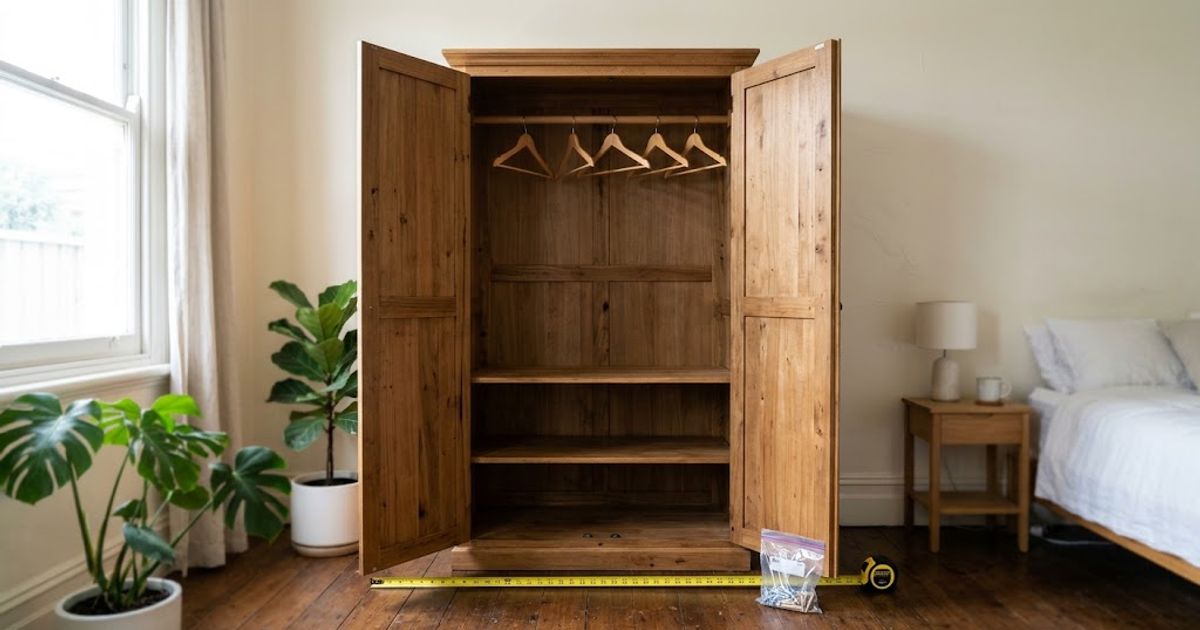
- Outside: overall width, depth and height in centimetres.
- Inside: the width of the hanging space, and the height from the rail to the floor of the unit if you can measure it, so buyers know whether a long coat or dress will hang freely.
- Doors: hinged or sliding, and how far hinged doors swing open.
- Contents: how many shelves and drawers it has, and whether they are adjustable.
If you do not know the brand or age, say so rather than guess. If you do know, put it in, because buyers search by brand.
Photograph It Open and Closed
Move the wardrobe near a window and clear the clutter around it. Then take:
- one wide shot of the closed wardrobe, straight on
- one with the doors fully open, showing the rail, shelves and drawers
- a close-up of the rail and its brackets
- the base and the back corners, if there are any marks
- any scratch, chip, stain or damaged hinge, in side light
Open wardrobe photos answer most buyer questions in one glance. They also show the condition honestly, which the ACCC asks of sellers. Its guidance on selling safe second-hand products online says private sellers should keep the information they give accurate and truthful, use clear photos that include any wear and tear, check that a product has not been recalled or banned and meets any mandatory standard, and keep a record of who they sold it to.
Write down every flaw as well: scratches, a loose hinge, a missing shelf, damp marks, a smell. A flaw you disclosed is already priced in, and one the buyer finds at the door usually means a lower offer or a walk-away.
Price It Against Similar Wardrobes
What you paid new matters less than what similar wardrobes are asking now. Browse second hand furniture in Melbourne and pick three wardrobes closest to yours by size, material and condition.
- A wardrobe with the same number of doors and similar wear is your closest match, so start near its price.
- A newer one in better condition sets a ceiling, and an older or more worn one sets a floor.
- Solid timber and well-known brands usually hold their value better than basic flat-pack. An older flat-pack wardrobe with missing fittings, damaged panels or visible wear generally needs a more competitive price than a solid timber one in the same condition.
Then set your price a little above what you would accept, because buyers often negotiate. These are asking prices, not sale prices, so a wardrobe that has sat listed for weeks is a sign the price is too high. Zirkly can draft your title and description from your photos, but read the result and check that your own measurements are filled in before you publish.
Say How It Comes Apart
Leave it assembled until a buyer has seen it. They want to check that the doors hang properly and the frame is solid, and that is hard to judge from a stack of panels. Once the sale is agreed, work out in chat who will take it apart and when.
Say in the listing whether it can be taken apart, and what tools the buyer needs. Our guide to taking apart furniture for moving or selling has the step-by-step for wardrobes, including doors, rails and flat-pack fixings, so there is no need to improvise on the day. Not every wardrobe is built to be taken apart and put back together, and repeated assembly can wear screw holes and fixings, so if you are unsure, sell it assembled and tell the buyer what vehicle it needs. If you take it apart beforehand, keep every screw, cam lock and bracket in a labelled bag and tape it to a panel.
Plan the Pickup, Because Wardrobes Get Stuck
Work the pickup out in the listing, not at the door.
- Describe your access. Mention stairs, a lift, a narrow hallway or a tight turn, so the buyer can plan.
- Tell buyers to check their route. Our guide to measuring doorways for secondhand furniture covers doorways, turns, stairwells and lifts at their end. A tall wardrobe that arrives lying down may also not stand back up in a low-ceilinged room.
- Name the vehicle. A wardrobe that stays in one piece usually needs a van or a ute. One that comes apart may fit in a large car, so say which it is.
- Plan for two people. Ask the buyer to bring a helper, and have blankets ready to protect the doors and edges.
- Mention mirror doors. They are heavy, and the glass can break, so say whether the mirror is intact and let the buyer plan for it.
Include any wall bracket, strap or anchor that came with the wardrobe, or tell the buyer you do not have one. Product Safety Australia lists wardrobes among freestanding furniture that can topple, says securing it to the wall or floor is the best way to prevent that, and says you can buy anchoring hardware if the furniture did not come with any, including furniture bought second-hand. A short line in your listing reminding the buyer to anchor it once it is set up is a good habit.
Keep Chats in the App, and Get Paid Safely
Keep your conversation in Zirkly messages, so there is a record of what you agreed.
For payment, agree on a bank transfer or PayID and open your own banking app to confirm the money has landed before the wardrobe leaves your home. Do not rely on a screenshot or a "payment sent" message. Be wary of a buyer who pays more than the agreed price and asks you to refund the difference, or who wants to buy without seeing it. Choose a daytime pickup and have someone else at home if you can. Afterwards, keep a note of who bought it and when.
What If It Doesn't Sell?
If a wardrobe has had no serious enquiries after a couple of weeks, improve the first photo, add any missing measurements and lower the price a little before you give up on it. A listing stays live until you sell it or remove it, so mark it sold as soon as it goes.
If it is damaged, damp or too worn to sell, your council's hard rubbish service may take it, and the rules, booking deadlines and limits vary by council, so check yours first. If it is in good condition but you would rather not wait, some charities collect furniture, though many decline large or worn pieces, so ask before you book.
Sell Your Wardrobe in Melbourne
List your wardrobe for free on Zirkly with clear photos, inside and outside measurements, and an honest description, then arrange pickup directly with a Melbourne buyer.
Frequently Asked Questions
How do I sell a wardrobe in Melbourne?
Check it over, measure the outside and the inside, and photograph it with the doors open. Describe any flaws, price it against similar wardrobes, and say how it comes apart and what vehicle is needed. List it on a local furniture marketplace such as Zirkly, and confirm the payment has landed before it leaves your home.
Should I take the wardrobe apart before the buyer arrives?
Usually not until the sale is agreed, because buyers want to inspect it assembled. Agree in chat who will take it apart and when. If you do it beforehand, bag and label every fixing and tape the bag to a panel.
How do I measure a wardrobe for a listing?
Measure the overall width, depth and height, then the inside hanging width and the height from the rail to the base. Note the door type, and how many shelves and drawers it has. Buyers use the outside numbers to check the room and the car, and the inside numbers to check their clothes.
What if my wardrobe has a smell or damp marks?
Say so in the listing and photograph the marks. Wardrobes hold odours, and swollen particleboard or mould at the base can mean it has been damp. Many buyers will still consider it if you are upfront, and what they dislike is finding out at the door.
Can I sell a wardrobe with mirror or sliding doors?
Yes. Say whether the mirror is intact and whether the doors run smoothly on the track. Mirror doors are heavy and the glass can break, so tell the buyer so they can bring a helper and blankets.
Should the buyer anchor the wardrobe to the wall?
It is a good idea. Product Safety Australia lists wardrobes among freestanding furniture that can topple, and says securing it to the wall or floor is the best way to prevent it. Include any bracket or strap that came with it, or tell the buyer they will need to buy anchoring hardware.
How do I get paid safely when selling a wardrobe?
Confirm the payment has landed in your own banking app before the wardrobe leaves, and keep your messages in the app. Be wary of a buyer who overpays and asks for a refund of the difference, or who wants to buy an expensive item without seeing it.
What do I do with a wardrobe nobody wants?
Try a better first photo, the missing measurements and a lower price first. If it is damaged or too worn to sell, check your council's hard rubbish rules, which vary by council, or ask a charity whether it takes large furniture before you book a pickup.
Adam
Zirkly Team
Adam turns complex secondhand furniture topics into practical advice for Melbourne buyers and sellers — pricing, safety and the decisions that make buying and selling used furniture clearer.