Can You Anchor Furniture to Walls in a Victorian Rental? Rules for Renters
Can renters anchor furniture to walls in Victoria? What Consumer Affairs Victoria allows without permission, what needs consent, and what to do at move-out.
Last reviewed 13 October 2026 against Consumer Affairs Victoria’s renting guidance (updated 12 October 2026) and Product Safety Australia’s toppling furniture guide (updated 25 September 2026). This is general information, not legal advice.
Quick summary: Victorian renters can generally fit wall anchors to secure furniture without the rental provider’s permission, except on exposed brick or concrete walls and in properties on the Victorian Heritage Register. On exposed brick or concrete you need to ask, and the rental provider can’t unreasonably refuse consent. Unless an exception applies, plan to restore the wall when you move out.
Anchoring furniture to walls in a Victorian rental is one of the minor modifications renters can usually make without asking first. The rules change on exposed brick and concrete, and again for properties on the Victorian Heritage Register. This guide covers what Consumer Affairs Victoria allows, when you need consent, what to do when you move out, and how to shop for tall secondhand pieces that will need anchoring.
Can Renters Anchor Furniture to Walls in Victoria?
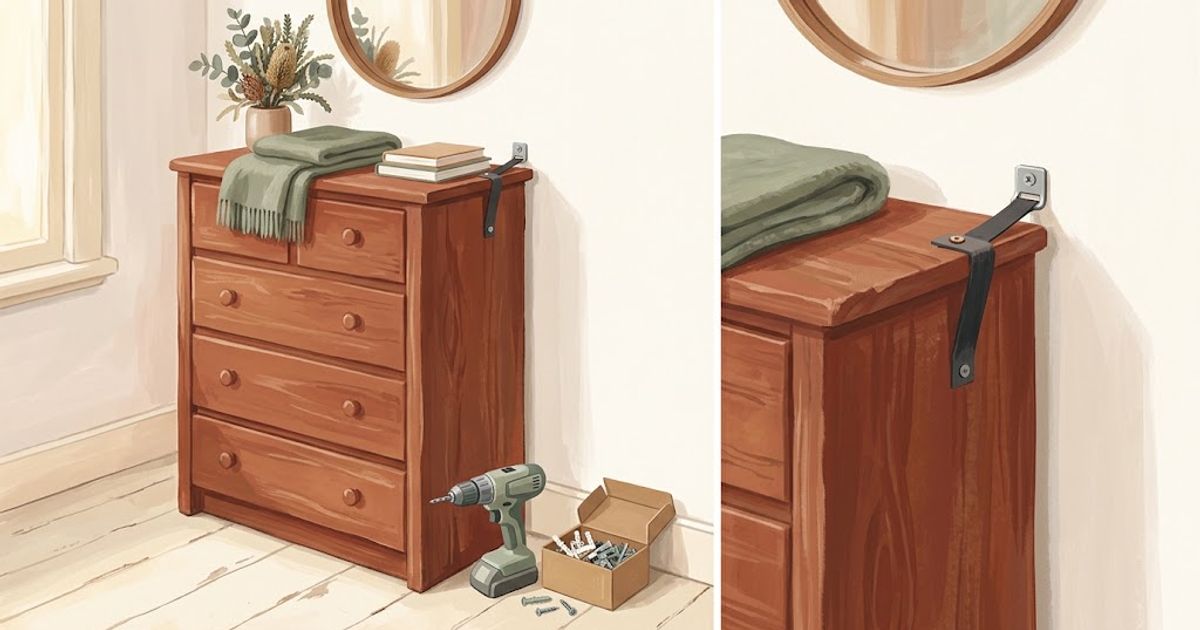
In most cases, yes. According to Consumer Affairs Victoria, a renter can install wall anchors to secure items of furniture on all surfaces except exposed brick or concrete walls without the rental provider’s permission, as long as the property isn’t listed on the Victorian Heritage Register. The same list covers picture hooks, shelf brackets and blind or cord anchors. Adhesive child safety locks on drawers and doors don’t need permission either.
Anchoring is worth doing properly. Product Safety Australia says toppling furniture has killed at least 28 people in Australia since 2000 and causes nearly 20 injuries every week, with children under five most at risk.
Telling your landlord or agent isn’t a legal requirement for these anchors, but it’s a sensible step. Product Safety Australia suggests explaining why you’re securing the furniture and letting them know you’ll remove the anchors at the end of the tenancy. Consumer Affairs Victoria also notes that a rental provider may require changes to be completed by a suitably qualified person, so a quick message before you start can avoid a disagreement.
What About Exposed Brick or Concrete Walls?
Anchoring into exposed brick or concrete is treated differently. You need to ask first, and the rental provider can’t unreasonably refuse consent. Consumer Affairs Victoria says they can’t refuse unless they have a good reason, and Tenants Victoria describes the same rule for in-wall anchoring devices on exposed brick or concrete.
Consumer Affairs Victoria’s examples of a reasonable refusal include heritage protections that would be affected, a change that would require modifications to other premises or common areas, and a property that’s about to be sold or vacated where the renter has been given a valid notice to vacate.
To ask, put the request in writing, say what you’re anchoring and why, and keep the reply. Tenants Victoria publishes a template letter requesting consent for modifications that you can adapt. If you can’t tell whether a wall counts as exposed brick or concrete, ask your agent before you drill.
If the answer is no, ask why first, as there may be a good reason. If you think the refusal is unreasonable, Consumer Affairs Victoria says you can apply to VCAT. Tenants Victoria notes that Rental Dispute Resolution Victoria now handles some rental disputes instead of VCAT, so check which applies before you lodge anything.
Before You Drill: Heritage, Asbestos and Apartments
Three things can change the answer.
Heritage listing. The no-permission rule only applies if the property isn’t on the Victorian Heritage Register. If it is, ask first.
Asbestos. Consumer Affairs Victoria warns renters to be aware of asbestos-containing materials and not to screw, hammer or drill into them. If you suspect a wall contains asbestos, stop and talk to your agent.
Apartments. Owners corporation rules apply to renters as well as owners, and a change that would need work on common areas is one of the reasonable grounds for refusal. Our guide to moving furniture into a Melbourne apartment explains how those rules reach tenants. If you’re unsure whether a wall is common property, ask your agent first.
What to Do With Anchors When You Move Out
Anchors are a modification, and modifications come with a restoration duty. Consumer Affairs Victoria and Tenants Victoria both say that a renter who modifies a property must, by the end of the tenancy, restore it to its earlier condition (allowing for fair wear) or pay the reasonable cost of doing so. Consumer Affairs Victoria says this applies even if the rental provider gave written consent.
The guidance lists exceptions: the rental provider agrees you don’t need to, it’s written into the rental agreement, or you paid a modification bond (an extra bond a rental provider may ask for to cover the cost of undoing changes). Which exception applies depends on your rental agreement, so check yours. Tenants Victoria recommends getting any agreement that you won’t have to remove modifications in writing before you make them.
Unless you’ve agreed otherwise, plan to remove the anchors and restore the wall before you hand back the keys. Dated photos of the wall before and after are the simplest record.
Which Secondhand Furniture Needs Anchoring?
Product Safety Australia lists the freestanding pieces that can topple: bookcases, chests of drawers, wardrobes, cabinets, entertainment units, unsecured TVs, hall tables, buffets and sideboards.
Secondhand pieces often arrive without their original anchor kit or instructions. Product Safety Australia says that’s easy to fix: you can buy anchoring hardware from a furniture retailer, hardware store or baby goods store, including for furniture bought second-hand. What you need depends on what your wall or floor is made of, so ask at a hardware shop or a tradesperson if you’re unsure.
- Kids’ rooms: our guide to safe secondhand furniture for kids’ rooms covers the stability checks and why every tall piece should be anchored.
- Kitchens: built-in joinery needs consent, which is why renters tend to choose freestanding storage like the cabinets in our pantry cabinet guide. A freestanding pantry cabinet is still tall furniture, and it can be anchored like any other.
- Dining rooms: our buffets and sideboards guide covers what to check before you buy.
- TVs: Product Safety Australia says to choose a stable, low spot, not to put a TV on a chest of drawers, and to secure the furniture to the wall if you strap the TV to it. Our home theatre and media room guide covers entertainment units.
If You Can’t Anchor Yet
Product Safety Australia says securing furniture to the wall or floor is the best way to prevent tipping. While you wait for consent or hardware, these steps reduce the risk but don’t replace anchoring:
- Choose low-set pieces or ones with a broad, stable base.
- Keep the heaviest items at the bottom of drawers and shelves.
- Don’t put TVs or anything tempting to children on top.
- Fit locking devices on drawers so they can’t be used as steps. Adhesive child safety locks don’t need permission in Victoria.
- Check the piece sits flat. Carpet can be thicker and more uneven at the edge of a wall, which makes furniture less stable.
Buying Tall Secondhand Furniture as a Renter
Product Safety Australia’s buying checks apply to secondhand pieces as much as new. Pull out the top drawers or open the doors and apply a little pressure to see how stable it is. Look for sturdy backing, drawers that don’t fall out easily, drawer stops, and a low or broad base.
Message the seller in Zirkly’s in-app chat before you travel. Ask whether it still has its anchor hardware and instructions, and for the exact height and depth so you know where it will go. Browse the storage and cabinets category or see what’s listed across Melbourne.
Looking for a bookcase, chest of drawers or cabinet that suits your rental? Browse secondhand furniture on Zirkly, and if your next place can’t take a tall piece, list it for free on Zirkly so another Melbourne household can give it a second life.
Frequently Asked Questions
Can I anchor furniture to the wall in a Victorian rental without permission?
In most cases, yes. Consumer Affairs Victoria says renters can install wall anchors to secure furniture on all surfaces except exposed brick or concrete walls, as long as the property isn’t on the Victorian Heritage Register. Telling your agent isn’t a legal requirement, but a rental provider may require the work to be done by a suitably qualified person, so it’s a sensible step.
Do I need permission to anchor furniture to exposed brick or concrete?
Yes, you need to ask, and the rental provider can’t unreasonably refuse consent. Put the request in writing and keep their reply.
When can a rental provider refuse an anchor request?
Consumer Affairs Victoria’s examples of a reasonable refusal include heritage protections that would be affected, a change that would need work on other premises or common areas, and a property about to be sold or vacated where you’ve received a valid notice to vacate.
Do I have to remove wall anchors when I move out?
Generally yes. You must restore the property, allowing for fair wear, or pay the reasonable cost. The guidance lists exceptions: the rental provider agrees you don’t need to, it’s written into the rental agreement, or you paid a modification bond. Which applies depends on your rental agreement, so check it and get any agreement in writing.
Do the rules change for heritage-listed or apartment rentals?
Yes. The no-permission rule only applies if the property isn’t on the Victorian Heritage Register. In an apartment, owners corporation rules apply to renters, and a change needing work on common areas can be a reasonable ground for refusal. Check with your agent.
Which furniture should be anchored to the wall?
Product Safety Australia lists bookcases, chests of drawers, wardrobes, cabinets, entertainment units, unsecured TVs, hall tables, buffets and sideboards.
Does secondhand furniture come with anchoring hardware?
Not always. Product Safety Australia says you can buy anchoring hardware from a furniture retailer, hardware store or baby goods store, including for second-hand furniture. The right type depends on your wall or floor material, so ask at a hardware shop or a tradesperson.
What can I do to reduce tipping risk if I can’t drill into the wall?
Choose low pieces with a broad base, keep heavy items at the bottom, and keep tempting items off the top. Fit drawer locks too, as adhesive child safety locks don’t need permission in Victoria. These steps reduce the risk but don’t replace anchoring.
Adam
Zirkly Team
Adam turns complex secondhand furniture topics into practical advice for Melbourne buyers and sellers — pricing, safety and the decisions that make buying and selling used furniture clearer.