Buying a Secondhand Cot in Australia: Safety Checklist
Buying a secondhand cot in Australia? Check cot measurements, recalls, mattresses and safety standards before buying. Plus, tips for secondhand nursery furniture.
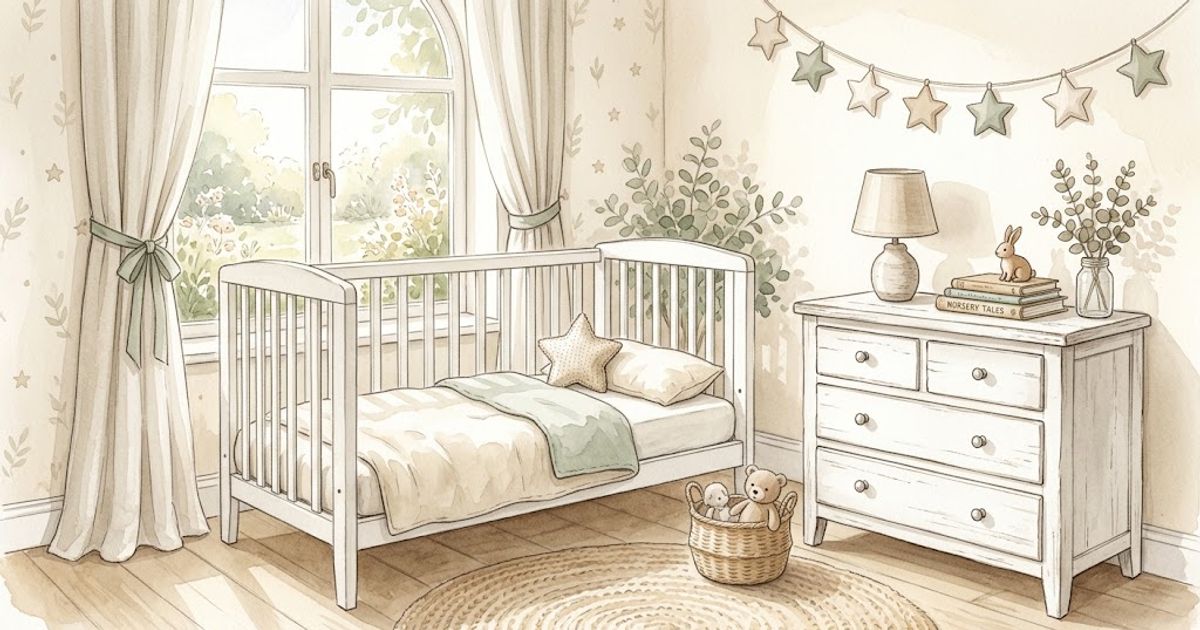
Quick summary A secondhand cot is worth buying only if it passes an in-person check: not recalled, bars no more than 95mm apart, a tight-fitting mattress (20mm gap is a conservative check), a secure drop-side lock, all parts and instructions present. Bassinets and cradles now have their own mandatory standard too. If you can't confirm a cot or bassinet is safe, don't buy it. Dressers, chairs and storage are much lower risk.
Buying a secondhand cot can save money, but safety matters more than appearance. A baby sleeps in a cot unsupervised, so small design details, such as gaps between bars, a poorly fitting mattress or a drop side that doesn't lock, can create serious risks. Scuffs and faded paint matter far less than whether the cot meets safety requirements.
That doesn't mean secondhand nursery furniture is off the table. Some used cots may be suitable if carefully checked, while dressers, nursing chairs and storage can be practical secondhand buys. This guide covers what to measure, how to check for recalls and what to look for when buying nursery furniture in Melbourne.
Why cots are different from other secondhand furniture
Most furniture risks are about durability or hygiene. Cots are about entrapment, strangulation and suffocation. According to Product Safety Australia, two mandatory standards for infant sleep products began applying to suppliers on 19 January 2026. They cover household cots, portable folding cots, bassinets, cradles and similar products, with product-specific requirements for each, plus the safety warnings and instructions that must come with them.
Here's the catch for secondhand buyers. The same page lists second-hand goods (other than those imported into Australia) among the products the standards don't apply to. So a secondhand cot doesn't come with the same built-in assurance as a new one. The checking falls to you.
Are secondhand cots legal to sell?
The rules depend on how a cot is supplied, and they're easy to over-simplify. Product Safety Australia's supplier guidance says the infant sleep safety standard doesn't apply to second-hand goods, other than second-hand goods imported into Australia or antique and collectable cots. It doesn't spell out how that applies to private sellers compared with businesses.
WA Consumer Protection is more direct: it says a second-hand cot may not meet current Australian safety standards, that it is illegal for retail stores or online businesses to sell a product that fails mandatory safety standards, and that non-compliant cots should never be passed on or sold. If you're buying or selling a cot in Melbourne, check the current requirements with the ACCC and Consumer Affairs Victoria rather than assuming an older cot is exempt. If a cot can't be confirmed safe, don't use it for infant sleep.
The in-person cot checklist
Product Safety Australia's household cots guide says to check, before buying or borrowing a second-hand cot, that it hasn't been recalled, meets current mandatory standards, has all parts in good working order, and comes with its assembly and use instructions. In practice, take a tape measure and run through this:
| Check | What to look for |
|---|---|
| Bar or panel spacing | No more than 95mm between bars or panels |
| Mattress gap | Conservative check: no more than 20mm between mattress and cot sides, mattress firm and tight-fitting |
| Side height | 600mm from mattress base to top of the cot side (250mm with the drop side down) |
| Adjustable base | 400mm at the highest base position |
| Protruding fittings | Nothing sticking out that clothing could snag. WA guidance says no more than 8mm for bolts, knobs and corner posts; Product Safety Australia's guide cites 0.5cm |
| Stability | No wobble; rails and base slats firmly attached; bolts tight; mechanisms work |
Measurements per WA Consumer Protection's second-hand cot guidance, except the protrusion note.
Then use your eyes and hands:
- Recall check. Search the model on the recalls database before you travel. Here's how to check whether a cot has been recalled in Australia.
- Drop sides. Product Safety Australia says drop sides need a clearly distinct, secure locked position. If it feels loose or the lock is missing, walk away.
- Surfaces and edges. No sharp edges, splinters, or flaking paint where a baby will chew or grab.
- Missing parts. Replacement bolts that aren't the original are a red flag.
- Instructions. Ask for them. No instructions usually means a seller who isn't sure how it's meant to be assembled.
- Brand, model and label. Photograph the safety label and note the exact model so you can check recalls and ask questions. A label or an intact-looking cot isn't, by itself, proof it's safe.
If you aren't confident it meets the standard, Product Safety Australia's advice is simple: don't buy it. A cot that looks old-fashioned or antique should never be used to put a baby in.
The mattress matters as much as the cot
The cot can be perfect and still be unsafe with the wrong mattress. Product Safety Australia says to use only the mattress size and thickness designed for that cot, and that a mattress should fit snug and flat within the cot, bassinet or cradle. Product Safety Australia's supplier guidance allows a gap of up to 20mm if the mattress is centred, or 40mm if it's pushed against one side or end. Treat 20mm as a conservative screening check at the door, and don't buy a mattress that leaves obvious gaps. Soft, sagging or damp-smelling mattresses are a no. Our guide to secondhand mattress safety in Melbourne covers adult mattresses, which have different considerations, so don't treat it as a cot mattress checklist.
Bassinets, cradles and portable cots
Bassinets and cradles are no longer a "no standard" category. Product Safety Australia states that they have a mandatory standard, and recommends looking for the safety warning statements when buying. Portable folding cots are covered too, and the ACCC publishes separate guides for each product type.
For a secondhand bassinet or portable cot, apply the same logic. A visual inspection alone doesn't prove it's safe: check for recalls, confirm the warnings and instructions are present, make sure the base is flat and firm, check that stands and folding mechanisms lock fully, and test that nothing wobbles. Baby sleeps in them for months, so a tired locking mechanism is a reason to pass.
Keep the cot clear: what goes in matters
Once you have a safe cot, set it up properly. Product Safety Australia's guide says to place baby on their back on a flat, firm, level surface, keep the cot clear of blinds, curtain cords, heaters and mobiles, and avoid extra mattresses, padding, pillows, bumpers and folded quilts. It also says to lower the mattress as soon as the child can sit, pull or stand. For wider safe sleep advice, Red Nose has a dedicated hub at rednose.org.au.
Nursery furniture that's an easy secondhand win
The good news: most of the nursery isn't a cot.
- Dressers and drawers. Solid timber chests of drawers are often better built than flatpack. Check the runners, and wall-anchor every tall piece. Product Safety Australia calls securing furniture to the wall or floor the best way to prevent tipping, and says this applies to furniture you've bought second-hand too. Our secondhand kids' furniture safety guide covers tipping risk in detail.
- Change tables. Check stability and that any rails or straps are intact and working before you buy.
- Rocking chairs and nursing chairs. Check the frame for cracks and loose joints, and sit in it for a minute.
- Bookshelves and toy storage. Low and open is ideal; secure anything tall.
- Rugs, lamps, baskets. Low risk, just clean them first.
Anything second-hand that comes into the nursery should be cleaned thoroughly. Our guide to cleaning secondhand furniture before bringing it home walks through it.
Where to Buy Secondhand Nursery Furniture in Melbourne
Browse the Kids Furniture category for nursery pieces across Melbourne, or check nearby suburb pages such as Moorabbin to see what's close to home. Message the seller early with specific questions: brand, model, whether instructions are included, and whether it's ever been recalled. A seller who answers clearly is usually a good sign. For the other side of the transaction, see how to write a secondhand furniture listing that gets replies.
Selling a cot or nursery furniture
If you're clearing out after your little one has outgrown the nursery, list the dressers, chairs and storage freely. For cots and bassinets, be conservative. Include the brand and model, photograph the safety label if there is one, keep the instructions with it, and only list it if it's in full working order and you're confident it meets current requirements. If you're selling as a business, confirm your obligations with the ACCC first. If it doesn't, don't sell or pass it on. WA Consumer Protection says ideally it should be destroyed.
The bottom line
Buy the dresser, the chair and the shelves without losing sleep. For a cot or bassinet, bring a tape measure, check for recalls, and be ready to walk away. A few minutes at the door is cheap compared with the alternative.
Ready to clear out the nursery? List your nursery furniture on Zirkly and connect with local Melbourne families who are looking for it.
Frequently Asked Questions
Is it safe to buy a secondhand cot in Australia?
It can be, if it passes an in-person check. Confirm it hasn't been recalled, all parts are present and working, the instructions are included, and the bar spacing, mattress gap and side height meet the measurements in the checklist. If you can't confirm that, don't buy it.
What are the safety measurements for a cot?
Per WA Consumer Protection guidance: no more than 95mm between bars or panels, 600mm from the mattress base to the top of the cot side (250mm with a drop side down), 400mm for an adjustable base at its highest position, and no bolts, knobs or corner posts protruding more than 8mm. For the mattress, no more than 20mm between mattress and cot sides is a conservative check.
Do secondhand cots have to meet the mandatory standard?
Product Safety Australia's supplier guidance says the infant sleep safety standard doesn't apply to second-hand goods, other than second-hand goods imported into Australia or antique and collectable cots. It doesn't spell out how that applies to private sellers versus businesses. WA Consumer Protection says it is illegal for businesses to sell products that fail mandatory standards and that non-compliant cots should never be sold or passed on. Check with the ACCC and Consumer Affairs Victoria if you're unsure.
How do I check if a cot has been recalled?
Search the brand and model on the Product Safety Australia recalls database before you buy, and ask the seller for the model name and any labels or paperwork.
Are secondhand bassinets safe?
They can be, but a visual check alone doesn't prove one is safe. Bassinets and cradles now have a mandatory standard, so check for the safety warnings, confirm instructions are included, check for recalls, make sure the base is flat and firm, and test every stand or folding lock and other moving part.
Can I use a secondhand cot mattress?
Only if it is the right size and thickness for that cot and fits snug and flat, and doesn't leave obvious gaps to the sides. A gap of 20mm or less is a conservative check; Product Safety Australia's supplier guidance allows up to 40mm if the mattress is pushed to one side. Avoid mattresses that are soft, sagging, stained or damp.
What nursery furniture is safe to buy secondhand?
Dressers, shelves, nursing chairs, storage and change tables are generally lower risk than cots. Check stability, drawer runners and edges, and anchor tall furniture to the wall.
Should I buy an old or antique cot?
No. WA Consumer Protection says antique cots should not be sold as usable items or used to put a baby in.
Can I sell my old cot in Melbourne?
Only if it's in full working order, has its instructions and you're confident it's safe. If it can't be confirmed safe, don't sell or pass it on. WA Consumer Protection says non-compliant cots should never be passed on, and businesses selling cots should confirm their obligations with the ACCC and Consumer Affairs Victoria.
Adam
Zirkly Team
Adam turns complex secondhand furniture topics into practical advice for Melbourne buyers and sellers — pricing, safety and the decisions that make buying and selling used furniture clearer.