How to Clean Secondhand Furniture Before Bringing It Home Safely (Step-by-Step Guide)
Bought secondhand furniture in Melbourne? Clean it properly before it comes inside. This room-by-room guide covers fabric sofas, timber, leather, office chairs and more — with products and methods that actually work.
Why cleaning secondhand furniture before it enters your home matters
Every piece of secondhand furniture — no matter how clean it looks — has lived in someone else's home. It has absorbed their dust, their skin cells, their cooking smells, their pet hair and, in some cases, their allergies. None of this is visible in listing photos. Almost none of it will be mentioned by the seller.
According to Lounge Repair Guys' health risk analysis of second-hand couches, even the cleanest-looking secondhand sofa can hide years of buildup — fabric lounges are the perfect environment for dust mites, which thrive in upholstery and feed on dead skin cells. According to Better Health Victoria, dust mites are one of the most common triggers of allergic reactions and asthma in Australian homes — and soft furnishings like sofas and mattresses are their primary habitat. Beyond dust mites, used furniture can carry allergens, bacteria, odours and occasionally pests that are not visible to the naked eye.
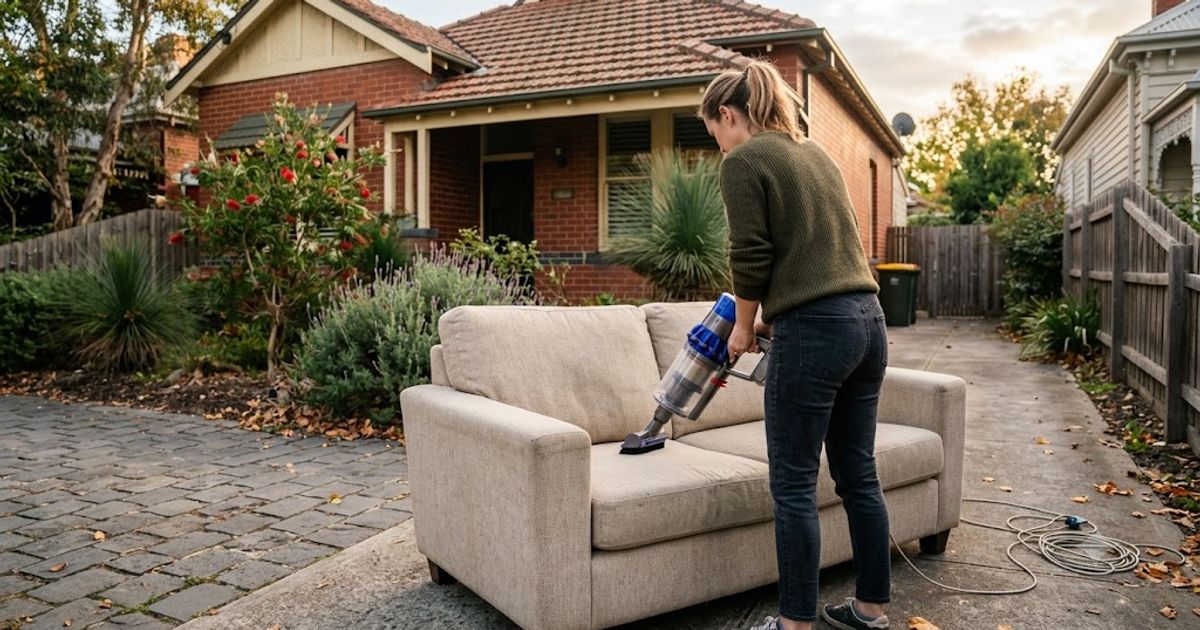
The rule is straightforward: clean everything before it enters your home. Not after it is in the living room. Not after the cushions are on the sofa. Before it comes through the door — ideally outside, in your driveway, courtyard or building foyer. Once a piece is inside and in place, any pests or allergens it was carrying have already entered your home environment.
This guide covers every major furniture category — fabric sofas, leather, timber, metal, bed frames, office chairs — with specific methods, products and the order in which to do each step. Everything recommended in this guide is available at Bunnings, Woolworths, or Chemist Warehouse in Melbourne.
To sanitise secondhand furniture safely, inspect it for pests first, vacuum thoroughly, clean according to the material, deodorise if necessary and disinfect before bringing it indoors. Whether you're cleaning a used couch from Facebook Marketplace, a Gumtree dining table or pre-loved furniture from a local Melbourne seller, the same principles apply — the method just changes by material type.
Quick answer: how to clean and disinfect secondhand furniture before bringing it home
| Material | First step | Key product | What to avoid |
|---|---|---|---|
| Fabric upholstery | Vacuum all surfaces | Upholstery cleaner or white vinegar + water | Soaking the fabric |
| Leather | Wipe with damp cloth | pH-balanced leather cleaner | Bleach, ammonia, acetone |
| Solid timber | Wipe with barely damp cloth | Timber-safe soap or Jarrimber timber cleaner | Excess moisture |
| Metal | Wipe with damp cloth | Mild dish soap + water | Abrasive scrubbers on chrome |
| Glass | Clean with glass cleaner | Standard glass cleaner + microfibre | Paper towels (leave streaks) |
| Bed frame | Vacuum, wipe all surfaces | Disinfectant spray | Soaking timber joints |
| Office chair | Vacuum, wipe hard surfaces | Upholstery cleaner + disinfectant | Soaking mesh |
How long does cleaning secondhand furniture take?
| Furniture | DIY cleaning time |
|---|---|
| Fabric sofa | 2–5 hours plus drying time |
| Leather sofa | 45 minutes |
| Solid timber table or sideboard | 20–30 minutes |
| Office chair | 30 minutes |
| Bed frame | 45 minutes |
| Metal or glass piece | 15–20 minutes |
Before you start — what to check and what to gather
Check the cleaning code first
Most fabric sofas and upholstered chairs have a cleaning code on a tag attached to the underside of the cushion or frame. According to Reperch's guide to cleaning used couches, this code indicates the safest cleaning method:
- W — water-based cleaners safe to use
- S — solvent-based cleaners only (no water)
- WS — either water or solvent-based cleaners
- X — vacuum only, no liquid cleaners
If there is no tag, test any cleaning product on a hidden area first — the back corner of a cushion, the underside of the sofa base — before applying it to visible surfaces.
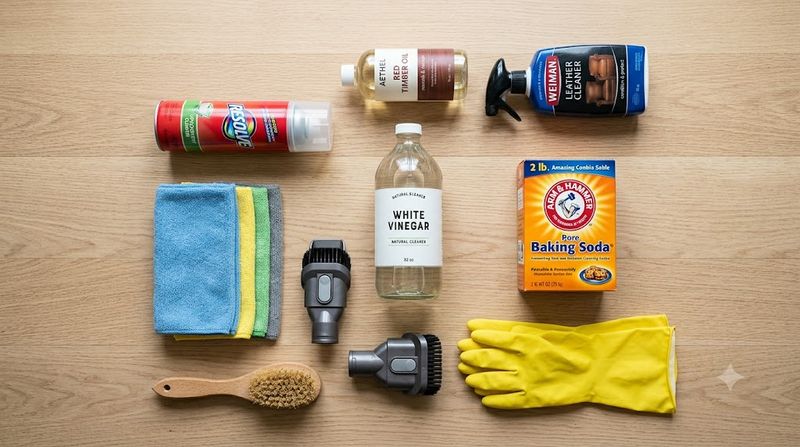
Gather your cleaning kit
Everything on this list is available at Bunnings or Woolworths:
- Vacuum cleaner with upholstery attachment and crevice tool
- Microfibre cloths (several — you will use more than you expect)
- Stiff-bristled brush (for crevices and seams)
- White vinegar
- Mild dish soap
- Baking soda
- Upholstery cleaner spray (Scotchgard Fabric Cleaner or equivalent)
- Timber-safe cleaner (mild soap or Jarrimber Timber Cleaner)
- Leather cleaner and conditioner (if applicable)
- Disinfectant spray (Dettol or equivalent, fabric-safe version)
- Rubber gloves
Do this first — inspect for pests
Before cleaning anything, inspect the piece for bed bugs, fleas and evidence of other pests. Our secondhand furniture bed bug inspection guide covers exactly what to look for. If you find evidence of pests, address that before anything else — cleaning alone will not eliminate an infestation.
Common mistakes when cleaning secondhand furniture — avoid these
- Don't soak upholstery. Excess moisture in fabric creates the ideal conditions for mould growth inside the cushioning. Mist lightly, never saturate.
- Don't mix bleach and vinegar. This combination produces chlorine gas — a toxic and dangerous reaction. Use them separately, never together.
- Don't use vinegar on leather. Vinegar is too acidic for leather and strips the natural oils that keep it supple. It causes permanent damage over time.
- Don't leave timber wet. Dry all timber surfaces immediately after cleaning. Moisture sitting at joints and edges causes swelling, warping and joint failure.
- Don't bring furniture inside before inspecting for pests. Once a piece is in your home, any infestation it carries has already transferred to your environment.
- Don't steam furniture with an S cleaning code. Steam uses water — and S-code upholstery requires solvent-based cleaners only. Steam on S-code fabric causes permanent damage.
How to clean fabric upholstered furniture — sofas and armchairs
Fabric sofas and armchairs are the highest-risk category for hidden allergens, dust mites and odours. They are also the most commonly bought secondhand piece in Melbourne's peer-to-peer market — and the most commonly under-cleaned before being brought home.
In our experience reviewing secondhand furniture listings on Zirkly, fabric sofas and office chairs are the two categories buyers most consistently underestimate when it comes to cleaning requirements. A sofa that looks clean in a well-lit listing photo often has years of accumulated dust and allergens in the seams and cushioning that only become apparent once the piece is in your home.
Step 1 — Vacuum everything
According to Lounge Repair Guys, start with a high-powered vacuum using the upholstery attachment. Go over both sides of every cushion, the back of the sofa, the arms and the underside. Use the crevice tool on every seam, between cushions, and along the piping. Pet hair, dust, crumbs and debris accumulate in these areas in quantities that are genuinely surprising.
Remove all loose cushions and vacuum the surface beneath them — this area is often the dustiest part of the entire sofa.
Step 2 — Treat any stains
For fabric upholstery with a W or WS cleaning code, mix 1 cup of warm water, ¼ cup of white vinegar and 1 tablespoon of mild dish soap in a spray bottle. Apply to the stained area, agitate gently with a soft brush, then blot (do not rub) with a clean microfibre cloth. Work from the outside of the stain toward the centre to avoid spreading it.
For S-code upholstery, use a dry-cleaning solvent. Do not use water.
Step 3 — Deep clean the fabric
Apply an upholstery cleaner (Scotchgard Fabric Cleaner, available at Woolworths and Bunnings, is suitable for most fabric types) according to the product instructions. Work in sections across the full surface. Allow to dry completely before the next step.
For a more thorough sanitisation, a steam cleaner is the most effective tool. According to Pressure and Steam's disinfection guide for used furniture, you need to clean the used furniture outside your home or in your lawn, garage or patio before bringing it inside. Steam at 100°C kills dust mites, bacteria and most allergens on contact. Steam cleaners are available to hire from Kennards, Total Tools and other equipment hire outlets across Melbourne for $40–$80 per day.
Step 4 — Deodorise
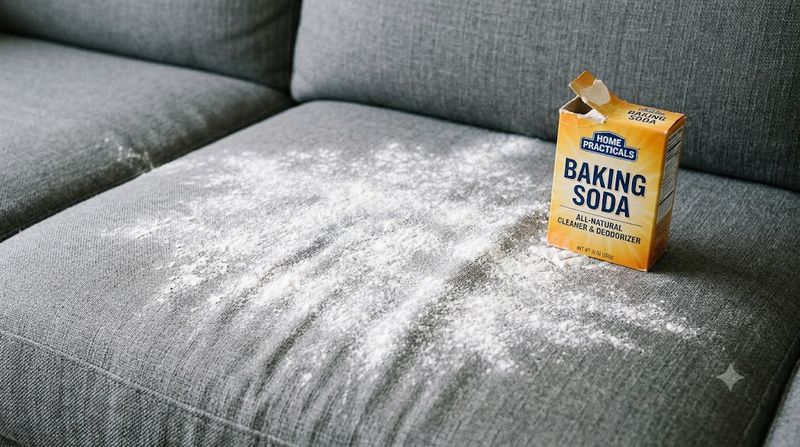
Sprinkle baking soda generously over all fabric surfaces. Leave for a minimum of two hours — overnight is better. Then vacuum off completely. Baking soda absorbs odours at a molecular level rather than masking them. This step makes a visible difference on pieces that have been in storage or in homes with pets.
Step 5 — Disinfect
Apply a fabric-safe disinfectant spray (Dettol Fabric Refresher or equivalent). Do not soak — mist lightly and allow to dry completely in a ventilated area. If possible, leave in sunlight for several hours after spraying. Sunlight is a natural disinfectant and the UV exposure helps reduce dust mite populations.
💡 Zirkly tip: If you are buying a fabric sofa from Zirkly, ask the seller whether the piece has been in a home with pets or smokers before arranging pickup. These are the two factors that most affect how much cleaning effort the piece will require.
How to clean leather and faux leather furniture
Leather sofas and armchairs require a different approach — water-based cleaners can damage leather if overused, and the wrong products strip the natural oils that keep leather supple.
Step 1 — Vacuum
Use the soft brush attachment to vacuum all surfaces, seams and crevices. Never use the bare plastic nozzle directly on leather — it can scratch the surface.
Step 2 — Wipe with a barely damp cloth
Wipe all leather surfaces with a microfibre cloth dampened with distilled water. This removes surface dust and grime without saturating the leather. Do not use excess water — moisture left sitting on leather causes damage over time.
Step 3 — Clean with a pH-balanced leather cleaner
According to Jim's Cleaning's leather care guide, use a product specifically designed for leather care — these are formulated to clean without stripping the natural oils. Apply a small amount to a soft cloth and work in circular motions across the surface. Do not spray directly onto the leather.
For genuine leather, apply a leather conditioner after cleaning to restore suppleness. According to Jim's Cleaning, apply conditioner every two to three months to keep leather flexible and prevent cracking.
What to avoid on leather: bleach, ammonia, acetone, window cleaners, alcohol-based products and household vinegar. According to Houzz AU's leather cleaning guide, warranties can be voided by using the wrong cleaner on leather — and incorrect products can cause permanent discolouration.
For faux leather: the same principles apply, but faux leather is generally more tolerant of water-based cleaning. Avoid abrasive scrubbers which can damage the surface coating.
How to clean solid timber and wooden furniture
Solid timber furniture is generally the easiest category to clean — it is non-porous (particularly when finished or oiled) and does not harbour allergens in the way upholstery does. The key risk is moisture damage from over-wetting.
Step 1 — Dust thoroughly
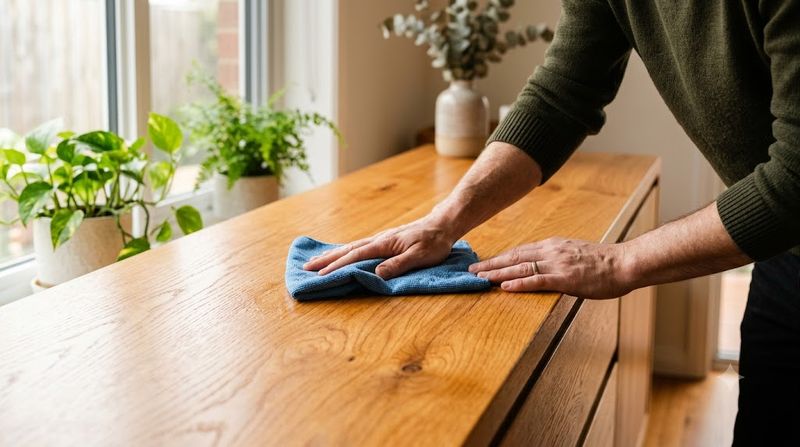
Wipe all surfaces with a dry microfibre cloth to remove loose dust. Pay attention to carved details, joints, drawer runners and the backs of pieces where dust accumulates.
Step 2 — Clean with a barely damp cloth
According to Jarrimber's timber furniture cleaning guide, dampen a cloth with warm water and mild soap — the cloth should be damp, not wet. Wipe in the direction of the grain. Dry immediately with a clean cloth — do not allow moisture to sit on timber surfaces, particularly at joints and edges where water can penetrate and cause swelling.
For sealed or lacquered timber, a mild dish soap solution is sufficient. For oiled timber (which includes most vintage solid timber furniture), use a timber-specific soap that will not strip the existing oil finish.
Step 3 — Treat the surface
For unfinished or oil-finished timber, apply a coat of furniture oil (Feast Watson Scandinavian Oil, available at Bunnings) after cleaning. This restores the surface, enhances the grain, and provides a degree of protection against future moisture and staining. Apply with a clean cloth in the direction of the grain, allow to penetrate for 15–20 minutes, then wipe off the excess.
Step 4 — Clean drawers and interior surfaces
Remove every drawer and clean the interior surfaces separately. Timber drawer interiors accumulate dust, debris and occasionally moisture from years of use. Wipe with a barely damp cloth and dry thoroughly before replacing.
Step 5 — Check and tighten joints
While cleaning, check all joints for looseness. A wobbly joint that was fine when you inspected the piece at the seller's home may have shifted during transport. Apply wood glue to any loose joints, clamp firmly and allow 24 hours to cure before using the piece.
How to clean metal and glass furniture
Metal and glass are the easiest surfaces to clean — they are non-porous, do not absorb odours and are not affected by most standard cleaning products.
Metal furniture (frames, legs, chrome components)
Wipe all metal surfaces with a cloth dampened with mild dish soap and warm water. Dry immediately to prevent water spots and rust on iron or steel components. For chrome, use a dedicated chrome cleaner to restore shine. For surface rust on iron or steel, rub gently with fine steel wool, wipe clean and apply a light coat of WD-40 or metal protector.
Glass surfaces
Apply standard glass cleaner (Windex or equivalent) to a microfibre cloth — never directly onto the glass, which can drip into joints and cause moisture damage. Wipe in one direction to avoid streaks. Dry with a second clean microfibre cloth. Paper towels leave fibres on glass that reduce clarity.
How to clean secondhand mattress bases and bed frames
A note on mattresses: do not buy a secondhand mattress. There is no reliable way to assess hygiene, and the risk of allergen, pest and bacterial contamination is too high to manage with DIY cleaning. Buy new.
Bed frames are a different matter — timber, metal or upholstered, they can be cleaned thoroughly and safely.
- Timber bed frames: follow the solid timber cleaning method above. Pay particular attention to slats, which accumulate dust underneath and should be vacuumed and wiped individually.
- Metal bed frames: wipe all surfaces with a mild soap solution. Check all joints and fixings — transport can loosen bolts and brackets that were secure at inspection.
- Upholstered headboards: treat as fabric upholstery. Vacuum, spot-clean stains, deodorise with baking soda, then disinfect with a fabric-safe spray.
How to clean secondhand office chairs and desks
Office chairs and desks are among the most practical secondhand purchases in Melbourne — particularly for people working from home. They require category-specific cleaning.
Office chairs
Most office chairs have mesh backs, fabric or vinyl seat pads, and hard plastic or metal frames.
- Vacuum the mesh back and fabric seat thoroughly with the upholstery attachment.
- Wipe the plastic frame, armrests and base with a cloth dampened with mild disinfectant.
- For fabric seats, apply an upholstery cleaner and allow to dry.
- For vinyl seats, wipe with a damp cloth and a mild soap solution. Dry immediately.
- Apply a few drops of oil to the chair's gas cylinder and caster wheels if they squeak or are stiff.
Desks
- Wipe all surfaces with a cloth dampened with a mild disinfectant solution.
- Clean drawers inside and out.
- For timber desks, follow the timber cleaning method. For melamine or MDF surfaces, wipe with a barely damp cloth and dry immediately — excess moisture swells MDF edges.
- Check and tighten all bolts, especially on adjustable-height desks.
How to deal with stubborn odours
Some secondhand furniture carries odours that survive standard cleaning. These are the most common and what to do about each.
Pet odour
Pet odour is the most persistent and the hardest to fully eliminate from fabric upholstery. The odour compounds are embedded in the fibres, not just on the surface. The most effective approach: steam clean (kills the bacteria producing the odour), apply baking soda overnight, vacuum thoroughly, then apply an enzyme-based odour eliminator (Biozet Attack or Urine Off, available at Woolworths and pet stores). Repeat if necessary. If the odour persists after two full treatments, the piece may need professional cleaning.
Smoke odour
Smoke odour permeates both fabric and timber. For fabric, the enzyme-based cleaner approach above is the starting point. For timber, wipe all surfaces with a white vinegar and water solution (50:50), allow to dry completely, then apply timber oil. For particularly severe smoke contamination in upholstered furniture, professional steam cleaning is the most reliable solution.
Damp or musty odour
Musty odour indicates moisture exposure — the piece has been in storage or a humid environment. Air the piece outdoors in sunlight for at least a full day. Apply baking soda overnight and vacuum. For timber pieces, ensure the surface is completely dry before applying any oil or treatment. If mould is visible (grey or green spots on fabric or timber), treat with a diluted white vinegar solution before proceeding with the full cleaning process.
When to call a professional
DIY vs professional cleaning — when each makes sense:
| Furniture type | DIY cleaning | Professional cleaning |
|---|---|---|
| Fabric sofa | ✓ For most situations | situationsBest for heavy stains, persistent odour |
| Leather sofa | ✓ For routine cleaning | Best for restoration, cracks, fading |
| Solid timber | ✓ Almost always sufficient | Rarely required |
| Mattress | ✗ — buy new | ✗ — buy new |
| Smoke-damaged sofa | Sometimes — for mild smoke | Recommended for heavy contamination |
| Mould on fabric | ✗ — not recommended | Required |
| Bed bug evidence | ✗ — do not attempt alone | Required |
DIY cleaning handles the vast majority of secondhand furniture cleaning tasks in Melbourne. There are situations where professional cleaning is the better option:
- Persistent pet or smoke odour after two DIY treatments — professional steam extraction removes embedded compounds that surface cleaning cannot reach.
- Visible mould on fabric upholstery — mould in fabric requires professional treatment to eliminate safely and completely.
- Leather in poor condition — cracked, faded or heavily stained leather may need professional restoration rather than DIY cleaning.
- Any evidence of bed bugs — do not attempt to treat an active pest infestation with DIY methods alone.
Professional upholstery cleaning services in Melbourne typically cost $80–$200 for a single sofa, depending on size and condition. Mobile cleaning services will come to your location. For a piece that has been well inspected and is structurally sound, the combined cost of the piece and a professional clean is almost always still significantly below the retail equivalent.
Find quality secondhand furniture worth cleaning in Melbourne
Whether you're buying used furniture in Brunswick, Fitzroy, Richmond, Preston, St Kilda or any other Melbourne suburb, the same cleaning process applies before bringing it home. Save this guide and refer back to it each time you collect a piece.
Every listing on Zirkly is from a local Melbourne seller — inspect in person before you buy, then clean before it comes inside. Browse by suburb — Ormond, Carnegie, Bentleigh and more — or browse all secondhand furniture in Melbourne.
Frequently Asked Questions
How do you clean a secondhand sofa before bringing it home?
Vacuum all surfaces thoroughly including seams and underneath, treat any stains with a white vinegar and mild dish soap solution, apply an upholstery cleaner across all fabric surfaces, deodorise with baking soda left overnight then vacuumed off, and finish with a fabric-safe disinfectant spray. For best results, do all steps outside or in a garage before the sofa enters your home. If the piece has had pets or smokers, consider hiring a steam cleaner for a deeper sanitisation.
What products do you need to clean secondhand furniture in Australia?
Everything you need is available at Bunnings or Woolworths: vacuum with upholstery attachment, microfibre cloths, white vinegar, mild dish soap, baking soda, upholstery cleaner (Scotchgard Fabric Cleaner), Dettol fabric-safe disinfectant, timber-safe cleaner or Feast Watson oil for timber, pH-balanced leather cleaner and conditioner for leather pieces, and glass cleaner for glass surfaces. For stubborn odours, an enzyme-based cleaner (Biozet Attack or Urine Off) is the most effective option.
How do you remove pet smell from secondhand furniture?
Steam clean the entire piece first — this kills the bacteria producing the odour. Apply baking soda generously across all fabric surfaces and leave overnight, then vacuum thoroughly. Apply an enzyme-based odour eliminator (Biozet Attack or Urine Off from Woolworths or pet stores) and allow to fully dry. Repeat if necessary. If odour persists after two full treatments, professional upholstery cleaning with hot water extraction is the most reliable next step. Pet odour in fabric is the hardest smell to fully eliminate with DIY methods.
How do you sanitise secondhand timber furniture?
Wipe all surfaces with a cloth barely damp with a mild soap and water solution, working in the direction of the grain. Dry immediately — moisture left on timber causes damage. For oiled timber, apply a coat of Feast Watson Scandinavian Oil after cleaning. According to Jarrimber's timber furniture guide, the key rule is to use as little moisture as possible and dry immediately. Clean drawers separately, check all joints for looseness, and tighten any that have shifted during transport.
Can you clean secondhand leather furniture yourself?
Yes, with the right products. Use a pH-balanced leather cleaner applied with a soft cloth in circular motions — do not spray directly onto leather. Avoid bleach, ammonia, acetone, alcohol-based products and household vinegar, all of which strip leather's natural oils. After cleaning, apply a leather conditioner to restore suppleness. According to Jim's Cleaning Australia, genuine leather should be conditioned every two to three months to prevent cracking. If the leather is severely cracked, faded or stained, professional restoration is worth considering.
Should you buy a secondhand mattress?
No. There is no reliable way to assess the hygiene of a used mattress, and the risks — allergens, dust mites, bacteria, possible pest infestation — are too significant to manage with DIY cleaning. Always buy a new mattress. Bed frames, bases, headboards and all other bedroom furniture can be cleaned thoroughly and safely secondhand.
How much does professional upholstery cleaning cost in Melbourne?
Professional upholstery cleaning for a single sofa in Melbourne typically costs $80–$200 depending on size, condition and the cleaning method used. Mobile services will come to your location. Professional cleaning is worth considering for pieces with persistent pet or smoke odour after DIY treatment, visible mould on fabric, or leather in poor condition. Even with the added professional cleaning cost, a quality secondhand sofa cleaned professionally is almost always less expensive than a new equivalent.
Can I use vinegar on secondhand furniture?
White vinegar diluted with water is effective on fabric upholstery (W and WS cleaning codes), timber surfaces and metal. Do not use vinegar on leather — it is too acidic and strips the natural oils, causing permanent damage. Do not mix vinegar with bleach — the combination produces toxic chlorine gas. For timber, use a 50:50 vinegar and water solution for smoke or musty odours, then dry immediately.
Can I use bleach to disinfect secondhand furniture?
Avoid bleach on most secondhand furniture. It damages fabric fibres, causes permanent discolouration on timber and leather, and is dangerous when mixed with vinegar or ammonia. For fabric upholstery, a fabric-safe disinfectant spray (Dettol Fabric Refresher) is the safer and more effective option. For hard surfaces like metal and glass, a mild disinfectant solution is sufficient.
How long should I leave baking soda on secondhand furniture?
A minimum of two hours, but overnight is significantly more effective. Baking soda absorbs odours at a molecular level — the longer it sits, the more odour it draws out of the fabric. After leaving overnight, vacuum thoroughly using the upholstery attachment to remove all residue before using the piece.
Is steam cleaning worth it for secondhand furniture?
Yes — for fabric upholstery, steam cleaning is the most thorough DIY sanitisation method available. Steam at 100°C kills dust mites, bacteria and most allergens on contact. It is especially worth doing for sofas that have been in homes with pets, smokers or allergy sufferers. Check the cleaning code first — do not steam S-code upholstery. Steam cleaners are available to hire across Melbourne for $40–$80 per day.
Can secondhand furniture carry bed bugs?
Yes — particularly upholstered pieces like sofas, armchairs and bed frames. Bed bug infestations in Australia have grown significantly in recent years. Inspect any upholstered secondhand piece carefully before bringing it home. Our bed bug inspection guide covers exactly what to look for. If you find evidence of bed bugs, do not bring the piece inside — contact a licensed pest control operator.
Adam
Zirkly Team
Adam focuses on turning complex secondhand furniture topics into practical, actionable advice for Melbourne buyers and sellers. He writes about used furniture pricing, buying guides, marketplace safety, and buying decisions, with a focus on the details that make buying and selling secondhand furniture clearer and more reliable. His guides are built for buyers and sellers who want clear answers, not jargon.