How to Fix a Sticking Drawer: Wooden & Metal Slides
Learn how to fix a sticking drawer on wooden or metal slides. Find the cause and use wax, light sanding or dry lubricant to get drawers sliding smoothly.
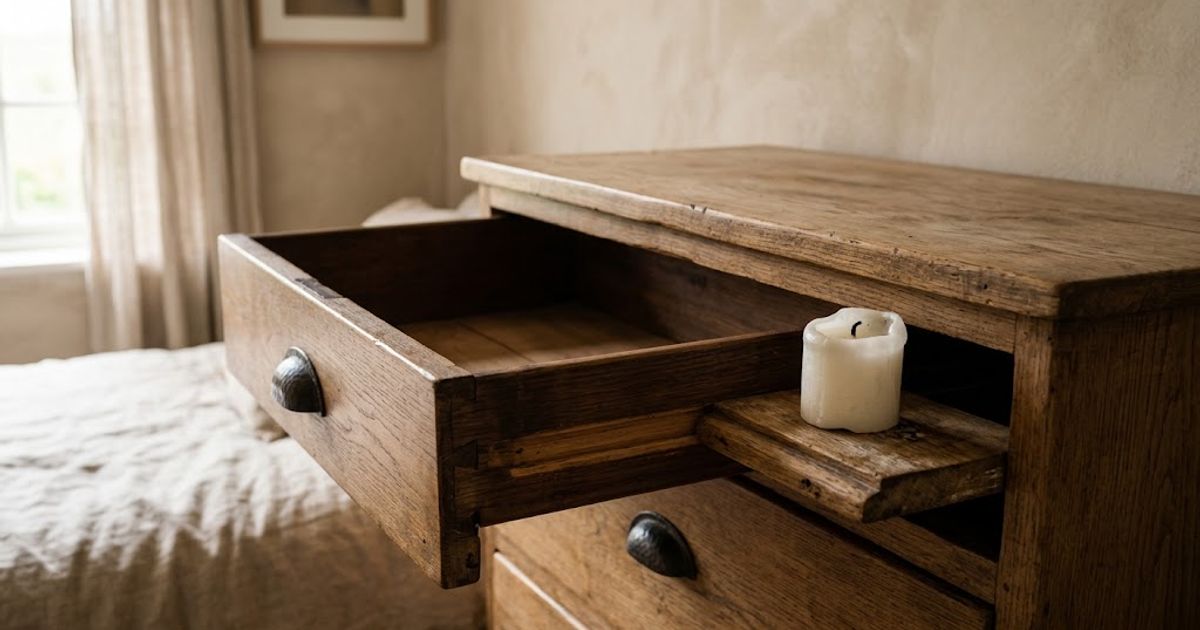
A sticking drawer is a common problem with older furniture, but learning how to fix a sticking drawer is usually straightforward. The cause is often swollen wood, built-up dust, dry runners or misaligned slides. Most wooden drawers need only candle wax or light sanding, while metal slides may need cleaning, lubrication or replacement. This guide covers both, how to work out which problem you have, and when a drawer needs more than a quick fix.
It is also a useful check if you are buying a chest of drawers or bedside table secondhand, because a drawer that sticks is often a drawer you can fix.
Quick summary: Take the drawer out, find where it rubs and clean the runners. On wooden drawers, rub paraffin wax or a candle over every surface that touches, and sand tight spots only if wax is not enough. On metal or roller slides, wipe off old grease and dust and use a dry silicone spray. Go slowly, because sanded wood cannot be put back. Drawers that are split, warped or need re-waxing all the time may need replacing or a restorer.
Why Drawers Stick
According to Family Handyman, humidity is a common culprit: moisture makes the wood fibres swell, so a drawer that once slid easily starts to rub on its slides. The same article names two other causes, older drawers warping as the wood ages and dust and dirt building up on the slides.
Other causes to check before you reach for sandpaper: something fallen behind or under the drawer, loose or missing slide screws, runners that have shifted or come loose so the drawer catches or sits unevenly, worn rollers or bearings, a split or dropped drawer bottom, and bowed sides. A piece moved from a dry room into a damp one can also start sticking.
Find Out Why It Is Sticking
- Empty the drawer and take it out. Pull it out as far as it goes. If it runs on rollers, lift the front edge to release them from the guides. On a tall piece, never open several drawers at once, because it can tip. Our guide to secondhand chests of drawers covers anchoring.
- Check behind and underneath. Look for a stray pen, coin or loose piece of wood.
- Look for rub marks. Shiny, scuffed or polished patches on the drawer sides, bottom edges and runners show where wood is rubbing.
- Notice where it sticks. A rough rule of thumb: sticking in one spot points to an obstruction or something out of line, while sticking along the whole run points to swelling, dirt or dry runners.
- Check the drawer itself. Look for a split bottom, bowed sides or loose joints.
If the piece is old and painted, check the paint before you sand. Old paint can contain lead, so read our guide to testing lead paint on vintage furniture first.
How to Fix a Sticking Wooden Drawer
This is for drawers that slide wood on wood. A Bunnings Workshop team member describes rubbing a candle along the contact points to leave a wax deposit as the traditional way to lubricate timber drawer runners. Work through these steps in order and stop as soon as the drawer moves freely.
- Clean the runners. Wipe old wax, dust and grime from the runners, the drawer's bottom edges and sides, and the frame rails inside the piece.
- Wax every contact surface. Family Handyman recommends paraffin wax, with a plain candle as a stand-in. Rub it along the drawer bottom and the runners where they meet, then slide the drawer in and out a few times. Wax removes nothing, so try it before sanding.
- Sand only where it rubs. If wax does not fix it, sand the rub marks lightly. Family Handyman suggests starting with a medium grit of around 180 to 220 on the drawer bottom, slides, runners or centre rails, then wiping the dust off with a dry cloth. Sand a little, test the fit and repeat. Wear a dust mask, and stop as soon as the drawer moves freely, because a drawer that is too loose is a new problem.
- Wax again. Freshly sanded wood is bare, so rub wax over it before the drawer goes back in.
- Try a longer-lasting option if wax keeps wearing off. The same article suggests a dry PTFE lubricant spray, which does not leave a greasy residue (check the label says it is safe for the material you are spraying), or self-adhesive nylon drawer slide tape. Tape will not stick to wax or dirt, so sand both surfaces lightly and vacuum first.
Try one approach at a time so you know what worked.
How to Fix a Sticking Metal or Roller Drawer
Metal slides and roller drawers stick for different reasons: dirt, dried-out lubricant, loose fixings or worn parts.
- Remove the drawer. Family Handyman's stuck drawer guide says to pull the drawer fully out, lift the front edge and uncouple the rollers from the guides.
- Clean the rollers and guides. Wipe off old lubricant and dust. Old grease collects dirt and can be the reason the drawer drags.
- Lubricate lightly. The same guide recommends a drying-type silicone spray that does not attract dust, and says to wipe off the excess before refitting the drawer. Check the product label says it is safe on plastic rollers and other parts first.
- Check the fixings. Tighten loose screws and make sure the slides sit level and parallel on both sides. A slide that is bent or out of line will keep catching.
- Replace worn slides. The Bunnings Workshop team member above notes that if the drawer has slides, the bearings or rollers might have worn out and need replacing. Measure the length and type of the old slides so the new ones match.
Lubricant does not cure an obstruction or a misaligned slide, so sort those out first.
When It Is More Than a Quick Fix
- Split, warped or constantly sticking. Family Handyman says wooden drawers that are split, warped or need the fixes above reapplied all the time should be replaced.
- Swollen MDF or particleboard. Board that has swollen from water often does not shrink back, so waxing will not help.
- Veneer. Veneer is thin, and it is easy to sand through it. If the veneer is lifting or chipped, a restorer is a safer bet than sandpaper.
- Loose joints or a dropped bottom. These need regluing or support, which is a different repair from a sticking runner.
Never force a stuck drawer. Pulling hard can break the runners or stops.
Check the Drawers Before You Buy Secondhand
A sticking drawer does not necessarily mean a secondhand chest of drawers is faulty beyond repair. However, check whether it needs simple lubrication or a more substantial repair before agreeing on a price. When you inspect a chest of drawers or bedside table:
- Open and close every drawer all the way, slowly.
- Look for rub marks on the sides and bottom edges.
- Check the drawer bottoms for splits.
- Look at the frame inside with a torch, and ask the seller if anything has been waxed or sanded.
If you are buying through Zirkly, you can ask the seller in chat for a short video of each drawer opening and closing. For a full checklist, see our guide to secondhand chests of drawers and tallboys in Melbourne, and you can browse secondhand furniture in Melbourne once you know what to look for. A drawer that needs wax or a light sand is an easy fix, while split or warped drawers are a good reason to offer less.
Keep Drawers Running Smoothly
- Wipe dust from the runners and frame rails now and then.
- Re-wax wooden runners when the drawer starts to drag.
- Avoid overloading drawers, which wears the runners and bends the slides.
Sell Your Chest of Drawers in Melbourne
Fixed up a chest of drawers or bedside table you no longer need? List it on Zirkly and sell it to a Melbourne buyer, and mention the fix in your listing so buyers know how it runs.
Frequently Asked Questions
Why is my drawer sticking?
Usually because wood has swollen in humid weather, the runners are dirty or dry, or something is blocking the drawer. Older wooden drawers can also warp, and metal slides can loosen or wear out.
What can I rub on wooden drawer runners to stop them sticking?
Paraffin wax is the usual choice, and a plain candle also works. Clean the runners first, rub it over every surface that touches, and re-wax when the drawer starts to drag.
Will a sticking drawer fix itself when the weather dries out?
If humidity is the cause, the wood may ease off as the air dries. Dirt, warping, worn slides and misaligned runners will not fix themselves.
How much should I sand off a sticking drawer?
As little as possible. Sand only the rub marks, then test the fit and repeat. Stop once the drawer moves freely, because removed wood cannot be put back.
How do I fix a sticking drawer with metal slides?
Take the drawer out, wipe the rollers and guides clean and apply a dry silicone spray, then wipe off the excess. Tighten loose screws and check the slides are level. If bearings or rollers are worn, replace the slides with ones of the same length and type.
Is it safe to sand an old painted drawer?
Not until you know what is in the paint. Old paint can contain lead, so test it first and avoid sanding if the result is positive. Our lead paint guide explains how to test. If you do sand, wear a dust mask.
When should I replace a drawer or call a restorer?
Consider it when the drawer is split or warped, needs waxing again and again, or has loose joints, a dropped bottom or lifting veneer. Swollen MDF or particleboard often will not shrink back either.
How do I check drawers before buying a secondhand chest of drawers?
Open and close every drawer fully and slowly, look for rub marks and split bottoms, and check the frame with a torch. If you are buying online, ask the seller for a short video of each drawer moving.
Can I use WD-40 on wooden drawer runners?
The sources we relied on recommend wax for wooden runners and a dry-type spray for metal slides, because dry products do not leave a greasy residue that collects dust. For wooden runners, stick with paraffin wax or a candle.
Adam
Zirkly Team
Adam turns complex secondhand furniture topics into practical advice for Melbourne buyers and sellers — pricing, safety and the decisions that make buying and selling used furniture clearer.