How to Repair Cane Furniture: Cane and Rattan Restoration
How to tell pressed cane from hand-woven seats, tighten a stretched cane seat, replace webbing in a groove, and know when to hand the job to a specialist.
Quick summary: To repair cane furniture, first work out how the seat is made. Pressed cane, where woven webbing sits in a groove, is a manageable DIY job with the right kit. Hand-woven seats, broken frames and unravelling wrapped joints are slower work that often suits a specialist. Water may tighten a seat that has only stretched, but it won’t mend broken strands or brittle cane.
Cane and rattan pieces turn up regularly on Melbourne’s secondhand market. Many arrive with a sagging seat, a loose wrap or a tired finish. This guide covers what you can restore at home, what to check before you buy, and where to source cane in Melbourne.
Cane, Rattan or Synthetic: What Are You Repairing?
Cane is the outer skin of the rattan plant, cut into strips and woven or wrapped. Look at how your piece is built, because the construction decides the repair:
- Pressed cane: a woven mesh sheet sitting in a groove around the seat opening, held by a thin round strip pressed into the groove. This is the easiest seat to replace.
- Hand-caned: individual strands laced through holes drilled around the frame.
- Wrapped or bound cane: thin strips wound around legs, arms or joints.
- Synthetic: plastic strands made to look like cane, common on outdoor sets.
Natural cane is an indoor material. According to Wicker Works, a South Australian cane supplier, sun bakes the fibres dry and brittle, and moisture can loosen joints and warp frames. It also says natural wicker furniture was made for indoor use.
What You Can Fix at Home (and What to Leave)
Reasonable DIY jobs:
- Cleaning a dusty or grimy weave
- Tightening webbing that has stretched
- Replacing a pressed cane seat with a kit
Think twice, or get a quote first:
- Hand-woven seats
- Cracked or loose frame joints
- Wrapped bindings coming undone across a whole piece
- Anything valuable or antique
For those, send a specialist cane and wicker repairer a few clear photos and ask for a quote before you buy or commit.
How to Fix a Sagging Cane Seat
Try water first, but only if the cane is intact. Wicker Works says webbing is fitted wet and dries tight. It adds that humidity or rain can make it loosen and bulge slightly, and that it will eventually dry tight again. If the webbing stays loose and stretched, it suggests applying water and letting it dry naturally. If that doesn’t work, the webbing needs replacing.
Our approach is to dampen the webbing lightly rather than soaking it, keeping water off glued frame joints. Let it dry naturally, away from heaters and hot sun.
Water has limits:
- It may tighten stretched natural cane. It won’t repair broken or split strands, and it won’t restore dry, brittle fibres.
- Changes in humidity can loosen the weave again.
- Not every loose seat is a stretched seat. Check for breaks before you start.
Snapped strands, splits or brittle cane mean the seat needs replacing.
How to Replace a Pressed Cane Seat
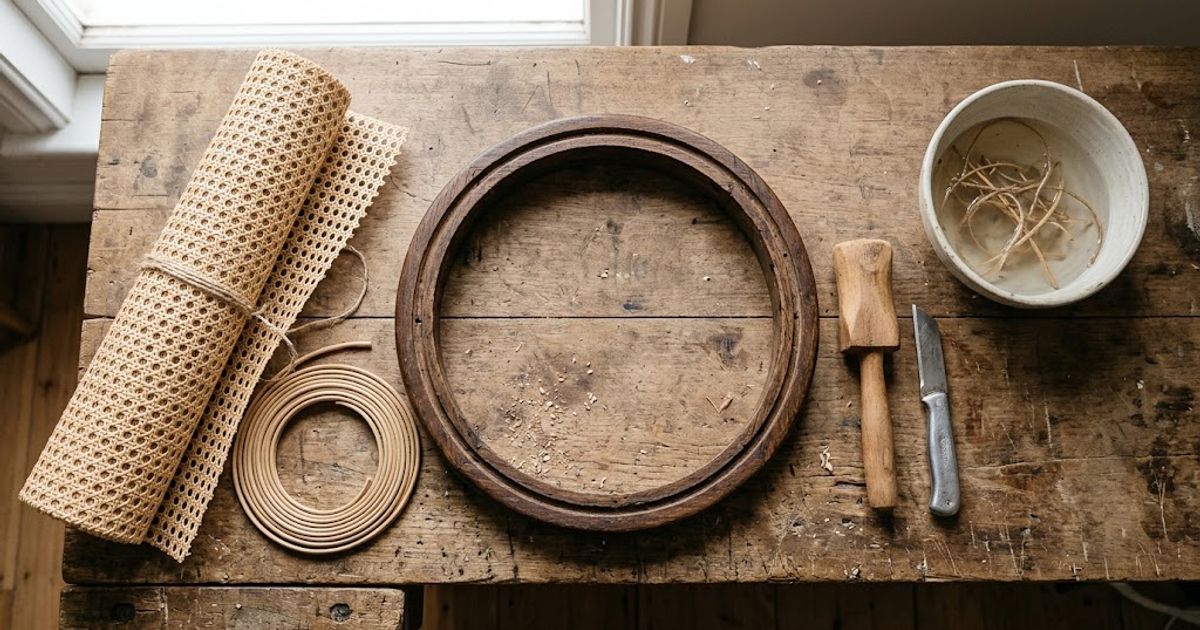
Before you order: measure the width of the groove. Wicker Works notes that not all chair seats have the same groove size, and its pre-woven kit page gives a general rule: a 5 mm groove takes 4 mm spline, and a 6 mm groove takes 5 mm spline. It also advises ordering about 50 mm of overhang. Its kit includes webbing, round-core spline, an instruction sheet and a wooden fitting tool.
Steps (the order shown in Wicker Works’ fitting photos, so follow your kit’s instructions if they differ):
- Photograph the seat, then take out the old webbing and spline.
- Wet the new webbing as your kit instructs. Wicker Works says webbing must be wet when fitted.
- Ease the webbing into the groove with a smooth, rounded tool.
- Trim the excess with a sharp utility knife, cutting away from your hands.
- Apply a little PVA wood glue in the groove.
- Tap the spline into the groove and wipe away excess glue with a damp cloth.
- Let it dry naturally. The webbing dries taut.
What About Hand-Caned Seats?
A hand-caned seat has no sheet of webbing and no spline. Look around the seat frame for a row of small holes drilled through the timber, with individual strands passing through them. Many strands run across the seat in both directions, so the pattern is built up strand by strand rather than laid in as one piece.
That is why a break in a hand-caned seat is harder to fix than one in pressed cane. A broken strand can’t simply be replaced with a patch. The pattern depends on strands passing through the holes in the right order, so a failed seat usually means re-weaving the whole thing. Our advice is to treat a hand-caned seat with broken strands as a specialist job, and to ask for a quote from a cane and wicker repairer before you buy. If the strands are intact and only slack, the water method above is worth trying first.
How to Clean Cane and Rattan Safely
Wicker Works recommends dusting regularly with a soft cloth or brush, or vacuuming with the brush attachment, and using a soft toothbrush for tight spots. Wipe over with a damp cloth now and then. For a badly soiled piece it suggests a mild soap solution, then rinse and dry. For synthetic (“all weather”) wicker, use mild soap and water, rinse well and don’t store it upside down, because water can pool. If you’re bringing a piece home from a seller, our guide to cleaning secondhand furniture before you bring it home covers the wider checks.
What to Check Before You Buy Cane or Rattan Secondhand
- Sag or break: a stretched seat can be a fair point for negotiating. Broken strands or splits mean a replacement job.
- The underside: check the back of the weave and the frame, not only the top.
- Brittleness: dry, cracking fibres suggest sun damage, which can’t be reversed with water.
- Smell and marks: natural rattan kept damp for long periods can go mouldy, according to Wicker Works. A musty smell or visible mould is a reason to walk away or reprice.
- Wobble: moisture can loosen joints and warp frames, so rock the piece and check the legs and arms.
Browse secondhand furniture in Melbourne on Zirkly, and message the seller to ask for a photo of the underside before you travel.
Where to Find Cane Supplies in Melbourne
Direct Factory Furniture lists natural and plastic rattan cane webbing and has a store in Knoxfield. Wicker Works takes orders through an online form and confirms them by email before payment. These are examples, not endorsements, so check stock and groove sizes before ordering.
If the piece will live outside, remember that natural cane is generally an indoor material. Synthetic wicker is the better fit for outdoor use.
Deciding whether to fix a piece before you sell it? Our guide to upcycling secondhand furniture and adding value before you sell covers which repairs are worth the effort.
Decided a cane or rattan piece isn’t worth repairing? Start selling on Zirkly, describe the sag or damage honestly, and let a buyer who wants the project take it on.
Frequently Asked Questions
Can I repair cane furniture myself?
Pressed cane seats are a reasonable DIY job with a kit and a measured groove. Hand-woven seats, broken frames and large areas of loose binding are slower and often suit a specialist.
How do I fix a sagging cane chair seat?
If the cane is intact, dampen the webbing with water and let it dry naturally. Natural webbing is fitted wet and dries tight. This only helps stretched webbing, and humidity can loosen it again. Broken strands or brittle cane need replacing.
How do I tell if a cane seat is hand-woven?
Look for small holes drilled around the seat frame with individual strands passing through them. Pressed cane instead has a sheet of mesh sitting in a groove, held by a thin strip.
What is the difference between cane, rattan and wicker?
Rattan is the plant. Cane is made from its outer skin. Wicker is a general term for woven furniture rather than a single material.
Where can I buy cane webbing in Melbourne?
Direct Factory Furniture lists natural and plastic cane webbing and has a Knoxfield store. Other Australian suppliers sell by mail order. Check stock first.
What size spline do I need for a cane seat?
Measure the groove. One Australian supplier gives a general rule of 4 mm spline for a 5 mm groove and 5 mm spline for a 6 mm groove. Grooves vary, so always measure.
Can I use natural cane furniture outdoors?
Natural cane and wicker are generally better kept indoors or under cover. Sun can dry the fibres, and prolonged dampness can cause mould. Synthetic wicker suits outdoor use better.
Is it worth buying a cane chair with a sagging seat?
It can be, if the strands are intact and the frame is solid, because a stretched seat may tighten with water. A seat with broken strands needs a replacement kit or a specialist, so factor that into your price.
Erica
Zirkly Team
Erica covers interior styling, furniture trends and the vintage pieces worth knowing about, helping Melbourne buyers and sellers make secondhand furniture feel like a deliberate choice rather than a compromise.