How to Fix a Wobbly Wooden Chair: Loose Joint Repair
Learn how to fix a wobbly chair with loose joints: find the loose joint, take it apart, clean off the old glue, reglue and clamp it square. Plus what to avoid and when to call a restorer.
Quick summary: To fix a wobbly chair with loose joints, find the joint that moves, take it apart, clean the old glue off both surfaces, reglue with PVA wood glue and clamp the chair square until it cures. Squirting glue into a joint that is still assembled is the most common mistake, because new glue doesn’t bond well to old glue. If the joints are tight but the chair still rocks, check for uneven legs or a missing glider instead.
A wobbly wooden chair is often caused by a loose joint where a leg, rung or rail connects to the frame. The original glue may have failed, or the wood may have moved as humidity changed. In many cases, the chair can be repaired rather than replaced.
The key is to do the repair properly: separate the loose joint, remove the old glue, apply fresh wood glue and clamp the frame square. This guide covers how to do that, which shortcuts to avoid, and when to call a professional. It also covers what to check if you’re buying or selling a secondhand chair that wobbles.
Why Does a Chair Get Wobbly?
According to Fibrenew, a furniture restoration company, the usual causes are deteriorated wood glue, loose fasteners, worn joints, seasonal expansion and contraction as humidity changes, and years of everyday use. A frame that keeps loosening also shifts load unevenly, which raises the risk of cracked wood or a broken joint.
Popular Woodworking adds that most chairs made since the mid-19th century are doweled. Doweled joints have less side-grain gluing surface than mortise-and-tenon joints, so they don’t hold up as well. That is why a wobbly dining chair is such a common find, and often a fixable one.
How to Find Where the Wobble Is Coming From
- Test it on a flat, hard floor. A rug can hide the problem. Press down on opposite corners of the seat. If it rocks without any joint moving, a leg may be shorter or a glider missing.
- Rock the seat and watch each joint. If wood is moving against wood, you’ve found a loose joint.
- Flip it over and check the corner blocks and screws. Tighten any that are loose. Fibrenew notes that failed corner-block glue or backed-out screws can let the whole seat frame skew under weight.
Mark each loose joint. Fibrenew suggests leaving solid joints alone, since an intact side gives you a square reference when you rebuild the rest.
Why You Shouldn’t Just Squirt Glue Into the Joint
It’s tempting to avoid taking the chair apart. Fibrenew calls injecting new glue into an assembled, loose joint the most common mistake, because new glue won’t bond effectively to old, dried glue. Popular Woodworking’s Bob Flexner makes the same point about syringes, drilled injection holes and “swelling” products. The adhesive bonds only to old glue that has already failed, and swollen wood compresses again with humidity changes.
Superglue isn’t the answer either. Fibrenew says it cures too brittle for wood joints and seals the wood pores, which makes a later proper repair harder.
Screws, nails and brackets don’t fix a loose joint. Flexner says it’s the glue that holds chair joints tight. Added metal can cause splits and makes regluing harder later. Tightening the existing corner-block screws, as in the check above, is fine.
What You’ll Need
- A rubber or dead-blow mallet
- Painter’s tape and a pencil
- A narrow chisel or utility knife
- Sandpaper
- PVA wood glue and a small brush
- Clamps (a strap clamp suits chairs)
- A damp cloth
- Spare spiral-grooved dowels, if your chair is doweled
For glue, Fibrenew recommends PVA or polyurethane wood glue. The Australian brand Selleys describes Aquadhere Interior as a PVA made for interior wood repairs, with interior furniture repair and restoration among its listed uses. Flexner favours white glue for the extra working time it gives you.
Our advice: Pick a standard PVA over a quick-set one. Selleys says Aquadhere Quick Set needs no clamping where joints aren’t under stress, and a chair joint is under stress every time someone sits on it.
How to Fix a Wobbly Chair: Step by Step
1. Take the seat off. Undo the screws underneath and lift out a drop-in seat. Remove the corner blocks (screws first, then tap them free). If the seat fabric is worn, this is the easy moment to recover it. Our dining chair seat reupholstery guide covers it.
2. Label every part. Use tape and a pencil so each rail, rung and leg goes back where it came from.
3. Knock apart the loose joints only. Hold the part a fraction above a soft surface and strike close to the joint with a soft mallet. Hitting far from the joint risks breaking something.
If a joint resists, work out what the old glue is before reaching for a solvent. Flexner describes old hide glue, common on antique chairs, as glue that turns sticky when rubbed with water. For that glue only, he says denatured alcohol wicked in with a syringe can loosen it, though it may turn the finish white. He says vinegar can soften white and yellow glue if it reaches the glue. Test any solvent on a hidden spot first and follow the product’s safety instructions. Fibrenew adds that a hair dryer or warm damp towel can soften old hide glue. Modern glues such as epoxy or polyurethane may not release at all. Our advice: if a joint won’t give and isn’t loose, leave it alone. Forcing it risks a split.
4. Clean off the old glue. Flexner says hide glue washes off in hot water and white or yellow glue can be soaked off. Other glues need scraping. Remove as little wood as possible, because tight wood-to-wood contact is what makes the joint hold. Fibrenew adds two tips: scrape down to bare wood without shaving the pin thinner, and lightly cross-hatch the pin so the new glue has more to grip.
If the chair is old and painted, test the paint for lead before you scrape or sand. Our lead paint testing guide explains how.
5. Dry-fit and fix any gaps. Glue isn’t a gap filler, as Fibrenew points out. For a pin that has shrunk, it describes wrapping a thin wood veneer strip around it and sanding to a firm fit. For doweled joints, Flexner often replaces the dowels, and says to replace them all if any have separated from the rails. He rates spiral-grooved dowels best. If the holes are worn or the fit is still sloppy, a restorer is the better call.
6. Glue and assemble. Coat both surfaces, including the sides of holes and dowels. Flexner’s order is the back first if it needs it, then the front legs and rail, then the side rails and stretchers. Wipe squeeze-out straight away with a damp cloth, since dried PVA is hard to remove without marking the finish.
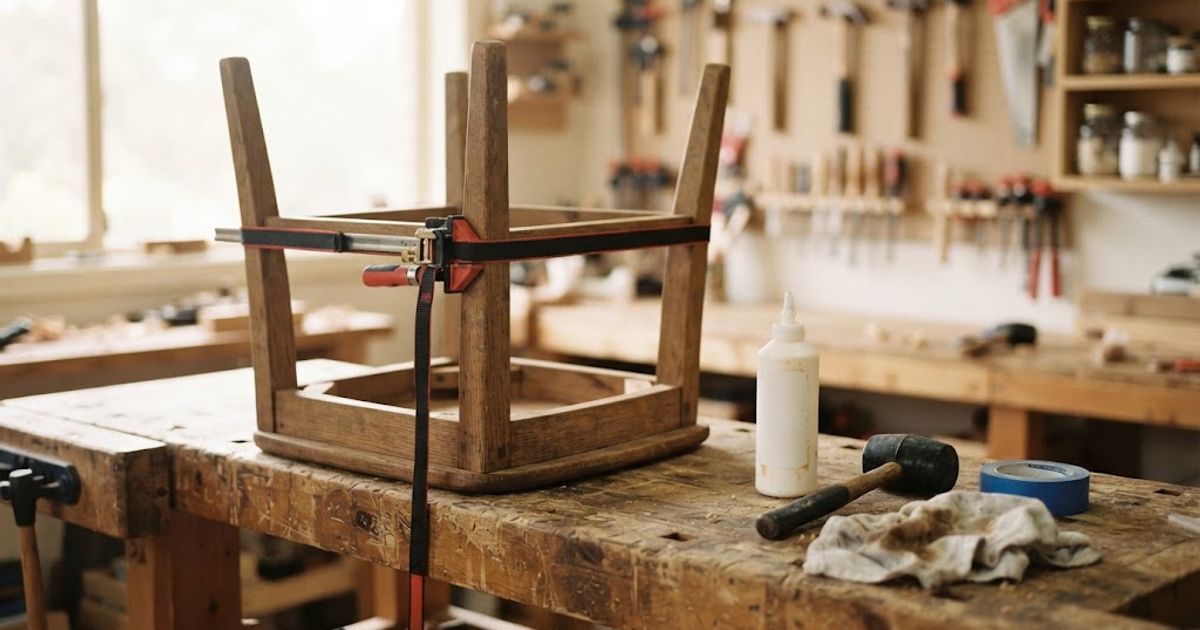
7. Clamp it square and let it cure. A strap clamp pulls all four legs in evenly. Use cardboard or soft pads under the clamp jaws. Measure the two diagonals between opposite legs: when they match, the frame is square. Both sources also say to check that all four legs touch a flat surface. For standard wood glues, Fibrenew suggests at least two to three hours in the clamps and a full 24 hours before the chair takes weight. Check your glue’s label for its own times.
When to Get a Professional
Fibrenew says a leg split along the grain can be glued and clamped. A split across the grain may need internal reinforcement or replacement. Cracked rails, badly worn or crushed holes and joints you can’t separate are also jobs for a furniture restorer. So is any chair that’s valuable, labelled by a maker or genuinely antique. Our advice: don’t sit on a repaired chair that still moves. A chair that fails under someone’s weight is a bigger problem than the wobble.
If the Joints Are Tight but the Chair Still Rocks
Fibrenew lists the usual causes: one leg worn shorter, a missing glider, a warped frame, or a frame clamped out of square in an earlier repair. A leveling glide or a thin spacer under the short leg usually solves it. To keep a repair holding, lift chairs rather than dragging them, and avoid big swings in humidity, which keep the wood moving.
Buying or Selling a Wobbly Secondhand Chair
Buying: Sit on it, rock it, then turn it over and check the corner blocks. Look for splits and cracked wood. A loose joint is often a reglue job, but split wood or crushed holes are bigger repairs. Ask the seller what’s loose, and test every chair in a set. When you browse secondhand furniture in Melbourne, message the seller about wobbles before you travel for a pickup. It’s also worth allowing for your time, glue and clamps when you weigh up the price.
Selling: Either fix the chair before you list it or describe the problem plainly. Say which joint is loose, whether you’ve reglued it, and show the underside in the photos. Buyers can handle a known, fixable fault far better than a surprise at pickup.
Fixed a Chair, or Got One You’re Done With?
If you’ve repaired a chair and have a spare, or a set that’s ready for a new home, list it on Zirkly and start selling in Melbourne.
Frequently Asked Questions
How do you fix a wobbly wooden chair?
Find the joint that moves, then take it apart. Clean the old glue off both surfaces, reglue with PVA wood glue and clamp the chair square. Leave it clamped for at least a few hours and keep weight off it for 24 hours.
Can you fix a wobbly chair without taking it apart?
Tightening loose screws or corner blocks can help. For a joint where the glue has failed, injecting new glue usually doesn’t last. The sources used here say new glue bonds poorly to old glue, and the reliable fix is to separate, clean, reglue and clamp.
What is the best glue for a wobbly chair?
A PVA wood glue is a sound choice, and Fibrenew also lists polyurethane wood glue. Selleys describes Aquadhere Interior as a PVA for interior furniture repairs. Choose a standard-setting glue rather than a quick-set one, so you have time to assemble and clamp.
Can I use superglue to fix a wobbly chair?
It’s not recommended. Fibrenew says superglue cures too brittle for wood joints and seals the wood pores, which makes a later proper repair harder.
How long should I clamp a chair after gluing?
Fibrenew suggests at least two to three hours for standard wood glues and a full 24 hours before the chair takes weight. Check the label on your glue for its own times.
What if the joint is still loose after cleaning off the old glue?
The wood may have shrunk. Glue won’t fill a gap, so build up the pin first with a thin wood veneer wrap, or replace the dowel if the joint is doweled. If the holes are worn or the fit stays sloppy, ask a furniture restorer.
Why does my chair rock when the joints feel tight?
Look for one leg that’s worn shorter, a missing glider, a warped frame or a frame clamped out of square in an earlier repair. A leveling glide or thin spacer under the short leg often fixes it.
Is a wobbly secondhand chair worth buying?
It can be, if the wobble is a loose joint and the wood isn’t split or crushed. Check the whole chair, ask the seller what’s loose and allow for your time and materials in the price.
Adam
Zirkly Team
Adam turns complex secondhand furniture topics into practical advice for Melbourne buyers and sellers — pricing, safety and the decisions that make buying and selling used furniture clearer.