Lead Paint on Vintage Furniture in Australia: How to Test and What to Do
Old painted furniture can contain lead, and the risk is dust and chips. Learn how to spot risky pieces, test paint, and handle or remove it safely.
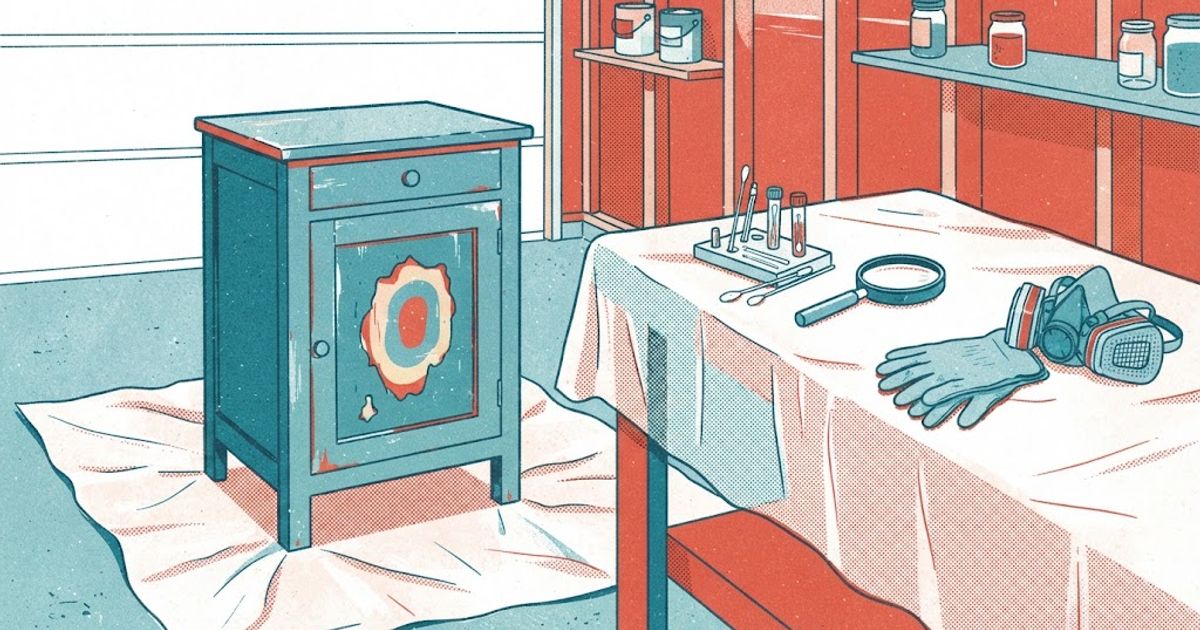
Quick summary Lead paint on vintage furniture is a real but manageable risk. It matters most when old paint is flaking, chewed by a child or sanded. Check older painted pieces before you buy, test if you're unsure, treat a negative swab as "not proven", never dry sand or heat-strip a suspect piece, and use a professional for stripping.
Last reviewed: October 2026. General information, not medical advice.
Buying a painted vintage chest, chair or cot is a good way to save money and keep furniture in use, but old paint can contain lead. Paint made before the late 1990s could legally contain far more lead than paint today, so check before you sand it, strip it or put it in a child's room. This guide covers how to check a piece, how testing works, and what to do next.
Is Lead Paint on Vintage Furniture Dangerous?
Not automatically. The danger comes from lead getting into the body, and that mostly happens when paint is damaged or disturbed. The Better Health Channel says lead paint was used in many Australian homes before 1970, and lists restoring old furniture among the hobbies that can involve lead exposure. It adds that children under five are at greatest risk.
The Australian Government's Lead Alert guide gives the timeline. Paints with up to 50 per cent lead were used before 1950, and paint with more than 1 per cent lead was still in use into the late 1960s. A 0.25 per cent limit was recommended in 1992, and the limit has been 0.1 per cent since December 1997. The same guide describes leaving lead paint alone as safe only when it is in very good condition and unlikely to be damaged or chewed.
Which Vintage Furniture Might Have Lead Paint?
You can't tell by eye, but a few factors raise the odds:
- It's painted, not oiled or stained. Lead was a paint pigment, so bare or oiled timber isn't the concern. Painted finishes are.
- It's older. Anything painted before the late 1990s can't be assumed clear, and the earlier the paint, the higher the likely lead content.
- It's been repainted. New coats can hide older layers.
- It's a surface people chew or rub. Lead Alert flags edges and surfaces that get knocked, chipped, chewed by children or subject to friction.
- It's a child's item. The Better Health Channel says very old or second-hand painted cots may contain unsafe lead levels, and Red Nose warns that chipped paint on old cradles and bassinettes could be lead-based.
What to Check Before You Buy Painted Vintage Furniture
Message the seller early and ask:
- How old is the piece, and where did it come from?
- Has it been repainted, stripped or sanded, and when?
- Is the paint chipped, flaking or powdery anywhere?
- Has it ever been tested for lead?
When you inspect in person, look at chips and worn edges, where several layers of paint often show. Flaking, chalky or peeling paint is the red flag, because that's the paint that turns into dust or chips. If the seller can't tell you the age and the paint is damaged, treat it as unknown. Our guide to telling whether secondhand furniture is good quality covers the structural checks.
How to Test Furniture for Lead Paint
Lead Alert describes three ways to screen or test paint:
| Method | What it involves | Main limit |
|---|---|---|
| Colour-change swab kit | Hardware-store kit; swab changes colour if lead is detected | False negatives and positives; hard to read on dark paint |
| Laboratory analysis | Paint sample sent to a NATA-accredited lab | Needs a sample from the piece |
| Portable XRF | A professional scans the surface | Needs a trained operator; doesn't damage the paint |
Three rules matter more than the method. Test the oldest layers, ideally the underside of a chip. Don't read a negative swab as proof, because the guide says no colour change may not mean no lead. And if the piece's age suggests lead paint, assume it's present or send a sample to a lab. The Australian Government's page on lead in house paint says the only way to be certain is to have paint tested. Ask the seller before taking a chip, and never create dust to get a sample.
What to Do If a Piece Has Lead Paint
Leave intact paint alone. If the paint is sound and the piece is for adult use, covering it with a sealer or fresh paint without sanding is one of the options Lead Alert lists.
Never dry sand, burn or use a high-heat gun. Lead Alert says dry sanding, burning, dry scraping and power-tool cleaning create the most serious dangers because the particles can be inhaled or settle on furnishings. Torches and high-temperature heat guns also release lead fumes.
For stripping, hire a professional first. Lead Alert ranks hiring a qualified contractor first, and a specialist restorer is usually the better call for a valuable piece. WorkSafe Victoria notes that lead is a risk when paint has deteriorated or when sanding or buffing creates dust, and favours wet methods over dry powered tools and wet cleaning over dry sweeping.
DIY removal is a last resort. If you still do it, work outdoors on a drop sheet with wet methods, wear a respirator that meets Australian Standard 1716 (P1 or P2 filters) and disposable coveralls, and keep children, pregnant or breastfeeding women and pets away. Ordinary dust masks aren't effective against lead dust. Clean up wet, not with a broom.
Dispose of waste properly. Lead paint waste can be classified as hazardous, so check with your council before anything goes in the bin.
Lead Paint on Kids' Furniture and Cots
This is where the risk concentrates. An ACCC safety alert on cots warns that older cots may be painted with lead paint that children might chew on and swallow when teething. The Better Health Channel advice is to make sure children can't reach peeling paint or chewable surfaces painted with lead-based paint, including old furniture and cots.
A cot must also meet safety standards, so lead is only one check. Our secondhand cot safety checklist covers the rest, and our kids' furniture safety guide covers tipping risk and finishes. A practical rule: don't use an older painted piece for a child until its paint has been assessed. If you can't confirm the age and paint condition, pass on it or keep it out of children's reach.
Selling or Restoring Painted Vintage Furniture
If you restore furniture to resell, you carry two risks: your own exposure and what you tell the next buyer. Our furniture flipping guide covers the business side, and our upcycling guide covers the DIY fixes. Run the checks above before sanding or stripping anything that could be old.
Habits for sellers:
- Say what you know. State the age if you know it, whether it's been repainted or tested, and note any chipped paint.
- Don't call a piece "lead-free" unless a lab has confirmed it. "Not tested" is honest and enough.
If you're browsing for older pieces, the vintage furniture category shows how sellers describe age and finish.
When to Talk to a Doctor
If you or someone in your household has been sanding or stripping old paint, or a young child has been chewing on a painted piece, see your doctor. The Better Health Channel says a doctor can arrange a blood test, and that the National Health and Medical Research Council recommends investigating the source of exposure when blood lead is above 5 micrograms per decilitre, particularly for a child or pregnant woman. Some people with elevated blood lead have no symptoms.
Have a painted vintage piece you'd rather pass on than strip? Check its paint condition, test it if you're unsure, then list it on Zirkly with its age, paint condition and clear photos so a local buyer knows what they're getting.
Frequently Asked Questions
Does vintage furniture have lead paint?
Some does. Lead was a common paint ingredient before the 1970s, and paint made before December 1997 could contain more lead than today's 0.1 per cent limit. Intact paint is a much lower risk than flaking paint.
How do I know if my furniture has lead paint?
You can't tell by looking. A swab kit from a hardware store gives a quick screen, and laboratory analysis is the more reliable option. If the piece is old and painted, the Australian Government guide says to assume lead is present or have it lab tested.
Are lead paint test kits accurate?
They're useful for screening but not conclusive. The Australian Government's Lead Alert guide warns they can give false negatives and false positives and are hard to read on dark paint. A negative result doesn't prove the piece is lead-free.
Is it safe to sand old painted furniture?
Not dry sanding. Government guidance says dry sanding and power sanding create the most serious dangers because they produce fine lead dust. Hire a professional for stripping where you can, and if you must DIY, use wet methods outdoors with a proper respirator.
Can I repaint lead-painted furniture instead of stripping it?
Often yes. The guide lists covering intact lead paint as an option, with as little sanding as possible. It's a temporary fix, so check the surface for chips and wear over time.
Is old painted furniture safe for kids' rooms?
Only if you can be confident about the paint. Young children chew and mouth surfaces, and the Better Health Channel specifically warns about old furniture and cots. If you can't confirm the age and paint condition, don't use it for a child until it's been assessed.
Is it safe to buy a secondhand cot with old paint?
Check it carefully or skip it. An ACCC safety alert says older cots may carry lead paint that children could chew, and a cot also needs to meet safety standards.
Can I sell furniture that might have lead paint?
You can sell it, but describe it honestly. Say how old it is, whether it's been repainted or tested, and mention any chipped paint. Don't describe it as lead-free unless a laboratory has confirmed it.
Adam
Zirkly Team
Adam turns complex secondhand furniture topics into practical advice for Melbourne buyers and sellers — pricing, safety and the decisions that make buying and selling used furniture clearer.