Furnishing a Heritage Apartment in Melbourne: Secondhand Furniture for Period Homes
Furnishing a heritage apartment in Melbourne? A guide to secondhand furniture that suits Victorian, Edwardian and Federation homes — high ceilings, bay windows and period features included.
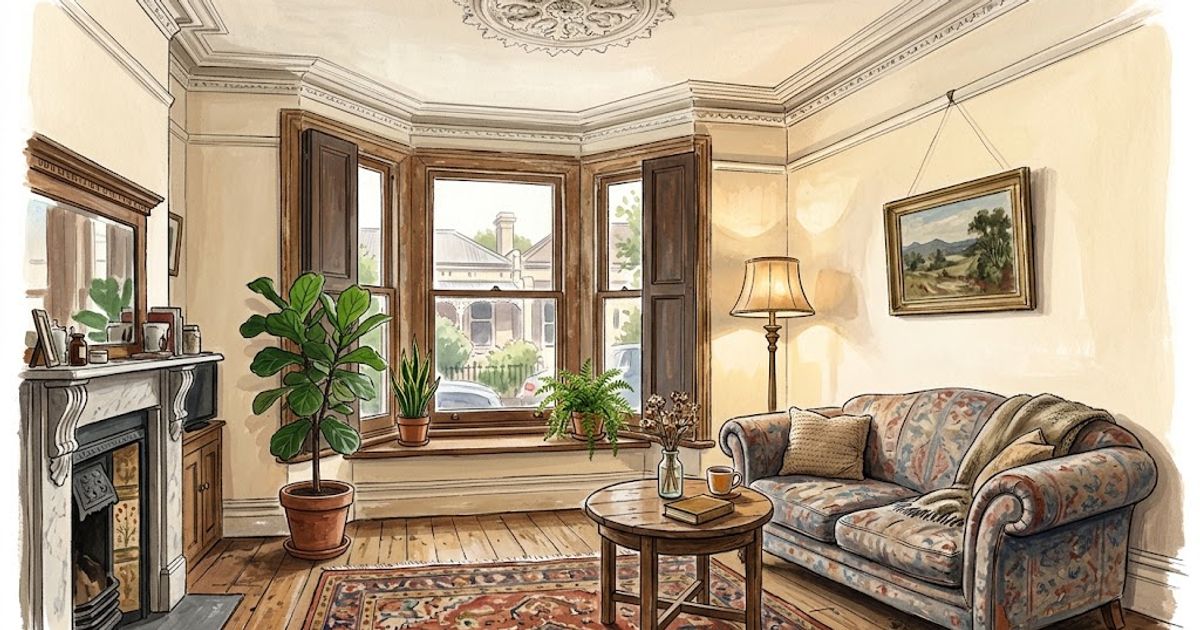
Quick summary: Furnishing a heritage apartment in Melbourne works best when the furniture respects what the building already has — high ceilings, bay windows, picture rails, original fireplaces and other period features — rather than fighting them with flat-pack pieces designed for modern proportions. Secondhand furniture can be particularly useful for Victorian, Edwardian and Federation homes, because older pieces often come in the larger, more varied proportions that suit these rooms.
If you've just moved into a converted terrace, an Edwardian block, or a warehouse conversion anywhere from Fitzroy to Caulfield, you've probably noticed that ordinary rental furniture looks slightly wrong the moment it's in the room. A low-slung sofa reads as squat under a high ceiling. A slim MDF console disappears next to a marble fireplace surround. The room isn't being difficult — it was designed for furniture with different proportions than most new furniture is built to.
What Counts as a Heritage Apartment in Melbourne
There isn't a single planning category called a "heritage apartment" in Melbourne. The term is generally used for apartments or flats in older buildings with heritage significance or period features — including Victorian terraces, Edwardian and Federation-era buildings, and some converted warehouses or industrial buildings. Many of these sit inside a formal Heritage Overlay, a planning control administered under Victoria's Heritage Act and each council's planning scheme, which — per the City of Melbourne's heritage and planning guidance — can apply across an entire precinct, not just to individually listed buildings.
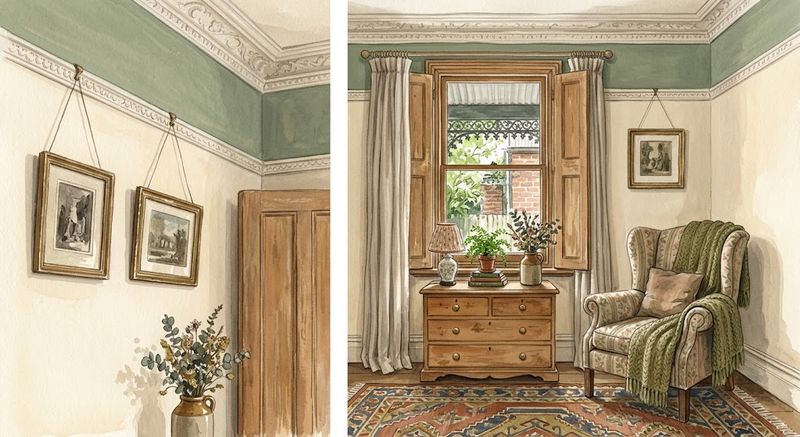
What matters for furnishing purposes is the physical inheritance: higher ceilings, tall narrow windows (often bayed), decorative cornices and ceiling roses, picture rails, and sometimes an original fireplace that's no longer functional but still anchors the room.
How to Furnish Around High Ceilings and Original Details
Ceiling height is the proportion problem people most often underestimate. Early Melbourne terraces can have ceiling heights around 3 metres, according to the City of Yarra's residential heritage policy documentation — substantially higher than many contemporary apartments. Furniture scaled for a standard new build can look lost or oddly stunted in a room that tall.
A few habits help:
- Go taller with anchor pieces. A tall bookcase, wardrobe, or floor lamp with genuine height reads as intentional rather than sparse — older wardrobes and dressers were often built taller than most sold new today.
- Let cornices and roses stay visible. Avoid tall shelving or pendant lighting positioned where it competes with a ceiling rose.
- Use rugs to reset scale at floor level, giving the eye a horizontal reference point.
Bay windows deserve their own thought. A single armchair or a slim daybed angled into the bay usually works better than a full three-seater — most bay geometry doesn't suit long straight furniture runs.
Choosing Secondhand Furniture by Room
Living room: higher-backed sofas, armchairs, timber coffee tables, sideboards, bookcases
Dining room: solid timber dining tables, traditional dining chairs, sideboards, display cabinets
Bedroom: timber bedheads, tallboys, wardrobes, bedside tables
Hallway: narrow console tables, hall tables, mirrors, umbrella stands
Bay window: armchair, small round table, daybed, reading chair
You don't need a strict period reproduction — most heritage apartments read well with furniture that shares the era's honest materials and generous proportions. For a Victorian or Edwardian apartment, that doesn't mean you need Victorian furniture specifically or exact reproductions — Federation, antique and vintage furniture can all work well when the proportions, materials and finishes complement the architecture. It's worth reading up on what actually separates vintage furniture from generic secondhand pieces before you start searching, since the two get used interchangeably but suit slightly different budgets and looks.
Well-made solid timber or quality timber-veneered construction over cheap particleboard tends to suit period rooms better than lightweight flat-pack pieces. Traditional timber legs, turned details and natural materials often sit more comfortably with period architecture than highly industrial finishes — though that's a general tendency, not a rule; a well-chosen contemporary piece can still work if the scale is right. If you're leaning that way, this piece on blending secondhand and new furniture without it looking mismatched is worth reading before you commit to a full period look.
Victorian, Edwardian and Federation: What Suits Each Style
| Apartment style | Furniture that can work well |
|---|---|
| Victorian | Darker timber, antique-style sideboards, traditional upholstered chairs |
| Edwardian | Lighter timber, curved detailing, upholstered armchairs |
| Federation | Timber furniture, traditional dining sets, display cabinets |
| Converted warehouse | Vintage industrial pieces, timber furniture, mid-century furniture |
Furniture Style vs Period Feature: A Quick-Reference Table
| Period feature | Furniture that suits it | What to avoid |
|---|---|---|
| High ceilings (3m+) | Tall bookcases, floor lamps, armoires | Low shelving as the only vertical element |
| Bay window | Armchair, daybed, small round table | Long straight sofas spanning the bay |
| Original fireplace | Seating arranged around the fireplace | Furniture blocking the mantel or sightlines |
| Picture rail / cornice | Furniture that works below the rail line | Pieces that visually compete with the rail |
| Narrow hallway | Slim console, hall table, narrow storage | Deep or bulky furniture |
Where to Find Period-Appropriate Secondhand Furniture in Melbourne
Heritage apartments and period homes are particularly common across Melbourne's inner and middle suburbs, including Fitzroy, Carlton, Richmond, North Melbourne, South Melbourne, Prahran, St Kilda and Caulfield. Filtering by furniture type — secondhand tables, sideboards, armchairs, storage pieces — is faster than scrolling generic marketplace feeds, and messaging a seller directly about dimensions or timber type before a viewing saves a wasted trip. It's also worth comparing secondhand furniture in Caulfield or other nearby suburbs to widen your options without extending your pickup radius much. For a broader look at channels beyond Zirkly, where to buy secondhand furniture in Melbourne covers vintage dealers, op shops and markets too.
It's worth checking build quality rather than assuming "old" means "well made" — knowing what to look for in solid, well-built furniture will save you from buying something that looks the part but won't hold up.
Measure Before You Buy
In a heritage apartment, measuring the room isn't enough. Check the doorway, hallway, stairwell, lift and any tight turns the furniture needs to pass through. A tall wardrobe may fit comfortably against a wall but be impossible to manoeuvre through a narrow terrace hallway. Ask the seller for the exact height, width and depth of any piece before arranging pickup.
Pre-Purchase Checklist for a Heritage Apartment
- Measure ceiling height and doorway width before buying anything tall
- Check for solid timber or quality veneer construction, not cheap particleboard
- Confirm exact dimensions with the seller for anything going into a bay window or alcove
- Photograph the room in natural light to check how cornices, rails or fireplaces sit against the piece
- Ask about delivery or pickup logistics early — narrow stairwells can rule out large items that would fit a standard apartment lift
Common Mistakes When Furnishing a Period Apartment
The most common mistake is over-committing to a single era — a room can end up looking more like a stage set than a lived-in home. Mixing a genuinely old piece with newer secondhand furniture usually looks more natural than an all-antique room. The second is ignoring scale in favour of style — a beautiful period-style armchair still looks wrong if it's undersized for a tall room. The third is treating original features as decoration to build around rather than the room's actual structure — a fireplace, bay window, or cornice line should shape where furniture goes, not just sit behind it.
Furnishing a heritage apartment in Melbourne with secondhand furniture takes a bit more attention to scale and material than a standard new-build, but it's also where secondhand genuinely outperforms new — decades of stock give access to proportions and materials that suit an older room far better than a single retail range can. Start with the dimensions you need, then browse secondhand furniture on Zirkly filtered by suburb and type. If you're replacing anything as part of the move, you can also sell your unwanted furniture on Zirkly.
Frequently Asked Questions
What furniture works best in a heritage apartment?
Furniture with generous proportions and honest materials — solid or quality veneered timber, traditional legs and detailing — generally suits period rooms better than lightweight flat-pack pieces.
What furniture suits a Victorian apartment in Melbourne?
Darker timber, antique-style sideboards and traditional upholstered chairs tend to complement Victorian-era proportions and detailing.
Can modern furniture work in a heritage apartment?
Yes — a considered mix of old and new usually looks more natural than an all-period room, as long as scale and materials feel intentional.
What furniture suits a bay window?
A single armchair, daybed or small round table usually suits bay geometry better than a long straight sofa.
How do you furnish a room with high ceilings?
Use taller anchor pieces — wardrobes, bookcases, floor lamps — and a rug to give the eye a horizontal reference point at floor level.
Where can I buy secondhand furniture in Melbourne?
Zirkly lets you filter listings by suburb and furniture type, alongside vintage dealers, op shops and local markets across inner and middle Melbourne.
Is secondhand furniture suitable for heritage homes?
Yes — decades of varied stock make it easier to find pieces built at the taller, larger scale many period rooms need, compared with most new retail ranges.
Do I need antique furniture for a heritage apartment?
No — Federation, vintage and even some contemporary pieces can work well if the proportions and materials suit the room.
Do I need council approval to furnish a heritage apartment?
Usually not for ordinary loose furniture — Heritage Overlays regulate building works and, on some properties, internal alterations, but not furniture itself. If you're altering walls, fireplaces or built-in elements, check the property's Heritage Overlay and council requirements first.
Erica
Zirkly Team
Erica covers interior styling, furniture trends and the vintage pieces worth knowing about, helping Melbourne buyers and sellers make secondhand furniture feel like a deliberate choice rather than a compromise.