Secondhand Furniture for Rental Properties in Melbourne: A Landlord's Guide
A practical guide for Melbourne landlords furnishing a rental property — what to buy, how much to spend, where to buy it, and what the law actually requires around furniture and condition reports.

Quick summary: Secondhand furniture for rental properties in Melbourne is a practical way for landlords to furnish an investment property without overcapitalising on pieces that will take wear from multiple tenancies. This guide covers when furnishing makes sense, roughly how much to budget, what to actually buy, where to buy it, and what Victorian tenancy law requires around furniture and condition reports.
If you're furnishing a rental property in Melbourne, buying everything new can quickly turn into a significant upfront cost. Secondhand furniture is a practical alternative, particularly for landlords furnishing apartments, student rentals, or short-term and corporate accommodation. The right approach depends on your property, your target tenant, and how much you're willing to tie up in an asset that starts depreciating the moment it arrives.
Should You Furnish Your Rental Property in Melbourne?
Furnishing works best where it matches tenant demand rather than as a blanket strategy. According to a Melbourne interiors and property advisory, furnished properties tend to draw stronger interest closer to the CBD, near train stations, universities and shopping precincts, while larger family homes further out don't typically see the same uplift. If your property is a smaller apartment near a campus or transport hub, or aimed at tenants relocating to Melbourne on shorter contracts, furnishing can widen your tenant pool. Melbourne's rental market remains relatively tight — SQM Research reported a 1.6% vacancy rate in June 2026, well below the 3% usually considered a balanced market — which makes presentation and tenant targeting worth thinking about, though a low vacancy rate alone doesn't prove that furnishing produces a higher rent.
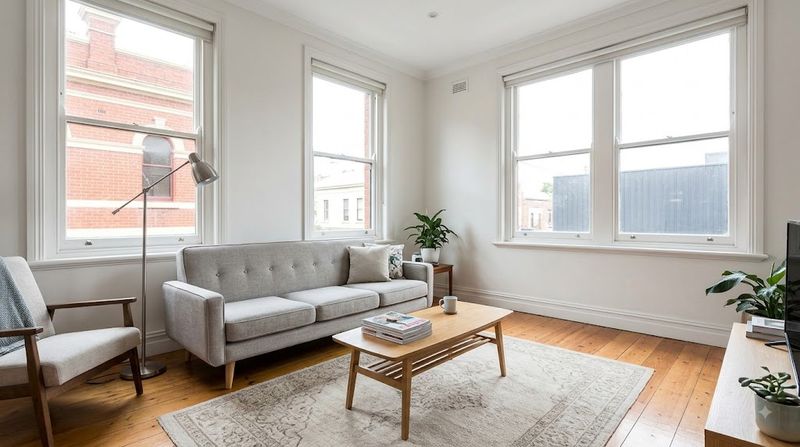
Furnished vs Unfurnished Rental Properties
| Fully Furnished | Unfurnished (Essentials Only) | |
|---|---|---|
| Best suited to | Apartments, student housing, short-lease and corporate tenants | Family homes, longer-term tenants, outer suburbs |
| Tenant appeal | Appeals to renters without their own furniture, or those wanting convenience | Appeals to renters who already own furniture and want a longer-term home |
| Upfront cost | Higher — full fit-out across every room | Lower — usually just window furnishings and appliances |
| Turnover effort | More furniture to inspect, clean and repair between tenancies | Minimal — mostly standard cleaning and repairs |
| Ongoing liability | Landlord owns and maintains all listed furniture | Limited to fixtures and any included appliances |
How Much Should You Spend Furnishing a Rental?
There's no fixed rule for how much to budget, and be wary of anyone who states one as fact. A useful way to think about it is proportionate to the property: a one-bedroom apartment needs far less than a three-bedroom house, and "fully furnished" costs meaningfully more than an essentials-only setup (bed, basic storage, window coverings). Two principles help avoid overspending:
- Avoid overcapitalising. Furniture is a cost against rental yield, not a showpiece — a mid-range, durable piece usually earns its keep better than an expensive one that a tenant may damage.
- Prioritise high-use pieces. Beds, sofas and dining tables get used daily and are worth the most care in selecting; occasional-use pieces (side tables, extra shelving) matter less.
Buying secondhand rather than new is one of the most direct ways to control this budget, since it lowers the upfront cost per room without changing what the tenant experiences day to day.
What Furniture Should a Landlord Provide?
Must-have:
- Bed and mattress
- Sofa
- Dining table and chairs
- Wardrobe or storage
- Bedside table
- Coffee table
Useful additions (tenant-profile dependent):
- Desk and chair
- TV unit
- Outdoor furniture
- Bookshelf or side tables
Generally avoid:
- Expensive designer pieces that add cost without adding rentability
- Fragile items unlikely to survive multiple tenancies
- Highly distinctive colours or styles that narrow tenant appeal
- Furniture that's difficult or costly to repair or replace
Furnishing Student Rentals in Melbourne
Student and share-house rentals are one of the clearest cases for furnishing well. Tenants in these properties typically want functional, low-fuss pieces — a sturdy bed frame, a desk, a wardrobe, and a dining table that can seat a share house — over anything decorative. If your property sits near Monash University's Caulfield campus or the Caulfield Racecourse precinct, the Caulfield secondhand furniture page is a useful starting point given the concentration of student and short-lease tenants in that pocket.
Where to Buy Furniture for a Rental Property in Melbourne
| Option | Best for | Main advantage | Main drawback |
|---|---|---|---|
| Secondhand marketplaces | Individual pieces and bundles | Lower upfront cost | Requires inspection and collection |
| Furniture retailers | Full new fit-outs | Convenient, consistent stock | Higher cost |
| Furniture rental services | Short-term accommodation | Low upfront commitment | Ongoing rental cost |
| Auctions/clearance sales | Bulk purchases | Potential bargains | Less predictable inventory |
| Local/community marketplaces | Local, one-off purchases | Large selection | Variable quality, more legwork |
Secondhand marketplaces tend to suit landlords furnishing gradually or buying multiple pieces at once — a hyperlocal platform like Zirkly lets you pick up quality furniture from sellers in the same suburb, and buying several pieces together from one seller, covered in Zirkly's guide to furniture bundle deals, is often more efficient than negotiating room by room.
Secondhand vs New Furniture for a Rental
For an asset the landlord doesn't personally live with, the case for secondhand is arguably stronger than for an owner-occupier. Rental furniture is handed between tenants, inspected at every changeover, and eventually replaced regardless of whether it started new or secondhand — so the premium of buying new rarely earns its keep. Before buying, check joints, frames and mechanisms work properly, and use Zirkly's guide to pricing secondhand furniture to budget realistically against comparable listings. A quick clean before move-in, covered in Zirkly's guide to cleaning secondhand furniture, sorts most cosmetic issues.
What Melbourne Landlords Need to Know About Furniture and Rental Standards
- Minimum rental property standards. Victoria's minimum standards, in force since 29 March 2021, set 14 mandatory categories a rental property must meet — covering things like the bathroom, kitchen, heating, electrical safety and window coverings — as set out by Consumer Affairs Victoria. These standards are about the property's fixtures and features, not furniture like sofas or beds specifically.
- Condition reports. Furniture and other items supplied with the rental should be accurately recorded in the condition report, including their condition at the start of the tenancy — Tenants Victoria notes this report is the main evidence used if a dispute arises later.
- Repairs and fair wear and tear. If furniture provided by the landlord breaks down through normal use, repairing or replacing it generally falls to the landlord, distinct from damage caused by the tenant.
Room-by-Room Furniture Checklist
| Room | Essentials |
|---|---|
| Living | Sofa, coffee table, TV unit or shelving |
| Bedroom(s) | Bed frame, mattress, wardrobe or drawers, bedside table |
| Dining/Kitchen | Dining table and chairs, basic storage |
| Study (if applicable) | Desk and chair |
| Outdoor (if applicable) | Basic outdoor setting, weather permitting |
Conclusion
Furnishing a rental property in Melbourne doesn't need to mean a retail showroom fit-out to meet a tenant's expectations or Victoria's rental standards. A budget set against the property's size, filled mostly with well-inspected secondhand furniture and accurately recorded on the condition report, does the same job as buying new at a fraction of the upfront cost. Find secondhand furniture for your rental property on Zirkly — and if you're replacing pieces between tenancies, sell the old ones on Zirkly rather than sending them to landfill.
Frequently Asked Questions
Is it cheaper to furnish a rental property with secondhand furniture?
Generally yes — secondhand furniture typically costs less upfront than buying the equivalent pieces new, without changing what the tenant experiences.
What furniture should a landlord provide in a furnished rental?
At minimum, a bed and mattress, sofa, dining table and chairs, and basic storage — additions like a desk or outdoor setting depend on the tenant profile.
How much does it cost to furnish a rental property in Melbourne?
It varies by property size and whether you're going fully furnished or essentials-only — budget proportionately to the property rather than against a fixed figure, and prioritise high-use pieces first.
Is furnished or unfurnished better for Melbourne landlords?
It depends on the property and tenant type — furnished suits apartments, student housing and short-lease tenants, while unfurnished often suits family homes and longer-term renters who already own furniture.
Where can landlords buy secondhand furniture in Melbourne?
Options include secondhand marketplaces like Zirkly, local/community marketplaces, and auctions — marketplaces tend to offer the most control over cost and individual item selection.
Do I need a condition report for furniture in a furnished rental?
Yes — furniture supplied with the rental should be accurately recorded in the condition report at the start of the tenancy.
Who is responsible for furniture repairs in a furnished rental?
The landlord is generally responsible for furniture they've supplied, for damage arising from normal wear and tear.
Erica
Zirkly Team
Erica covers interior styling, furniture trends and the vintage pieces worth knowing about, helping Melbourne buyers and sellers make secondhand furniture feel like a deliberate choice rather than a compromise.