How to Style a Teak Sideboard: Vintage & Mid-Century Ideas
Style a vintage teak sideboard with the right lighting, artwork and accessories. Discover mid-century styling ideas, colour combinations, placement tips and ways to protect the timber finish.
Quick summary
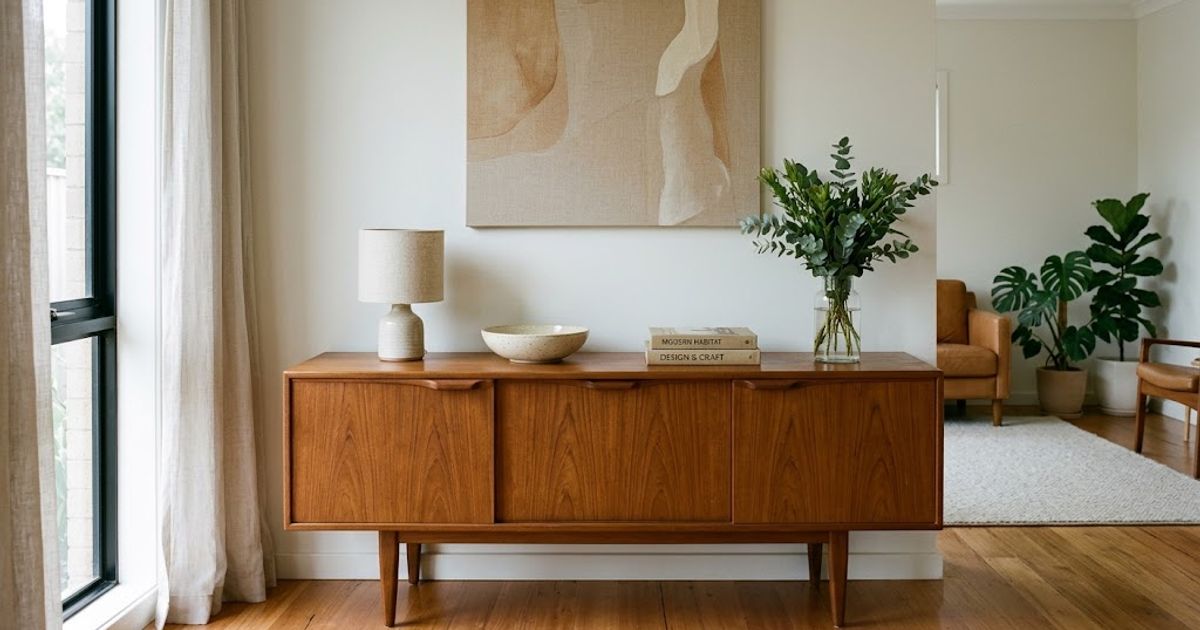
To style a vintage teak sideboard, anchor it first, then build one calm vignette on top: a lamp for height, a low bowl and a few books for weight, with art or a mirror above. Leave plenty of bare timber showing, because the grain, tapered legs and sculpted handles are the feature. Keep it out of direct sun and away from heaters, and put a tray or mat under anything hot or wet.
A vintage teak sideboard is long, low and warm, which makes it easy to overstyle. Most online advice is written for white or painted pieces, but a mid-century credenza needs a lighter touch because the timber does half the work. This guide covers where to put it, what goes on top and how to protect it as you style it. Australian sellers usually list these pieces as sideboards or buffets, while “credenza” is more common on international sites. The styling rules are the same.
What Makes a Vintage Teak Sideboard Different to Style?
Four traits change how you style it:
- It is long and shallow. The top works like a wide, thin shelf, so objects sit best in a line or a loose group, not a deep cluster.
- The timber is already warm. Teak reads orange-brown, so cream, green, black and blue objects look sharper against it than more brown.
- The legs and handles are part of the design. Tapered legs lift the piece off the floor, so keep the space underneath clear and don’t hide sculpted handles behind objects.
- The finish has age. Small marks come with a vintage piece. Style around them, or fix them first (more on that below).
Is Your Sideboard Solid Teak or Teak Veneer?
Both are common in vintage furniture, and veneer isn’t a lesser choice. It is a different construction, and it changes how you care for the piece. Our own checks, not a formal test:
- Look at the edges and drawer fronts. On veneer, you can often see a thin layer of timber with a different core beneath it. On solid timber, the grain usually runs through the edge.
- Check the underside and the back. Unfinished areas often show the core material or a plainer timber.
- Compare the grain across the top. A very regular, matching pattern across a wide surface can point to veneer.
If you’re unsure, ask the seller. The answer matters most when you restore the piece, because heavy sanding can cut through a thin veneer layer. Our guide to restoring teak furniture covers the gentler options.
Where Should You Put a Vintage Teak Sideboard?
Think about light first. The Canadian Conservation Institute says light damage to wood builds up over time and can’t be reversed. It can darken pale timber, bleach dark timber and leave the finish discoloured or cracked. It advises keeping furniture out of direct sunlight, using blinds or curtains, and staying away from fireplaces, heaters and heat vents. In a Melbourne home, that means checking where the afternoon sun lands and where your heating vents sit before you pick a wall.
Then measure. Check the sideboard’s depth against the walkway you’ll have left, and its height against nearby furniture such as a sofa arm, a window sill or the dining chairs beside it. A low piece at roughly the height of the surrounding furniture looks settled, and a shallow one suits a narrow wall.
Then anchor it. According to ACCC Product Safety, freestanding furniture including buffets and sideboards can topple, and the best protection is securing it to the wall or floor. The same page says you can buy anchoring hardware for furniture you bought secondhand, and that Victoria is one of three states with laws that make it much easier for tenants to secure furniture to a wall. It also advises keeping the heaviest items low and not putting heavy things like TVs on top. Do this before you style, so you aren’t lifting objects on and off later.
How Do You Style the Top of a Teak Sideboard?
Build the top in layers, from tall to low, and stop sooner than you think.
- Add height at one end. A table lamp or a tall vase, placed off-centre, gives the eye a place to start.
- Add something low and wide. A shallow bowl, a tray or a stack of two or three books gives the group weight so it doesn’t look spindly.
- Add one organic piece. Cut stems, dried branches or a sculptural object soften the straight lines. The Canadian Conservation Institute advises against putting potted plants on wooden furniture because of water damage. Cut stems in a vase are a lighter risk, but spills happen, so stand the vase on a tray or mat (our advice). Keep potted plants on a stand beside the sideboard.
- Leave gaps. Space between groups lets the grain show. Odd numbers (three objects or five) tend to look settled, and one clear stretch of bare timber helps.
Choose lighter objects and keep heavy ones low, especially if children visit. ACCC Product Safety suggests removing heavy vases and ornaments from the top of furniture.
What Goes Above a Mid-Century Credenza?
One large piece beats several small ones. A single framed artwork or a mirror, about two-thirds the width of the sideboard (a common styling rule of thumb, not a standard), balances the long horizontal line. A mirror also bounces light back into the room, which helps in a darker dining room or hallway. For a relaxed look, lean a large frame against the wall, but keep it stable and clear of the lamp. If you hang a heavy mirror, use fixings that suit your wall type, and leave a hand’s width between the frame and the objects below it.
How Do You Style a Teak Sideboard by Room?
Dining room. Use the top as a serving spot: a tray with a jug and glasses, a runner or mat, and a trivet for hot dishes. Some vintage sideboards have a felt-lined cutlery drawer or a drinks compartment. Use the inside for what it was made for and keep the top calm.
Living room. A lamp, a few books and a record player suit the period, and some mid-century sideboards were built with drinks and record storage. If you want a TV in the room, ACCC Product Safety suggests wall-mounting it. If you attach a TV to furniture, the furniture should be anchored to the wall as well.
Hallway. A shallow sideboard can suit a narrow hall: a bowl for keys, a mirror above and bags or shoes inside. Check the walkway before you commit.
Which Colours and Materials Suit Teak?
Teak supplies the warmth, so choose contrast. Cream or white ceramics, green leaves and glass, black metal, blue or terracotta pottery, brass and linen all sit well against it. Avoid matching every object to the timber, because a top full of brown flattens the grain. Keep the group to two or three colours, and let one object be the accent.
How Do You Protect a Teak Sideboard While Styling It?
The Canadian Conservation Institute says drink coasters, tabletop cushions or glass tops protect the finish, and that water spills can leave cloudy white patches. In practice, that means felt pads under ceramics and lamp bases, a tray under any vase of cut flowers, and a trivet under anything hot. If the top already has rings, dull patches or scratches, fix them before you style over the damage.
What Should You Check Before You Buy a Vintage Teak Sideboard?
Styling works best on a sound piece. Our guide to secondhand buffets, sideboards and hutches in Melbourne covers drawers, back panels, mould and measuring for your room. If you are weighing a Parker or Fler piece, our Parker and Fler sideboard value guide explains what moves the price. You can browse sideboards from local sellers on Zirkly and inspect them in person before you buy.
Have a teak sideboard you’re ready to pass on? List it on Zirkly and let a Melbourne buyer give it a new home.
Frequently Asked Questions
How do you style a vintage teak sideboard?
Anchor it, keep it out of direct sun, then layer the top: a lamp for height, a low bowl or books for weight and one organic piece. Add one large artwork or a mirror above and leave bare timber showing.
What do you put on top of a mid-century credenza?
A lamp, a shallow bowl or tray, a short stack of books and cut stems in a vase. Keep heavier items low and leave space around each group.
Can you put a TV on a vintage teak sideboard?
ACCC Product Safety advises against putting TVs on furniture that wasn’t made for them and suggests wall-mounting. If you attach a TV to furniture, anchor the furniture to the wall too.
What colours go with a teak sideboard?
Cream, white, green, black, blue and terracotta. Teak is already warm, so contrast works better than matching the timber.
Can you put plants on a teak sideboard?
Not potted plants. The Canadian Conservation Institute advises against them because of water damage. Cut stems in a vase on a tray are a lighter risk, or put the plant on a stand beside it.
How do you stop sun damaging a teak sideboard?
Move it out of direct sunlight, use blinds or curtains and keep it away from heaters and vents. The Canadian Conservation Institute says light damage builds up and can’t be reversed.
How can you tell if a sideboard is solid teak or teak veneer?
Check the edges, drawer fronts, underside and back for a thin timber layer over a different core. If you can’t tell, ask the seller, because it matters most for sanding and restoration.
Where can I buy a vintage teak sideboard in Melbourne?
Browse sideboards and buffets from local sellers on Zirkly and inspect the piece in person. Measure your space first and check the drawers, back panel and legs.
Erica
Zirkly Team
Erica covers interior styling, furniture trends and the vintage pieces worth knowing about, helping Melbourne buyers and sellers make secondhand furniture feel like a deliberate choice rather than a compromise.