How to Mix Secondhand and New Furniture Without It Looking Mismatched
A vintage sideboard next to a flat-pack shelf shouldn't feel like an accident. The design principles that make mixed furniture look deliberate.
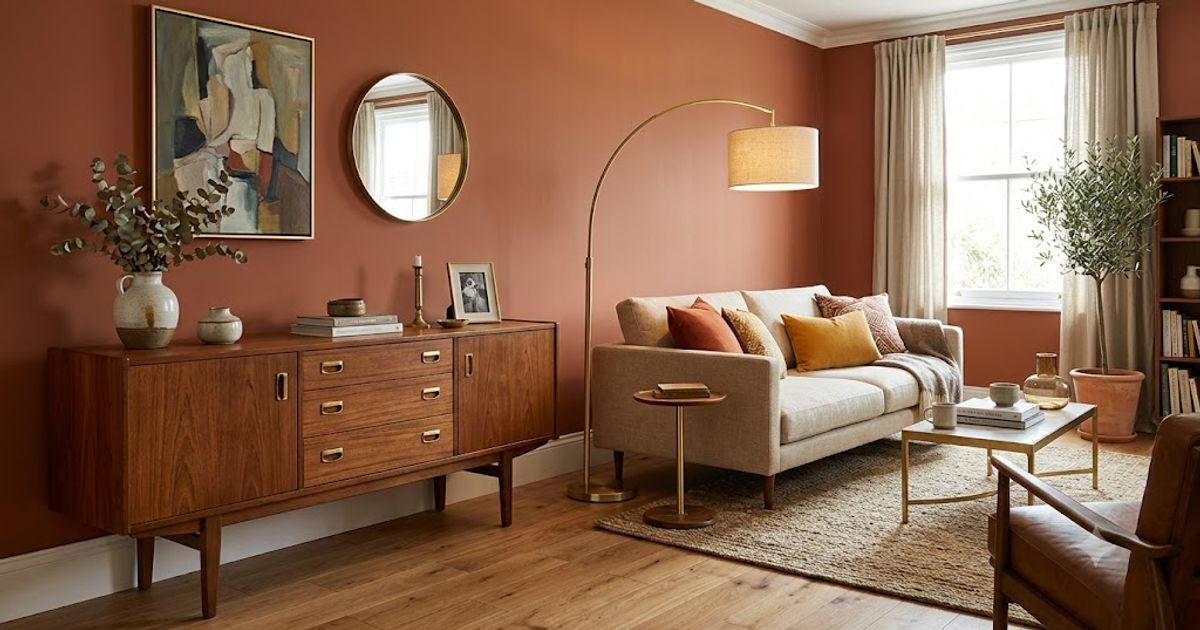
The fear is always the same: buy one secondhand piece and the room starts looking like it was furnished by accident. A vintage sideboard next to a flat-pack bookshelf, a thrifted armchair beside a brand-new sofa — and suddenly nothing feels like it belongs together.
It's rarely the secondhand piece's fault. Rooms read as mismatched for a handful of specific, fixable reasons — not because old and new can't sit together, but because nothing in the room is doing the work of tying them to each other. Once you know what that work looks like, mixing secondhand and new furniture is one of the easiest ways to make a home feel collected rather than bought all at once.
Pick one hero piece and build the room around it
Every room that reads as "curated" rather than "thrifted" has one piece doing the heavy lifting — usually the secondhand one. A beautiful vintage dining table, a well-proportioned mid-century armchair, a solid timber sideboard with real character. That piece sets the tone, and everything else in the room supports it rather than competing with it.
Choose the hero first, then shop around it. Buying a room's worth of furniture all at once, new and old together with no lead piece, is exactly how a space ends up feeling like a pile of individually fine decisions that don't add up to anything. Our guide to vintage versus secondhand furniture is worth a read if you're not sure whether a piece has the presence to carry a room — genuine vintage and well-made older furniture usually does.
Repeat something, don't match everything
Matching is what happens when you buy a "living room set." Mixing works differently — it relies on repetition, not uniformity. Pick one element and echo it around the room: a colour, a material, a shape, a finish.
If the vintage armchair has brass legs, a new brass floor lamp ties them together without either piece needing to match the other. If the secondhand coffee table is round, echoing that curve in a mirror or a rug softens the straight lines of a new sofa. The eye doesn't need everything to match — it needs to find a thread it can follow around the room, and one repeated element is usually enough to do that.
The ratio that actually works
A useful rule of thumb: let one side lead. A room that's mostly secondhand with a few carefully chosen new pieces reads as intentional — the new pieces feel like considered additions rather than filler. The reverse works just as well: a mostly new room with one or two standout secondhand pieces, where the older furniture reads as a deliberate feature rather than a leftover.
What doesn't tend to work is a strict fifty-fifty split with no clear lead. Without one side setting the tone, the room can end up feeling like two different decorating decisions happening in the same space rather than one coherent choice.
A living room example makes the ratio easier to picture. A new sofa, a new rug and new curtains, with one secondhand coffee table and a single vintage lamp, reads as a fresh room with one interesting detail. Flip it: a secondhand sofa, a secondhand sideboard and a vintage rug, with one new armchair and new cushions, reads as an established room with one modern update. Both work. What tends not to work is four new pieces and four old pieces all fighting to be the interesting one.
Wood tones and metals: the clash worth watching
This is where most "mismatched" rooms actually go wrong, and it's rarely the era of the furniture — it's the undertone. A warm honey-toned secondhand table next to a cool grey-toned new shelf can clash even though both are otherwise attractive, well-made pieces.
Two ways to handle it. Either lean into the contrast deliberately — a warm timber table with cool black metal chairs is a genuinely popular look, not a mistake, as long as it's clearly a choice — or keep wood tones in the same general family (all warm, or all cool) so nothing fights for attention. The same logic applies to metals: brass, black and brushed nickel can all sit in one room, but two competing gold tones in different finishes often reads as accidental rather than layered.
Scale and proportion do more than colour
A small vintage side table next to an oversized new sofa looks like an afterthought, even if the finishes are perfect. Scale mismatches are often what actually reads as "thrifted" — not the age of the piece, but a piece that's clearly the wrong size for the room or the furniture around it.
Before buying a secondhand piece to sit alongside something new, measure both. A piece that's proportionally right for its spot will look intentional even if it's fifty years older than everything around it; a piece that's the wrong scale will look out of place even if it's brand new.
Where mixing works especially well
Some spots in the home are particularly forgiving — and rewarding — for combining secondhand and new:
- A dining setting with mismatched chairs. A new table with a run of secondhand chairs (or the reverse) is one of the most reliable versions of this whole idea — it looks deliberate almost by default, because dining chairs are expected to have some personality.
- A console or sideboard as the anchor. A characterful secondhand piece in an entryway or against a living room wall does a lot of work with very little furniture.
- Open shelving and styling. New shelving with a mix of secondhand objects, books and a couple of newer pieces is an easy, low-cost way to practise the repetition principle on a small scale before committing to bigger furniture.
If you're furnishing a whole space rather than one corner, our guide to furnishing a Melbourne apartment on a budget with secondhand furniture covers the wider budget picture this styling approach fits neatly into.
A quick test before you buy
Before adding a secondhand piece to a room with new furniture already in it, check:
- Does it echo something already in the room — a colour, a material, a shape — even loosely?
- Is the scale right for where it's going, not just attractive in isolation?
- Does the wood or metal tone sit in the same family, or is the contrast a deliberate choice rather than an accident?
- Is there already a clear hero piece, or is this trying to be a second one competing for attention?
A secondhand piece that passes these checks will almost always look intentional. One that fails two or more is worth reconsidering, or finding a different spot for.
Found your hero piece yet? Browse secondhand furniture on Zirkly to find the one that anchors the room, or list what you've styled out of for free — someone else's room is probably missing exactly that piece.
Frequently Asked Questions
Is it OK to mix old and new furniture in the same room?
Yes — most well-designed rooms do exactly this. What matters isn't whether the furniture is old or new, it's whether something ties the pieces together: a repeated colour, material or shape, and a clear hero piece the rest of the room supports.
How many secondhand pieces should I mix with new furniture?
There's no fixed number, but letting one side lead tends to work better than an even split. A mostly secondhand room with a few new pieces, or a mostly new room with one or two standout older pieces, both read as intentional in a way a strict fifty-fifty mix often doesn't.
Do wood tones need to match when mixing furniture?
Not exactly, but they should either sit in the same general family (warm with warm, cool with cool) or contrast deliberately. It's the in-between — tones that are almost but not quite alike — that tends to read as accidental rather than styled.
Why does my room look mismatched even though I like every piece in it?
Usually it's scale rather than style — a piece that's the wrong size for its spot reads as out of place even when it's beautiful on its own. Check that every piece is proportioned for where it actually sits, not just attractive as a standalone object.
What's the easiest way to start mixing secondhand and new furniture?
A dining setting is the most forgiving place to start — a new table with a few secondhand chairs, or the reverse, looks deliberate almost immediately because mismatched dining chairs are already an expected look.
Can I mix furniture styles in a small apartment without it feeling cluttered?
Yes, and repetition matters even more in a small space — pick one thread (a colour, a material, a shape) and echo it two or three times across the room, rather than letting every piece introduce something new. A small space with one clear idea running through it reads as curated; a small space with five unrelated ideas reads as cluttered.
Erica
Zirkly Team
Erica covers interior styling, furniture trends and the vintage pieces worth knowing about, helping Melbourne buyers and sellers make secondhand furniture feel like a deliberate choice rather than a compromise.