Secondhand Buffets, Sideboards & Hutches in Melbourne: What to Check Before Buying
Secondhand buffets, sideboards and hutches are some of the best-value dining furniture buys in Melbourne. Here's what to check for damage, how to tell solid timber from veneer, and how to make sure your new-to-you piece will actually fit your home.
Quick summary: Buffets, sideboards and hutches are often excellent secondhand furniture buys because they're built for long-term use and most visible wear is cosmetic. Check drawer runners, door alignment, the back panel, base and legs, veneer condition and glass before buying. Measure your wall space, doorways, hallway and door-swing clearance, and confirm whether the piece comes apart for transport. These pieces can be heavy, so plan transport and a second pair of hands before pickup.
What's the Difference Between a Buffet, Sideboard and Hutch?
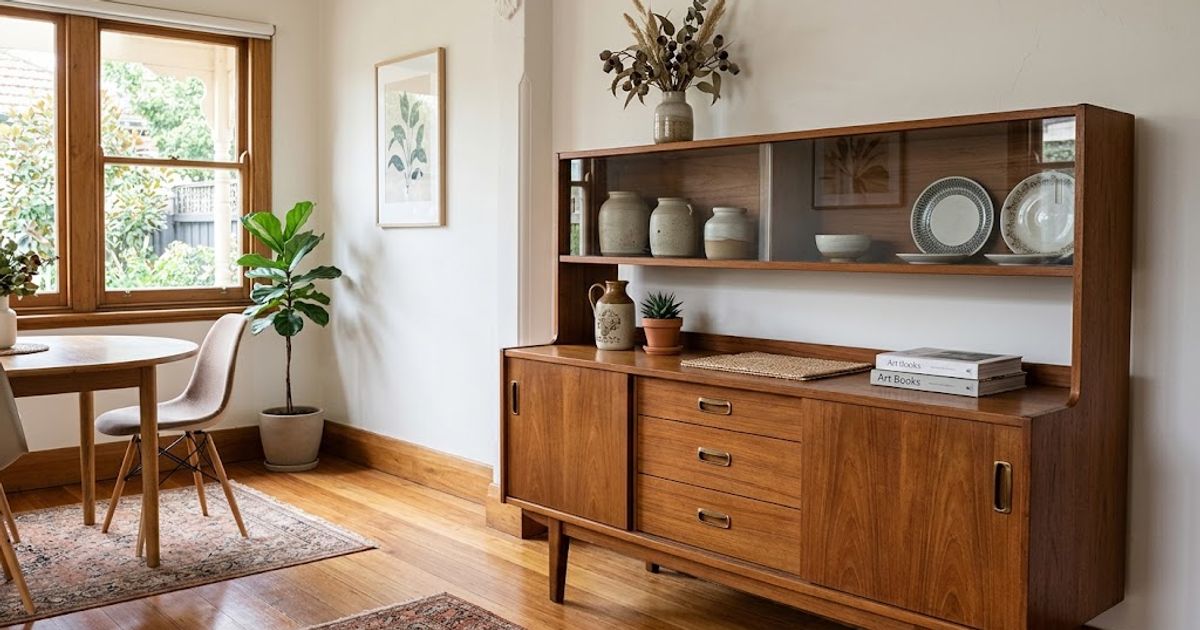
The terms overlap in everyday use, but there are real distinctions. A buffet is a low storage unit — cupboards and sometimes drawers — designed to sit against a dining room wall for serving and storage. A sideboard is essentially the same piece; the two words are largely interchangeable, though "sideboard" is slightly more common for mid-century and vintage pieces. A hutch adds a second tier on top: an open or glass-fronted display cabinet, often with shelving, sitting above a buffet-style base. Some hutches are one solid piece; others separate into a base and top section.
In Melbourne's secondhand furniture market, you'll commonly see these pieces listed as "buffets," "sideboards," "buffet cabinets," "dining cabinets" or "hutches" — knowing the terms helps you search more precisely.
Why Buffets and Sideboards Make Good Secondhand Furniture
Buffets, sideboards and hutches are particularly good candidates for secondhand buying. They're often expensive when purchased new, but their construction means they can remain useful for decades. Unlike upholstered furniture, most wear is visible and repairable: drawer runners can be replaced, hinges adjusted, and timber surfaces cleaned or refinished. If you're furnishing a dining room with secondhand furniture, these pieces are usually one of the better places to spend your budget.
What to Check When Buying a Secondhand Buffet, Sideboard or Hutch
A few minutes of inspection covers almost everything that matters:
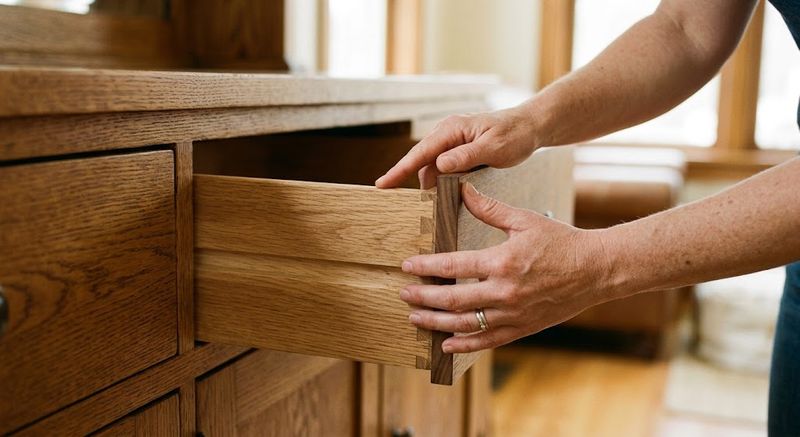
- Drawer runners and glides — open every drawer fully. They should slide smoothly without sticking or dropping. Worn runners are a cheap, common fix, but a warped drawer frame is not.
- Door hinges and alignment — doors that hang crooked or don't sit flush usually mean the cabinet frame has shifted or the hinges are worn. Minor sag is adjustable; a badly racked frame is a bigger job.
- Back panel condition — most buffets and sideboards have a thin hardboard or plywood back panel, which is the part most likely to show water damage or mould if the piece has spent time in a garage, shed, or damp room. Pull it out from the wall if you can and check the back directly.
- Base and legs — check underneath for cracks, loose joints, previous repairs or water staining. A slight wobble can usually be fixed, but cracked structural joints or badly damaged legs may point to a more serious problem.
- Veneer vs solid timber wear — look for lifting, bubbling, or peeling at edges and corners, which signals veneer damage rather than simple surface wear.
- Glass condition (hutch doors) — check for cracks, chips, and cloudiness.
- Smell — a persistent musty smell can indicate previous damp or mould exposure. The Better Health Channel notes that damp conditions can support mould growth, which can linger inside enclosed furniture even after the surface has dried.
None of this makes buying secondhand risky — it just tells you what to look at, the same way you'd check any piece of furniture before bringing it home.
Solid Timber vs Veneer: Which Is Better for a Secondhand Sideboard?
Not as much of a distinction as buyers often assume. Solid timber is generally more forgiving of minor damage — scratches and dents can be sanded and refinished — while veneer needs more careful handling since there's only a thin timber layer over a substrate. Veneer can be applied over plywood, MDF, particleboard or other materials, so "veneer" doesn't automatically mean low quality — good-quality veneer construction from a reputable maker can outlast a lower-grade solid timber piece. The condition checks above matter more than the material itself.
How to Measure a Secondhand Sideboard or Hutch Before Buying
This is the step buyers most often skip, and where buffets, sideboards and hutches most often go wrong compared to smaller furniture. Before you commit:
- Measure your wall space, including the width you need for doors to open fully — not just the footprint of the piece sitting closed.
- Don't forget the depth. A sideboard can technically fit along a wall while projecting too far into a walkway, or preventing a nearby door from opening properly.
- Check ceiling height if you're considering a hutch, since the two-tier combined height can be taller than expected.
- Measure your doorways and hallway width, and check for any tight turns between the front door and the room it's going in. A piece that fits through a doorway straight-on can still get stuck at an angled turn.
- Ask about disassembly. Many hutches separate into a base and top section for transport — this can be the difference between a piece fitting through your home and not.
Getting a Secondhand Sideboard or Hutch Home in Melbourne
Getting a large secondhand sideboard home in Melbourne can be harder than finding one. Buffets, sideboards and hutches are heavier and bulkier than most secondhand furniture — plan for at least two people, and a van or ute rather than a regular car for anything beyond a small bedside-style sideboard. If you're buying from another Melbourne suburb, confirm the pickup location and access conditions before agreeing to collect it. If you don't have your own transport, our guide on how to transport furniture without a ute covers the options.
On Zirkly, you can message the seller directly to ask about disassembly, confirm exact dimensions before you commit to pickup, and arrange a time that works for a two-person collection.
Vintage and Mid-Century Sideboards: What's Worth More?
Not all buffets and sideboards depreciate the way mass-market furniture does. Vintage and mid-century pieces — particularly well-designed examples from recognised manufacturers — can retain their value better than mass-market furniture, although age alone doesn't make a sideboard valuable. Maker, design, materials, originality, condition and provenance all play a part. If you're weighing up an older piece against a newer one, our guide on vintage vs secondhand furniture breaks down how to tell the difference.
Questions to Ask the Seller
- Does it separate into pieces for transport?
- Has it always been stored indoors?
- Are all the original keys included, if it has locking drawers or doors?
- Has any glass or hardware been replaced?
- What are the exact width, depth and height?
- Are there any repairs, water damage, veneer lifting or previous restoration?
Ready to find your next dining storage piece — or make some space by selling your own? Browse buffets, sideboards and hutches from sellers across Melbourne on Zirkly, or if you've got one taking up space, start selling on Zirkly in minutes.
Frequently Asked Questions
What's the difference between a buffet and a sideboard?
Functionally, they're the same thing — a low storage unit for a dining or living room. "Sideboard" is used slightly more often for vintage and mid-century pieces, but the terms are largely interchangeable.
What is a buffet cabinet used for?
A buffet cabinet provides low storage in a dining room or living area, typically with cupboards, drawers or both. It's commonly used for storing dinnerware, serving pieces, table linen, glassware and other items that aren't needed on the dining table every day.
Will a secondhand buffet or hutch fit through a standard doorway?
Most will, but check the piece's exact width, depth and height against your doorway and hallway measurements before buying — including any tight turns. Ask the seller if the piece disassembles, which can make a tight fit possible.
How do I fix a wobbly sideboard?
Wobbling is usually caused by an uneven floor or loose leg fittings rather than a structural problem. Check the legs are tightened and consider adjustable furniture pads if your floor isn't level.
How can I tell if it's solid timber or veneer?
Check the edges and underside of drawers or shelves — solid timber shows consistent grain all the way through, while veneer shows a thin timber layer over a different material at any exposed edge or chip.
Is a musty smell in an old buffet a deal-breaker?
It's a sign the piece has been exposed to damp conditions at some point, and it's worth checking the back panel and interior carefully before buying. A smell that persists after airing out is worth walking away from.
Are vintage sideboards worth more than newer ones?
Some are — particularly well-designed pieces from recognised mid-century manufacturers, which can retain their value better than mass-market furniture. Condition, originality and provenance matter more than age alone.
Do hutches come apart for moving?
Many do — the hutch top often lifts off the base separately. Always ask the seller before pickup day, since this affects both how many people you need and whether it'll fit through your doorways.
What should I check on the glass in a hutch cabinet?
Look for cracks, chips and cloudiness. Flat, standard-sized glass is generally easier and cheaper to replace; curved, shaped or unusually sized glass can cost considerably more.
Are secondhand buffets and sideboards cheaper than new ones?
Yes, generally — buffets, sideboards and hutches are among the more expensive furniture categories to buy new, so secondhand savings tend to be larger here than on smaller items.
Adam
Zirkly Team
Adam turns complex secondhand furniture topics into practical advice for Melbourne buyers and sellers — pricing, safety and the decisions that make buying and selling used furniture clearer.