Secondhand Kitchen Islands and Butcher's Blocks: What to Check Before Buying
A practical inspection guide for buying a secondhand kitchen island or butcher's block — structural checks, fit and transport, sanding and re-oiling, and what it's actually worth.
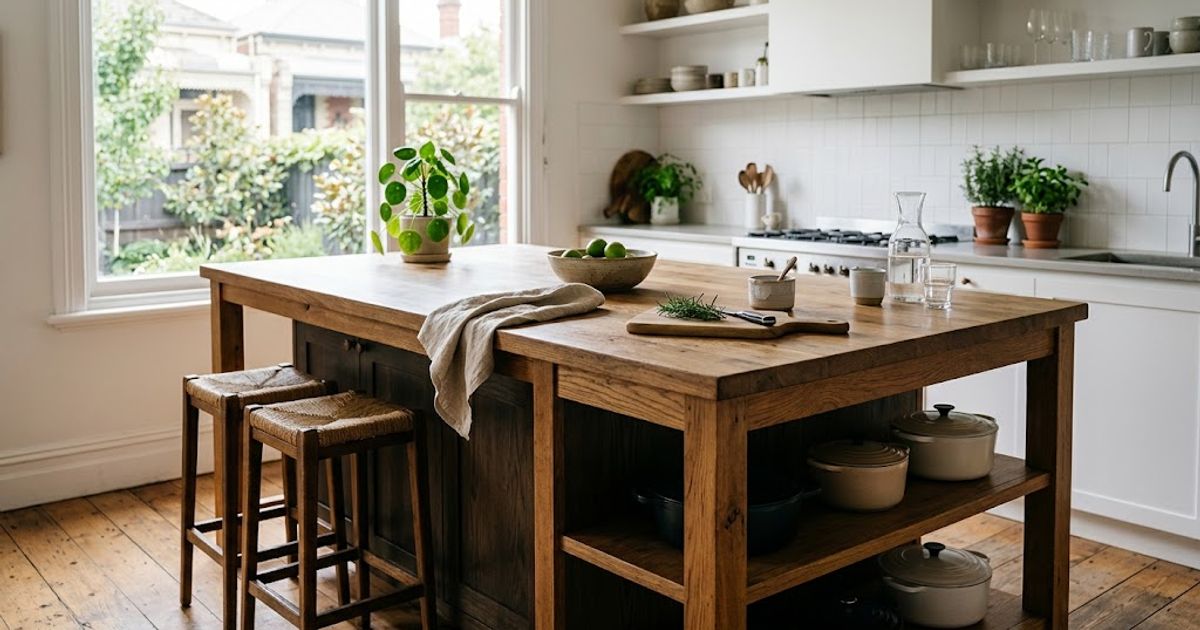
Quick summary: Buying a secondhand kitchen island or butcher's block comes down to four checks: is the frame structurally sound, is the timber top salvageable with cleaning, sanding or re-oiling, will it actually fit through your doorway and kitchen, and is the asking price reasonable for the materials and construction. Get those right and a used kitchen island is one of the easier big-ticket items to buy secondhand.
Secondhand kitchen islands and butcher's blocks can be excellent buys, particularly when they're made from solid timber. Unlike a built-in island, a simple freestanding kitchen island can usually be assessed largely as a piece of furniture rather than as part of the kitchen's plumbing and cabinetry installation — though it's worth confirming this isn't a repurposed benchtop before you commit. The main things to check are the structure, timber condition, dimensions and access, and whether the piece is genuinely freestanding.
Why Buy a Secondhand Kitchen Island or Butcher's Block?
A used kitchen island can offer considerably more timber, storage and character for the money than a new budget model, but the condition of the frame and top matters more than appearance alone. Solid timber kitchen islands and butcher's blocks are built to be worked on, which means a well-made one from a decade ago is often sturdier than a flat-pack equivalent sold new today. Buying secondhand also keeps a heavy, awkward-to-dispose-of item out of landfill. For the general judgement calls — seller history, photos, pickup logistics — it's worth reading through what to consider before buying secondhand furniture in Melbourne.
Kitchen Island vs Butcher's Block: What's the Difference?
The two terms get used interchangeably in listings, but they're not the same thing.
A kitchen island is primarily a freestanding piece of kitchen furniture. It usually includes storage — drawers, shelving, sometimes a sink — and its benchtop may be timber, stone, laminate or another material entirely. A butcher's block is primarily a heavy timber work surface, traditionally designed for chopping, often made from end-grain or thick hardwood, and can exist either as the top of an island or as a standalone freestanding block. A secondhand butcher's block can be part of a kitchen island, but if you specifically want a chopping surface, check the listing describes the actual top material — not every "kitchen island" has a timber work surface.
Structural Checks Before You Buy
Most problems with a secondhand kitchen island live in the base, not the top.
Frame and joints. Push the top from each corner — a stable island shouldn't rock on a flat floor. Check the leg-to-frame joints for gaps or visible movement; a joint that's been re-glued once is fine, but repeated splitting suggests it's failing.
Castors and hardware. If it rolls, check the wheels lock and the mounting plate isn't pulling away from the underside of the top. If it has drawers or doors, open and close each one to confirm hinges and runners work properly.
Water damage. Islands sit near sinks and dishwashers, so check the underside of the top and the base of the legs for swelling, soft spots, or dark staining.
Genuinely freestanding. Check the back and sides are finished, not raw chipboard — an unfinished back usually means it was cut free from a built-in benchtop run rather than designed to stand alone.
How to Tell if a Secondhand Butcher's Block Is Still Usable
A butcher's block top that looks tired secondhand is usually just dry, not damaged. Grey, chalky timber, faint watermarks and shallow knife marks are cosmetic wear that cleaning and re-oiling will resolve, and scarring is actually a good sign — it means the timber is solid enough to have been used as intended.
What's worth walking away from, or negotiating hard on: deep or widening splits, particularly those that run through multiple sections of the block or compromise its stability; soft or spongy patches, which can indicate rot, prolonged moisture exposure or other timber damage; strong odours that don't lift after a first clean; and end-grain blocks where sections have started separating, since re-gluing the whole surface is a much bigger job than most buyers want.
Can You Sand and Re-Oil a Secondhand Butcher's Block?
Yes, and it's one of the simplest ways to improve a secondhand block, requiring very little equipment.
- Clean it. Wipe with hot, soapy water — never soak it, since standing water is what causes warping and splitting, as The Boardsmith's care guide explains. Dry it fully.
- Sand if necessary. Light sanding lifts surface marks and staining; deeper sanding can remove old finishes or heavier scarring, but avoid removing more material than needed, especially on end-grain blocks.
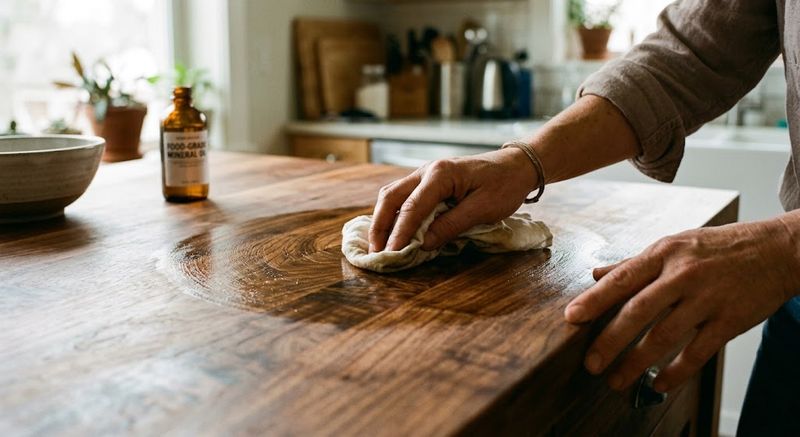
- Apply a food-grade oil. Food-grade mineral oil is the standard choice because it won't turn rancid the way olive or vegetable oils can. Apply generously, let it soak in for 20–30 minutes, then wipe off the excess.
- Re-oil periodically. There's no fixed schedule — oil again whenever water stops beading on the surface or the timber starts looking dry.
This matters for food preparation as well as appearance. Wooden cutting surfaces need to be kept clean and dry, and heavily damaged surfaces can be difficult to clean effectively, as the foodsafety.asn.au guide to chopping boards notes. If a secondhand butcher's block has deep cracks, persistent contamination or deterioration that can't be properly cleaned and repaired, replacing that piece may be the safer option.
Will a Secondhand Kitchen Island Fit Your Kitchen?
This is one of the highest-intent questions for a kitchen island purchase, and it's easy to check only half of it. Measure the island's length, width and height, and the clearance you need around it — but also measure the route from the seller's property to your kitchen, including doorways, gates, staircases and tight corners. A solid timber island that fits your kitchen perfectly is still a bad buy if you can't get it through the front door. Check whether legs or castors can be removed, or the top separated from the base, to make transport easier.
How Much Is a Secondhand Kitchen Island Worth?
There's no fixed price, but a few factors consistently drive value: solid hardwood versus engineered board or veneer, overall dimensions, construction quality, condition of the frame and top, whether it includes drawers or storage, whether the top is stone or timber, and how difficult it will be to transport. A heavily marked solid-timber island can still be worth more than a pristine-looking flat-pack island if the underlying construction and materials are substantially better — appearance alone is a poor guide to value here.
When to Walk Away
Walk away, or negotiate hard, when the likely repair cost outweighs what the piece is worth: structural cracks in the frame, major water damage, severe timber separation, a rotten base, persistent contamination or odour that doesn't lift, a badly warped top, an unfinished back that suggests it was never meant to be freestanding, or dimensions that make transport genuinely impractical for your property.
Secondhand vs New: A Quick Comparison
| Factor | Secondhand kitchen island / butcher's block | New retail island |
|---|---|---|
| Timber quality | Often solid hardwood from an older build era | Varies — budget models may use veneer or particleboard |
| Structural check | Inspect joints, base and stability before buying | Still worth checking on delivery |
| Surface condition | May need cleaning, sanding or re-oiling | Usually ready to use |
| Cost | Often lower for comparable materials | Usually higher for solid timber |
| Environmental impact | Reuses an existing item | Requires new materials and manufacturing |
| Availability | Depends on local listings | Usually readily available |
Where to Find a Secondhand Kitchen Island or Butcher's Block in Melbourne
If you're looking for a secondhand kitchen island or butcher's block in Melbourne, local pickup makes a real difference — these pieces are heavy and awkward to transport, so finding one in your suburb or nearby is often more practical than travelling across the city for a slightly cheaper listing. The Point Cook area on Zirkly is a good example of how browsing by suburb narrows things down to pickups you can actually get to. For islands with built-in drawers or shelving, it's also worth browsing the storage and cabinets category directly, since sellers list these under a few different names.
Secondhand Kitchen Island & Butcher's Block Checklist
- Frame doesn't wobble when pushed from each corner
- Leg-to-frame joints show no significant gaps or splitting
- Top has no deep or widening structural cracks
- Underside is free of soft spots and significant water damage
- Castors lock and are securely attached
- Timber has no persistent unusual odour
- Previous finish is identifiable or can be safely removed
- Measurements fit the kitchen and the access route, including doorways
- Back and sides are finished, confirming it's genuinely freestanding
- Seller can confirm whether it was originally freestanding or built-in
- Any drawers, doors and hinges operate correctly
A secondhand kitchen island or butcher's block rewards a bit of patience at inspection — the frame and joints matter far more to its lifespan than a dry, dull-looking top, which a clean and re-oil will usually put right. If you find one that checks out structurally and fits your kitchen, it's a piece that will likely outlast a new budget equivalent. Ready to start looking, or clearing one out of your own kitchen? Start selling on Zirkly or browse current listings to find your next island or block.
Frequently Asked Questions
Is it safe to buy a secondhand butcher's block?
Generally yes, provided it's cleaned thoroughly and kept dry between uses. Heavily damaged surfaces that can't be properly cleaned are the exception worth avoiding.
What should I look for when buying a used kitchen island?
Check the frame for wobble, inspect the joints and underside for damage, confirm it will fit through your access route, and check any drawers or hinges operate correctly.
How do I know if a butcher's block is solid timber?
Check the end grain and underside where a laminate or veneer finish would be visible as a thin surface layer rather than continuous wood grain, and ask the seller directly if it isn't obvious from photos.
Can you sand and re-oil a secondhand butcher's block?
Yes — light sanding lifts surface marks, and a food-grade mineral oil re-oil afterwards restores the timber's appearance and helps protect it.
What oil should I use on a butcher's block?
Food-grade mineral oil is the standard choice, since it won't go rancid the way olive or vegetable oils can over time.
How do I fix a wobbly kitchen island?
A wobble caused by an uneven floor or a loose bolt is usually a simple fix. A wobble caused by a cracked or separating joint is more involved and worth factoring into your offer.
How much should I pay for a secondhand kitchen island?
It depends on timber quality, construction, condition and included storage — a well-built solid-timber island can be worth more than a newer but lower-quality piece.
How do I know if a kitchen island will fit through my doorway?
Measure the island itself, then separately measure the full access route from the seller's property to your kitchen, including doorways, gates and any staircases.
Where can I buy a secondhand kitchen island in Melbourne?
Local listings vary week to week, but browsing by suburb narrows results down to pickups within a reasonable distance, which matters given how heavy these pieces are to transport.
What should I avoid when buying a used butcher's block?
Avoid blocks with deep or widening splits, soft or spongy patches, persistent odours, or end-grain blocks where sections have visibly started separating.
Adam
Zirkly Team
Adam turns complex secondhand furniture topics into practical advice for Melbourne buyers and sellers — pricing, safety and the decisions that make buying and selling used furniture clearer.