What Is the Circular Economy — and Why Zirkly Is Part of the Solution for Melbourne
What is the circular economy and why does it matter for Australia? We explain the concept, the data and why buying and selling secondhand furniture in Melbourne is one of the most practical ways to participate.
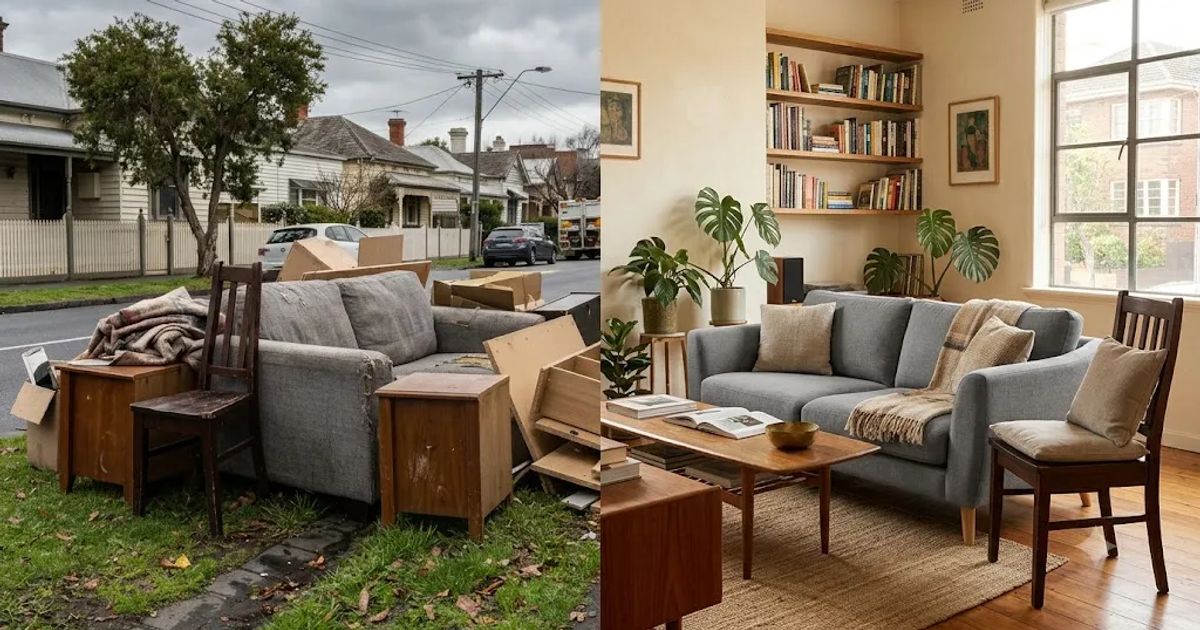
What is the circular economy?
Every week across Melbourne, perfectly good sofas, dining tables and bookshelves are left on kerbsides waiting for landfill collection. At the same time, thousands of people are searching for affordable furniture to fill their homes.
That contradiction — usable things being destroyed while people need them — sits at the heart of the circular economy.
A circular economy is an economic system that keeps products and materials in use for as long as possible through repair, reuse, resale and recycling, reducing waste and the need for new raw materials.
The modern concept has been popularised globally by the Ellen MacArthur Foundation, which defines it through three core principles:
Design out waste and pollution. Products are designed from the start to be repaired, reused, remanufactured, or recycled — not discarded.
Keep products and materials in use. Instead of extracting raw materials, making products, using them once and disposing of them, a circular economy keeps what already exists circulating in the economy for as long as it has value.
Regenerate natural systems. Rather than depleting resources, circular systems return nutrients and materials to the environment or economy in ways that restore rather than damage.
For most of human history, this is actually how economies functioned — things were repaired, handed down, traded and reused. The throwaway culture of the 20th century is a relatively recent deviation, driven by cheap manufacturing, cheap disposal and a culture that equated newness with value.
The linear economy — why the old model is broken
The dominant economic model of the past century is linear. Raw materials are extracted from the earth, transformed into products, sold to consumers, used for a period and then discarded. At every stage, value leaks out of the system and becomes waste.
According to the Productivity Commission's 2025 Inquiry into Australia's Circular Economy, a circular economy uses materials in more sustainable and efficient ways. The traditional economic activity has followed a linear "take, make, use, dispose" model: raw materials are extracted, transformed into products, consumed, then disposed of as waste. By contrast, a circular economy aims to meet human needs with fewer materials, reducing the environmental impacts and costs of economic activity.
The consequences of the linear model at scale are significant:
- Resources are finite. The raw materials being consumed — timber, metals, minerals — are extracted faster than they can regenerate.
- Disposal creates pollution. Landfill contributes to soil and groundwater contamination. Incineration contributes to air pollution and greenhouse gas emissions.
- Economic value is destroyed. Every product that ends up in landfill represents materials, manufacturing energy, transport and labour that cannot be recovered.
- Climate impact is compounding. Manufacturing new products from raw materials is one of the most energy-intensive human activities. Every new product made represents a carbon cost that could have been avoided if the previous product had been kept in use.
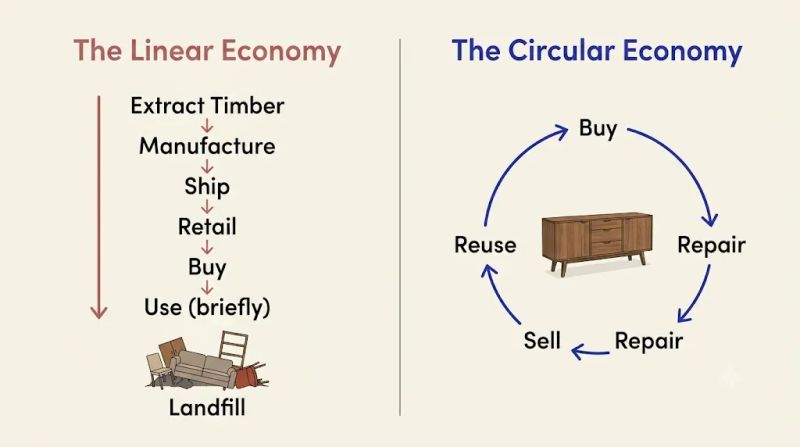
The linear economy — furniture enters the waste stream:
Extract timber → Manufacture → Ship → Retail → Buy → Use (briefly) → Landfill
The circular economy — furniture stays in use:
Buy → Use → Repair → Sell → Reuse → Repair → Sell → Reuse → Repeat
Australia's circular economy — the data
Australia's relationship with the circular economy is improving — but slowly and from a low base.
According to the Australian Bureau of Statistics' Circular Economy indicators (2024), Australia's circularity rate in 2024 was approximately 4.3% — meaning only 4.3% of materials used in the Australian economy are recycled or reused. This is below the global circularity rate of 6.9% according to the Circularity Gap Report 2025 and well below the European Union's 11.5%.
According to GBCA's TRANSFORM 2025 report, a staggering 95.5% of Australia's resources are used for a single purpose or wasted. Only 4.5% of materials are repurposed — below the global average of 7.2% and less than half the EU rate.
The good news: Australia's government has set clear targets. Australia's Circular Economy Framework, launched in December 2024, sets a goal to double the circularity rate by 2035. According to the GBCA, CSIRO modelling shows that meeting that goal could add $26 billion to GDP annually, cut greenhouse gas emissions by 14% and divert 26 million tonnes of material from landfill each year.
On waste recovery, the ABS confirms that 66% of waste was recovered for reuse, recycling or energy in 2022-23 — an improvement from 61% in 2016-17. The National Waste Policy Action Plan sets a target of 80% recovery by 2030.
The gap between where Australia is (4.3% circularity) and where the government wants it to be (double by 2035) is significant. Closing it requires action across every sector of the economy — including furniture.
The furniture problem — Australia's most visible waste challenge
Furniture is one of the most significant contributors to Australia's waste challenge — and one of the most visible. Every week, Melbourne kerbsides fill with sofas, dining tables, bookshelves and bed frames that are perfectly functional but unwanted.
According to Bazaa's circular economy and furniture research, citing Australian government data, Australia generates 30,000 tonnes of commercial furniture waste each year — with 95% of this ending up in landfill. To put that figure in context, it is equivalent to approximately 2.5 times the weight of the Eiffel Tower, discarded every single year.
The broader waste picture compounds this. The ABS confirms that Australia generates 2.88 tonnes of waste per person annually. According to the Productivity Commission's Inquiry, Australia's materials productivity of US$1.10 per kg lags the OECD average of US$2.50.
The furniture industry's waste problem has a specific cause: the rise of fast furniture.
Fast furniture — flat-pack, low-cost, disposable pieces designed for short lifespans — follows the linear economic model precisely. It is manufactured cheaply, purchased cheaply, used briefly and disposed of cheaply. The environmental cost is externalised entirely — paid by the soil, the groundwater and the climate rather than by the manufacturer or the consumer.
The irony is that furniture does not have to work this way. A well-built solid timber dining table from the 1960s is sitting in Melbourne homes right now — 60 years after it was made, still functional, still beautiful, still in use. That is the circular economy in practice: a product with a lifespan so long that it has passed through three or four households without generating any additional manufacturing impact.
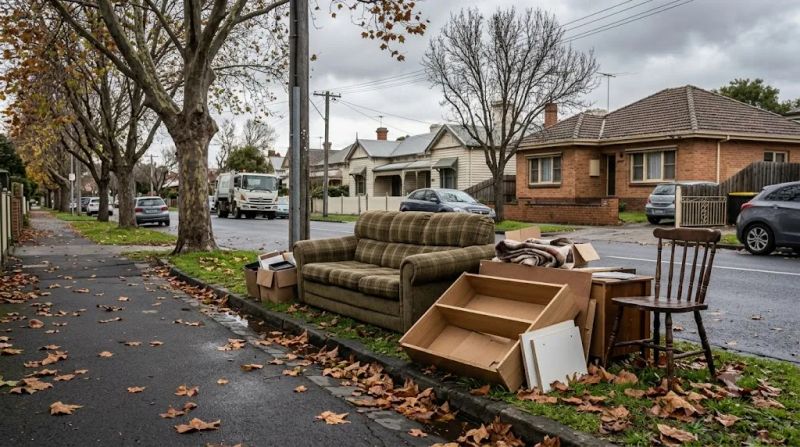
How the circular economy applies to furniture
A circular approach to furniture means extending the useful life of every piece as long as possible before it becomes waste. This happens through a hierarchy of actions:
1. Buy quality to begin with. A piece of furniture built to last 30 years is more circular than a piece built to last 3 years, regardless of what happens at the end of its life. Solid timber construction, quality joinery and durable upholstery are circular choices.
2. Repair and maintain. A scratched tabletop that is sanded and re-oiled stays in use. A wobbly chair joint that is re-glued and clamped stays in use. Repair extends the value already embedded in an existing piece. Our upcycling guide covers exactly how to do this before selling.
3. Reuse — sell or donate. When you no longer need a piece, the most circular action is to find it a new home rather than disposing of it. Every piece sold or donated is a piece that does not go to landfill — and a piece that does not require a new replacement to be manufactured.
A practical Melbourne example: a family in Carnegie upgrading to a larger dining table can sell their old solid timber table to a first-home buyer in Bentleigh. The table — which might have gone to kerbside collection — travels 4km to a new home and stays in active use for another decade. No new manufacturing, no landfill, no transport from overseas. That single transaction is the circular economy working exactly as intended.
4. Repurpose. A dining table becomes a desk. A sideboard becomes a media console. A bookshelf becomes a storage unit. Repurposing keeps materials in use even when the original function is no longer needed.
5. Recycle. When a piece truly cannot be repaired, reused, or repurposed, recycling recovers the raw materials — timber, metal, fabric — for use in new production. This is the last resort, not the first response.
The secondhand furniture market — peer-to-peer trading between individuals — operates at steps 3 and 4 of this hierarchy. It is the most direct and most scalable mechanism for keeping furniture in use rather than in landfill.
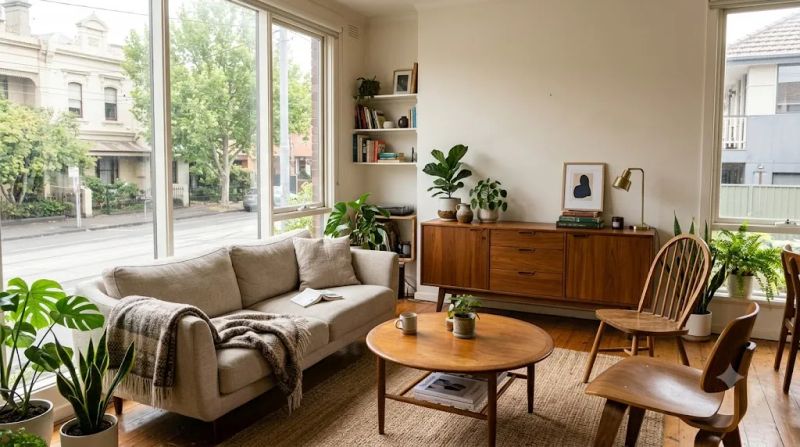
Why peer-to-peer furniture marketplaces matter
The secondhand market is not a niche activity. According to Gumtree's Trading in the Circular Economy report, Australia's pre-loved goods market has grown to $62 billion — up 29% in two years. According to the Productivity Commission's 2025 Inquiry, 96% of Australians engaged in at least one sustainable practice in the past three months and price and quality remain the top drivers of purchases.
This is the circular economy's central insight for consumer goods: the most sustainable choice and the most economical choice are often the same choice. Buying a secondhand solid timber dining table for $200 instead of a new MDF table for $600 is simultaneously better for the buyer's budget, better for the quality of the furniture in their home and better for the environment. The incentives are aligned.
Peer-to-peer marketplaces make this alignment actionable at scale. They connect the person who no longer needs a piece with the person who does — locally, efficiently and without the overhead of a retail intermediary. The transaction happens in the seller's suburb, the piece travels a short distance to a new home and the lifecycle of the furniture is extended by years or decades at near-zero additional environmental cost.
The key word is local. A secondhand sofa that travels 3km from one Melbourne home to another has a fraction of the environmental impact of a new sofa manufactured in Southeast Asia, shipped to Australia, warehoused in a distribution centre and delivered by truck. Hyperlocal peer-to-peer trading is among the most circular furniture transaction models available — it involves minimal additional transport, no new production, and direct community benefit.
The idea behind Zirkly
Zirkly was built around a simple observation: Melbourne produces an enormous volume of good quality furniture that goes to waste not because it is broken, but because its owner no longer needs it — and finding the next owner is harder than it should be.
General classifieds platforms — Gumtree, Facebook Marketplace — carry furniture among thousands of other categories. Furniture buyers have to filter through cars, electronics, clothing and job ads to find what they need. Furniture sellers compete for attention against everything else listed that day. The result is friction: pieces that should find new homes quickly sit unsold and buyers who should find what they need locally end up buying new.
Zirkly removes that friction by being furniture-only, Melbourne-focused and locally oriented. Every listing is furniture. Every seller is a Melbourne local. Every buyer is searching specifically for furniture in a specific suburb. The match between supply and demand is faster, more reliable and more local than on any general classifieds platform.
From a circular economy perspective, reducing friction in the secondhand market is one of the highest-leverage interventions available. The pieces already exist and the buyers already want them — the barrier is discoverability. Lower that barrier and more furniture stays in use rather than going to landfill, which is exactly what a circular economy requires.
After analysing furniture listings and buyer behaviour across Melbourne suburbs — from Bentleigh and Carnegie in the southeast to Brunswick and Fitzroy in the inner north — the same pattern is clear: quality pieces find buyers quickly when they are easy to find. The problem is never a shortage of good furniture or willing buyers. It is a matching problem. Zirkly exists to solve it.
One observation that consistently reinforces the circular economy argument: solid timber furniture — dining tables, sideboards, bookshelves — tends to attract buyer interest within days of listing on Zirkly, while cheaper flat-pack pieces often receive fewer enquiries and take longer to sell. Buyers instinctively recognise quality. Furniture built to last retains value for longer — which is exactly what circularity requires.
What you can do today
Participating in the circular economy does not require policy changes or industrial transformation. It requires individual decisions made at the moments that matter — when you are furnishing a home, when you are clearing out a space, when you have a piece that no longer serves you.
When you need furniture: search the secondhand furniture market in Melbourne before buying new. The piece you need — in the suburb you live in, at a fraction of the retail price — is more likely to be available than you think.
Before you throw something out: list it. A piece that feels worthless to you is often exactly what someone nearby is looking for. Listing on Zirkly takes under a minute — a photo, a description, a price.
📋 How to write a secondhand furniture listing that gets replies → A step-by-step guide to writing listings that attract serious buyers fast.
When something is worn or damaged: consider repair before disposal. Fixes that cost $20–$60 in materials can add hundreds of dollars in resale value.
🔧 How to upcycle secondhand furniture before selling → Sand, paint, re-oil and replace hardware — simple DIY fixes that keep furniture in circulation.
When you choose quality: buy solid timber, buy pieces built to last and buy pieces that have already proven their longevity by being secondhand. Every purchase is a vote for the kind of economy you want to live in.
Every secondhand purchase keeps one more piece of furniture in circulation. Browse furniture available across Melbourne and participate in the circular economy today. www.zirkly.com.au →
Related Zirkly guides
Frequently Asked Questions
What is the circular economy in simple terms?
The circular economy is an economic model that keeps products and materials in use for as long as possible instead of discarding them after a single use. Rather than the linear "take, make, use, throw away" model, a circular economy loops resources back into use — through repair, reuse, resale and recycling. The goal is to get more value from what already exists and reduce the need to extract new raw materials.
What is Australia's circularity rate?
According to the Australian Bureau of Statistics (2024), Australia's circularity rate is approximately 4.3% — meaning only 4.3% of materials used in the economy are recycled or reused. This is below the global average of 6.9% and significantly below the EU rate of 11.5%. Australia's Circular Economy Framework, launched in December 2024, sets a goal to double the circularity rate by 2035.
How much furniture waste does Australia generate?
According to Australian government data cited by Bazaa, Australia generates 30,000 tonnes of commercial furniture waste each year, with 95% ending up in landfill. Household furniture waste adds significantly to this total. The scale of furniture waste is one of the most visible and solvable components of Australia's broader waste challenge.
Is buying secondhand furniture part of the circular economy?
Yes — buying and selling secondhand furniture is one of the most direct ways to participate in the circular economy. When a piece of furniture changes hands rather than going to landfill, it stays in use without any additional manufacturing impact. Peer-to-peer furniture trading — particularly local, suburb-to-suburb transactions — is a highly efficient form of circular economy activity because it involves minimal additional transport and no new production.
What is fast furniture and why is it a problem?
Fast furniture refers to cheap, flat-pack, disposable furniture designed for short lifespans — typically 3 to 5 years. It follows the linear economic model precisely: manufactured cheaply, purchased cheaply, used briefly and discarded. The environmental cost is externalised — it ends up in landfill rather than being reflected in the purchase price. Fast furniture is the opposite of circular economy thinking. Solid timber furniture built to last 30 to 50 years, by contrast, embodies circular economy principles by design.
What is Zirkly and how does it support the circular economy?
Zirkly is Melbourne's dedicated secondhand furniture marketplace — built to reduce the friction in peer-to-peer furniture trading so that more pieces find new homes rather than going to landfill. By being furniture-only and suburb-searchable, Zirkly makes it faster and easier to buy and sell secondhand furniture locally in Melbourne — which is the most direct way to keep furniture in circulation and out of landfill.
What does Australia's Circular Economy Framework say?
Australia's first national Circular Economy Framework was launched in December 2024 by the Australian Government. It sets a goal to double Australia's circularity rate by 2035. According to CSIRO modelling cited by the Green Building Council of Australia, meeting that goal could add $26 billion to GDP annually, cut greenhouse gas emissions by 14% and divert 26 million tonnes of material from landfill each year.
Sujith
Zirkly Team
Sujith is the Founder of Zirkly — Melbourne's dedicated secondhand furniture marketplace. With over 20 years of experience building digital products and leading product strategy, he writes about the secondhand furniture market, consumer behaviour, and the circular economy. His perspective combines technology, market research, and the experience of building a peer-to-peer furniture platform.
More from Insights
Secondhand Bedroom Furniture in Melbourne: What to Do With It After a Wardrobe Clean-Out
22 Aug 2026
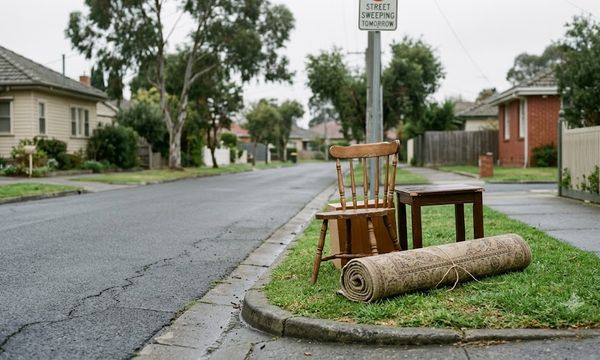
Furniture Waste in Australia: The Real Numbers Behind Landfill (and How Zirkly Fits In)
5 Aug 2026
Granny Flat Furniture Melbourne: A Secondhand Guide to Furnishing a Secondary Dwelling
31 July 2026