How to Remove Mould From Wooden Furniture in Melbourne Homes
Small patches of mould on finished timber can often be cleaned at home. Here is what to wear, what to use, why not to sand first, and how to stop it coming back.
Quick summary
Clean small patches of mould from finished wooden furniture with mild detergent and water. Protect yourself, avoid dry brushing and sanding, dry the piece thoroughly and fix the moisture source. Deep mould in raw timber may not be removable.
Mould on a wardrobe, sideboard or bed frame usually comes down to moisture. Showering, cooking and drying washing indoors all add it to the air, and furniture pushed against an outside wall gets little airflow. This guide covers how to spot mould on wood, what to wear, how to clean it off, when a piece isn’t worth saving and how to keep it from coming back.
How Can You Tell It’s Mould on Wood?
According to the Better Health Channel, mould often looks like fuzz or like a stain, smudge or discolouration. Black, green and white are the most common colours, but it can also be grey, orange or brown. The same page says that if you can see or smell mould, you should clean it up straight away, because mould can damage the surface it grows on.
If you can’t tell whether a dark patch is mould, dirt or an old water mark, treat it as mould. The cleaning steps below cost you a mask and some soapy water.
Who Shouldn’t Clean Mould, and What to Wear
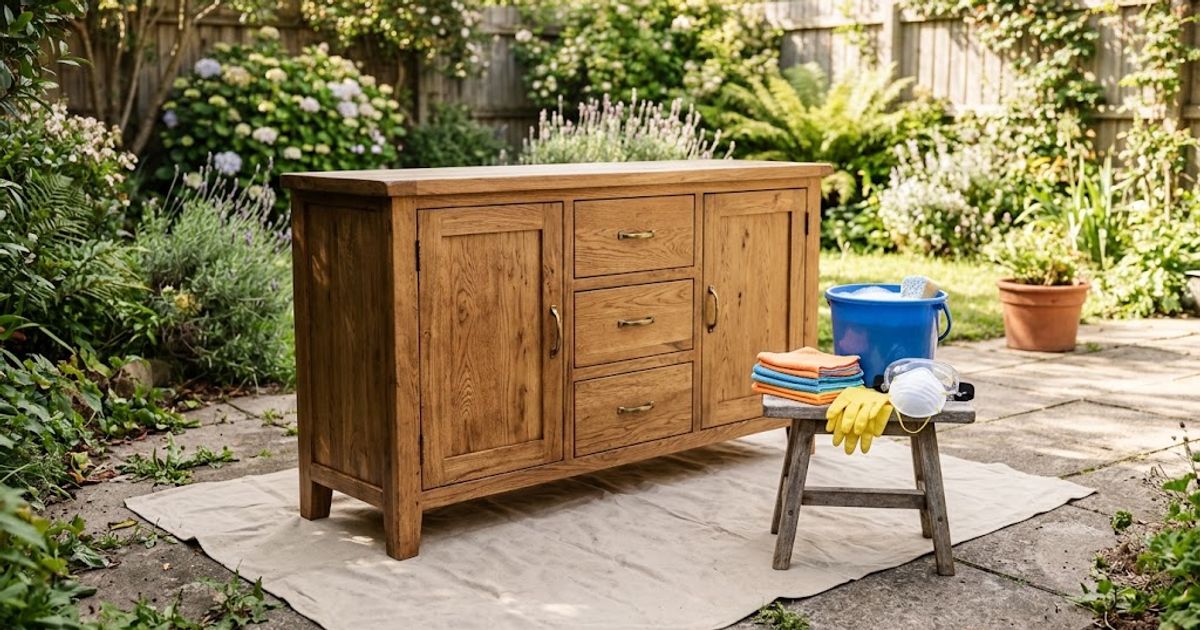
The Better Health Channel’s mould removal guidance recommends good ventilation and protective clothing: rubber gloves, eye protection, overalls, suitable footwear and a P1 or P2 face mask from the hardware store. It says pregnant women, children and people with weakened immune systems or chronic lung disease should not remove mould or be present while it’s removed.
Masks only work with a good seal, and the same page notes that beards can ruin it. It also advises anyone with a heart or lung condition to get medical advice before using a P2 mask.
Don’t dry brush mouldy furniture. Better Health says the brush can flick spores into the air. If you vacuum, use a vacuum with a HEPA filter only.
Should You Sand Mould Off Wood?
No. Neither Better Health nor WA Health’s mould guidelines mentions sanding, so this is our precaution rather than their guidance. Both warn against dry brushing because it can release spores into the air, and sanding is also a dry, abrasive job. WA Health adds that mould can grow into the spaces inside raw wood, so sanding can’t be relied on to reach it.
If mould is still there after cleaning and drying, or the piece is valuable, get professional advice instead of sanding it yourself.
How to Remove Mould From Wooden Furniture, Step by Step
This suits small, isolated patches on finished timber, where you know where the moisture came from and can fix it. WA Health describes a simple, home-manageable problem as new, isolated and visible, with an easily fixed cause and an area of no more than about one square metre. It calls that size arbitrary, so size alone isn’t the test. A small patch that keeps returning means the moisture problem isn’t fixed.
- Choose where you’ll work. Outdoors on a calm, dry day is best. Indoors, pick a room you can close off, because WA Health says to close doors to other rooms, ventilate to the outdoors, and not run air conditioners, ceiling fans or exhaust fans while you remove mould. Moving air can carry spores into other parts of the house. It also notes that on a windy day, open windows can just spread spores around the room.
- Vacuum only with a HEPA filter. If you don’t have one, skip this step.
- Wipe with soapy water. Use mild detergent in water on a microfibre cloth, and rinse the cloth often in a separate container of clean water so you don’t spread the mould. Don’t soak the wood. On antique or polished timber, test a hidden spot first.
- Scrub gently and go past the visible edge. WA Health says the physical removal of the mould matters more than the cleaning product. It suggests cleaning 30 to 50 cm beyond the visible edge on a surface, because new growth is often invisible. On furniture, wipe the whole panel, and check backs and undersides.
- Wipe off the residue with a clean damp cloth.
- Dry it fully. Once the mould is off, WA Health says a fan can help, directed across the surface rather than at it, with air at ambient temperature, because hot air can dry the outside and trap moisture inside. Complete drying can take days. Don’t paint, seal or polish until it’s completely dry.
- Contain the waste and recheck. Seal used cloths and disposable gloves in a plastic bag, and wash your cleaning clothes separately. Look again after two to four weeks. WA Health uses no regrowth in that window as a sign the job worked. If mould or a musty smell remains, get professional advice rather than scrubbing harder.
Bleach, Vinegar or Soapy Water: What Should You Use?
WA Health recommends soapy water, which it describes as effective and the least damaging to the surface being cleaned. The Better Health Channel says household detergent or white vinegar is enough in many cases on hard surfaces.
WA Health says bleach won’t completely remove mould on its own and doesn’t appear to prevent regrowth well. It can also leave residues. It adds that vinegar, alcohol and essential oils may help, but it isn’t known whether they beat soapy water. Whatever you use, never mix bleach with ammonia, acids or other cleaners, because the fumes are hazardous.
When Is Mould on Wood Too Deep to Save?
WA Health says mould is hard to remove completely from porous material such as raw wood, and that these items often can’t be economically salvaged. It says valuable or sentimental pieces may need a professional.
Call a professional, or consider letting the piece go, if:
- The mould covers a large area or several places, or it keeps coming back after cleaning. WA Health treats both as complex problems that typically need professional help.
- The mould is deep in unfinished timber.
- The piece has padded or upholstered parts. The Better Health Channel says soft furnishings that can’t go in the washing machine need professional cleaning, or may have to be thrown out.
WA Health says mould isn’t hazardous waste and can go out with normal rubbish, but mouldy items should be contained so spores aren’t spread when they’re carried through clean parts of the home. For a large piece, bagging may not be practical. Our suggestion is to wrap or cover it as far as you can, take the shortest route out, and avoid dragging or knocking it. Hard rubbish rules differ by council, so check yours before you put it out.
How to Stop Mould Coming Back
Mould needs moisture, so the fix is damp control:
- Repair leaks and clear gutters.
- Use exhaust fans or open a window when showering and cooking, and wipe up condensation.
- Dry washing outside where you can.
- Move furniture slightly away from walls so air can pass behind it, and leave wardrobe and cupboard doors open now and then.
- Keep indoor humidity below 65%, which is WA Health’s guide. A cheap hygrometer will tell you where you stand, and the Better Health Channel suggests a dehumidifier or reverse-cycle air conditioning if you have one.
- Don’t store furniture in damp basements or crawlspaces, or against cold outside walls.
Buying Secondhand Wooden Furniture? Check for Mould First
Before you buy, smell the inside of drawers and cupboards, look at the back panel and underside, and ask where the piece was stored. A patch of surface mould that wipes off a finished top is a different proposition from staining that has gone into raw timber. On Zirkly you can message the seller and ask for photos of the back and underside before you travel. Browse secondhand furniture in Melbourne and apply the same checks.
Bathrooms are damp by nature, so bathroom furniture deserves extra scrutiny. Our guide to secondhand bathroom vanities and cabinets covers what to look for. Once a piece is home, cleaning secondhand furniture before you bring it inside covers the rest.
Cleaned up a piece that has stayed mould-free, or got furniture you no longer need? Start selling on Zirkly, and say plainly in your listing if it has ever had mould and how you treated it, so buyers know exactly what they’re getting.
Frequently Asked Questions
Can you remove mould from wooden furniture yourself?
Often yes, if it is a small, isolated patch on finished timber and you know where the moisture came from and can fix it. WA Health’s one square metre figure is a rough guide, not a safe limit. Large, recurring or deep patches in raw wood need professional advice, or the piece may not be worth saving.
What is the best cleaner for mould on wood?
WA Health recommends soapy water and gentle scrubbing, and says the scrubbing matters more than the product. The Better Health Channel says detergent or white vinegar is enough in many cases. Bleach doesn’t appear to prevent regrowth well.
Is it safe to sand mould off wood?
We don’t recommend it. Neither Better Health nor WA Health mentions sanding, but both warn that dry brushing can release spores, and sanding is also dry and abrasive. If mould remains after cleaning and drying, get professional advice.
Can you use vinegar on mouldy wood?
The Better Health Channel says white vinegar is enough on many hard surfaces, but WA Health says it isn’t known to beat soapy water. Test a hidden spot first on polished or antique timber.
Why is mould growing on my wardrobe or bed frame?
Usually moisture and poor airflow. The Better Health Channel lists condensation from showering, cooking and drying clothes, and furniture pushed against outside walls. Moving it a little way from the wall and ventilating the room helps.
Is mouldy wooden furniture worth keeping?
A small surface patch on finished timber often is. Mould deep in raw wood, over a large area, or on a valuable piece usually calls for a professional opinion, and sometimes the piece can’t be saved.
Why does my furniture still smell musty after cleaning?
A persistent mouldy or earthy smell can mean mould is still there, including hidden mould. Dry the piece fully, check the backs and undersides again, and if the smell stays, get professional advice.
Is mould on secondhand furniture a dealbreaker?
Not automatically. A small patch on a finished surface can be cleaned. A strong musty smell or staining in raw timber is harder to fix, so ask where the piece was stored and for photos of the back and underside before you buy.
Adam
Zirkly Team
Adam turns complex secondhand furniture topics into practical advice for Melbourne buyers and sellers — pricing, safety and the decisions that make buying and selling used furniture clearer.