Secondhand Bed Frames and Bases in Melbourne: Sizes, Slats and What to Check
Buying a secondhand bed frame in Melbourne? Learn how to match frame and mattress sizes, check slat spacing and inspect joints before you buy.
Quick summary
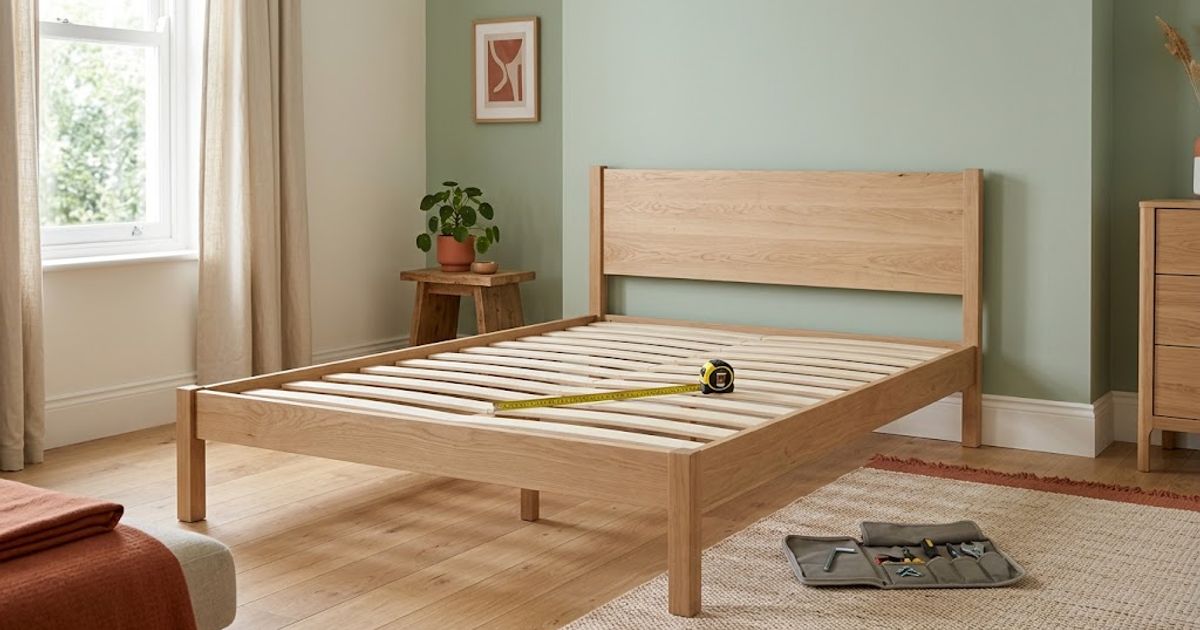
Secondhand bed frames and bases in Melbourne are straightforward to buy well when you check three things: the frame's inside size matches your mattress, the slats or base support it evenly, and the joints and hardware are sound. Measure your mattress and room first, then inspect the underside in person, or ask for photos of it, before you commit.
A bed frame is a simple structure with few moving parts, so most problems show up in a ten-minute inspection. The checks below apply whether you are shopping for secondhand bed frames in Melbourne, such as a plain timber double, a metal single or a storage bed, or for secondhand bed bases that sit under a mattress.
Secondhand Bed Frames vs Bed Bases: What Is the Difference?
The frame is the structure: side rails, head and foot ends, and legs. The base is what the mattress rests on, such as timber slats, a solid platform or a sprung ensemble base. Some listings sell both together as a complete bed. Others sell a headboard-and-rails frame that still needs slats or a base. Check the listing says which you are getting, because a frame without slats is not ready to sleep on.
What Bed Frame Sizes Are There in Australia?
Bed frames are named after the mattress they hold. According to Bedshed's bed sizes guide, standard Australian mattresses are single (920 x 1,880 mm), long single (920 x 2,030 mm), king single (1,070 x 2,030 mm), double (1,380 x 1,880 mm), queen (1,530 x 2,030 mm), king (1,830 x 2,030 mm) and super king (2,030 x 2,030 mm). The guide treats these as indicative, with a 20 mm manufacturing tolerance.
Queen, king and super king are all the same length, so the extra size is in the width. A frame is always bigger than its mattress by an amount that depends on the design, so go by the frame's inside dimensions rather than its name.
How to Measure a Secondhand Bed Frame and Your Room
Measure the inside of the frame from rail to rail and from head to foot, then the outside footprint. Compare the inside figures with your mattress. A frame that is too tight pushes the mattress edges up, and one that is too loose lets it shift.
Then check the room. Bedshed's size guide suggests leaving at least one metre around the sides and end of the bed, and choosing a mattress at least 150 mm longer than the tallest sleeper. That clearance is generous and many Melbourne bedrooms, apartments especially, cannot offer it, so treat it as a guide and make sure you can still walk around the bed and open doors and drawers. Also measure the doors, hallways and stairs the frame must travel through, using our guide to measuring doorways for secondhand furniture.
How Far Apart Should Bed Slats Be?
Slat spacing decides how evenly a mattress is supported, and it is the detail buyers most often miss. There is no single Australian rule for it, because each mattress maker sets its own requirements. As one example, Sleeping Duck's warranty terms say gaps wider than 12 cm leave springs unsupported and recommend 8 cm or less, and that the middle of the mattress needs support, not just the edges. Treat those figures as a reference point from one manufacturer, and check the care instructions for your own mattress.
In person, measure a few gaps with a tape and count the slats. Look for cracked or missing slats, slats loose in their holders, and curved slats that have flattened. Extra slats can often be fitted if the gaps are too wide. Larger frames should also have a centre rail running head to foot, with legs reaching the floor, so the middle of the mattress does not sink.
What to Check on a Secondhand Bed Frame Before You Buy
Work through the frame in this order:
- Joints. Grip the headboard and rails and rock them. A little movement can be fixed by tightening bolts. Wobble from stripped holes or split timber is harder to repair.
- Brackets and hooks. Look for bent or cracked metal brackets where the rails meet the ends.
- Timber. Check for splits near bolt holes, and for tiny round holes with fine powdery dust beneath, which can indicate borer.
- Metal frames. Check welds for cracks, legs for bends and joins for rust.
- Upholstered headboards. Look for stains, odours, torn fabric and exposed staples.
- Hardware. Ask whether all the bolts, brackets and any Allen keys come with it.
- Noise. Sit on the edge and rock. A frame that creaks now will usually creak at home.
- Bed bugs. Inspect joints, screw holes, slat ends and the underside for live bugs, tiny dark spots or shed skins. Our bed bug check for secondhand furniture explains what to look for. If you see signs, walk away.
If the bed comes with its mattress, apply the same care to it, using our guide to buying a secondhand mattress safely.
Secondhand Storage Beds, Ensembles and Trundles
Gas-lift storage beds should raise smoothly and stay open without drifting down, so test the lift before you pay. Check that drawers slide fully on their runners. On ensemble bases, look at the fabric underside for rips and make sure the surface sits flat. On trundles, roll the lower bed out and back to confirm the wheels and mechanism work. These frames are heavy, so plan for two people at pickup.
Secondhand Bunk Beds: What to Check
Bunk beds are covered by a mandatory standard that applies to suppliers. According to ACCC Product Safety, bunks must have permanent guardrails on all four sides, at least 260 mm between the top of the guardrail and the mattress base, no gaps between 95 and 230 mm or between 30 and 50 mm, and no protrusions over 8 mm. The ACCC notes that suppliers should have bunks tested to meet the gap requirements.
Those figures are useful inspection guidance, and a tape measure will show you quickly if a bunk falls short. Passing them does not certify that a secondhand bunk meets the standard, because a tape cannot show how it was made or tested. Older bunks, or any that have been modified, repaired or are missing parts, carry more risk, so walk away from those. Check the ladder and fixings, then run the model through our furniture recall check before you travel.
How to Dismantle and Move a Bed Frame
Photograph the frame assembled, then photograph each step as you take it apart. Bag the bolts for each part and tape the bag to that part. Bring the right tools, usually an Allen key, screwdriver and spanner, plus blankets to protect the timber. If you can, inspect the frame assembled and then dismantle it together with the seller.
Most frames travel well in a regular car once the rails and slats are separated. Our guide to transporting furniture in a regular car covers loading and securing.
Where to Find Secondhand Bed Frames in Melbourne
On Zirkly, browse the bed frames category or the wider beds and bedroom range, then compare listings of the same size side by side. Message the seller through the app and ask for the inside dimensions, a photo of the slats and a photo of the underside. If you prefer to shop close to home, the South Yarra page lists beds from local sellers alongside other furniture. Some sellers also offer delivery, so check each listing. To judge whether an asking price is reasonable, our guide to pricing secondhand furniture in Melbourne explains what drives value.
Buy or Sell a Bed Frame Locally
Ready to find a frame that fits your mattress? Browse local bed frames on Zirkly. Clearing out a frame you have outgrown? List it free on Zirkly and let a local buyer collect it.
Frequently Asked Questions
What size bed frame do I need for a queen mattress?
A queen frame, which is typically around 153 x 203 cm inside. Measure rail to rail and head to foot, because makers vary slightly.
How far apart should bed slats be?
It depends on your mattress. One mattress maker recommends 8 cm or less, but check your own mattress's instructions.
Can I use a secondhand bed frame with any mattress?
Usually, if the size matches and the base supports the mattress evenly. Some mattress makers specify the type of base, so check first.
What should I check on a secondhand bed frame?
Test the joints, slats and centre rail, look for splits, rust or cracked welds, and inspect screw holes and joints for signs of bed bugs.
Where can I buy a secondhand bed frame in Melbourne?
Browse the bed frames category on Zirkly and filter by size and suburb, then message the seller for the inside dimensions and a photo of the underside.
How much does a secondhand bed frame cost?
Prices depend on size, material, condition and features such as storage. Compare listings of the same size, and read the Zirkly guide How to Price Secondhand Furniture in Melbourne for what drives value.
Can I take a bed frame apart to move it?
Yes, most frames dismantle with basic tools. Photograph the assembly, bag the bolts for each part, and bring a second person for storage frames.
Are secondhand bunk beds safe?
They can be, if complete and undamaged, but a tape measure cannot confirm that a bunk meets the standard. Check the ACCC measurements and recalls, and skip older, modified or incomplete bunks.
Adam
Zirkly Team
Adam turns complex secondhand furniture topics into practical advice for Melbourne buyers and sellers — pricing, safety and the decisions that make buying and selling used furniture clearer.