Secondhand Bathroom Vanities and Cabinets in Melbourne: What's Safe to Buy Used?
A Melbourne buyer's guide to secondhand bathroom vanities and cabinets — what's genuinely safe to buy used, the water-damage and mould checks to run before you pay, and the questions worth asking every seller.
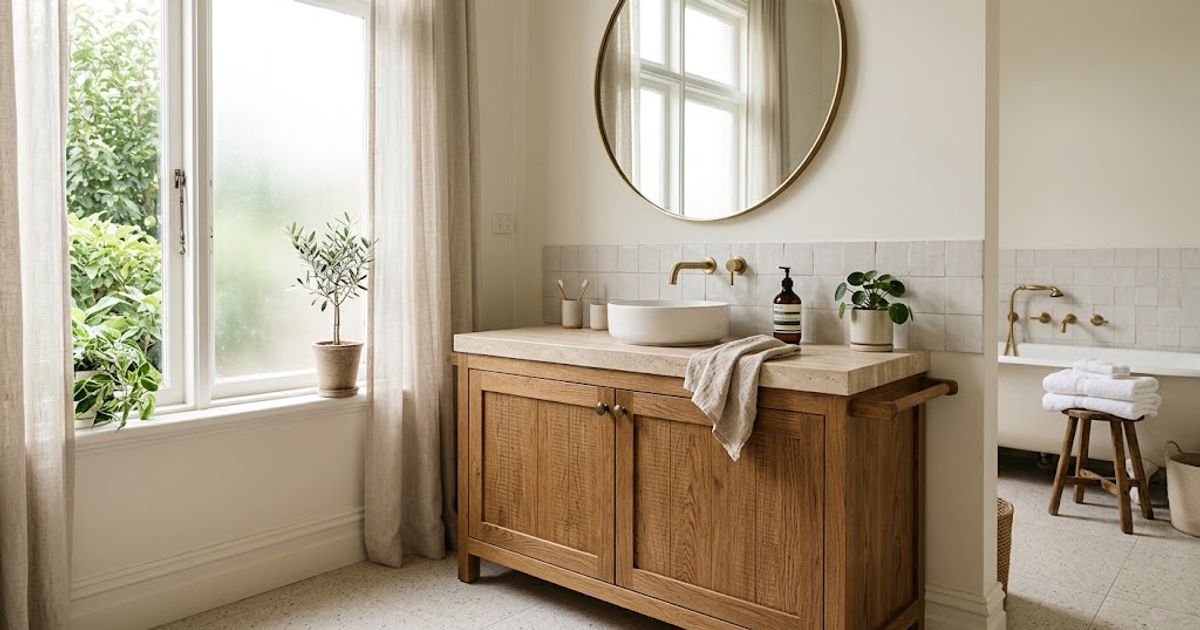
Quick summary: Secondhand bathroom vanities are a safe buy in Melbourne when you check the cabinet's condition rather than trust the material alone — timber, plywood and stone generally hold up well, but MDF or particleboard with swelling, delamination or a musty smell is a genuine reason to walk away. Tapware and waste plumbing are best treated as separate items rather than assumed safe. This guide covers exactly what to inspect, what to ask the seller, and how installation works in Victoria.
Buying a secondhand bathroom vanity in Melbourne can save money, but bathrooms are one place where condition matters more than appearance. Water exposure can cause swelling, mould, delamination and structural damage that isn't always obvious in listing photos. The safest approach is to inspect the cabinet carcass, benchtop and hardware in person, while treating tapware and plumbing components as separate items to assess or replace on their own merits.
Is It Safe to Buy a Secondhand Bathroom Vanity?
The concern is specific: bathrooms mean sustained moisture, and moisture is what causes mould and material failure in cabinetry that wasn't built to stay wet. According to the Better Health Channel, mould grows wherever there's enough moisture and poor ventilation — conditions a bathroom cabinet sits in daily, which is exactly why the inspection below focuses on moisture history rather than surface appearance. It's a similar trust question to buying a secondhand mattress: the fix isn't avoiding the category, it's knowing precisely what to check before you pay.
What's Safe to Buy Secondhand
Cabinets and carcasses
- Solid timber or marine-grade plywood — generally lower risk, but still check for water staining, rot at joints, and finish condition; material alone doesn't guarantee there's no hidden damage
- Hardware — hinges, handles and soft-close mechanisms are cheap to replace, so wear here shouldn't rule out an otherwise sound cabinet
Benchtops and basins
- Stone and engineered stone benchtops — lower risk and generally durable, though check specifically for cracks or chips around the basin cutout, since that's the most common failure point
- Ceramic or vitreous china basins — check for hairline cracks and chips rather than assuming intact means undamaged underneath
Mirrors and mirrored cabinets
- No direct water contact in normal use, so condition here is mostly cosmetic
What to Avoid When Buying a Used Bathroom Vanity
🚩 Walk away if you find:
- Swollen, soft or spongy MDF or particleboard, especially near the base or plinth
- Extensive delamination or peeling laminate at seams
- A persistent musty or damp smell inside cabinet cavities
- Visible mould or significant water staining
- A cracked benchtop around the basin cutout
- Rotten or discoloured timber
- An unexplained previous leak or water damage the seller can't account for
- A seller who won't allow an in-person inspection before you commit
How to Inspect a Secondhand Bathroom Vanity
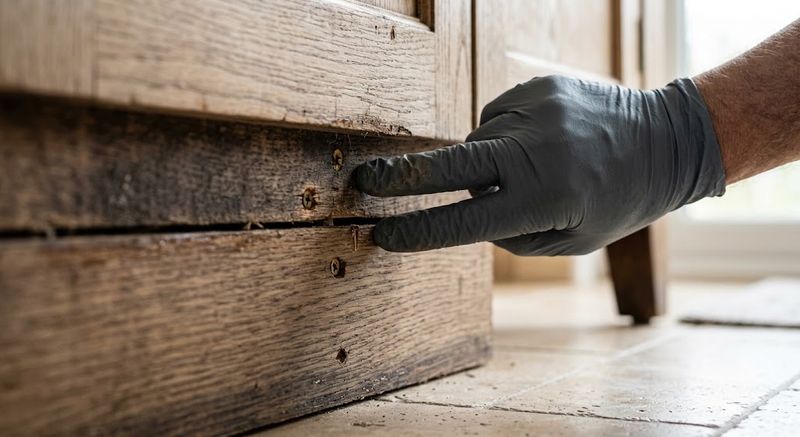
- Check the underside, back panel and hidden edges. Bathroom furniture gets damaged in places sellers rarely photograph — the underside, rear bottom edge, inside corners, kickboard and any exposed particleboard or MDF edges.
- Press-test the base panel. Firm, even pressure — any give or sponginess signals water damage that won't show on the surface.
- Check around pipe cutouts and tap holes for staining, softness or old sealant residue, since these are the highest-exposure points on any vanity.
- Open every door and drawer and smell inside. A musty or damp smell, particularly in cavities, can indicate previous moisture exposure or mould growth — it's a strong prompt to look closer, not proof on its own.
- Inspect the benchtop and basin for cracks or chips near the cutout.
- Ask the seller directly why it's being sold and what condition the bathroom was in.
Questions to Ask Before Buying a Used Bathroom Vanity
- Why are you selling it?
- How old is the vanity?
- Was it installed and plumbed in, or has it been in storage?
- Has it ever had a leak or water damage?
- Has the bathroom itself had mould issues?
- How long has it been removed from the wall?
- Are the basin and benchtop included?
- Are the tapware and plumbing components included?
- What are the exact dimensions?
- Can I inspect it in person before buying?
Check Dimensions and Plumbing Compatibility Before Buying
A structurally sound vanity can still be the wrong buy if it doesn't fit your space or your existing plumbing. Before committing, confirm:
- Overall width, depth and height
- Basin position and waste outlet position
- Tap-hole configuration
- Clearance for doors and drawers to open fully
- Wall fixing points and available bathroom space
Don't assume a vanity that physically fits the space will connect to your existing plumbing without modification — check basin and waste positions against your current setup before you buy, not after.
Secondhand Bathroom Vanity Materials at a Glance
| Material / component | Typical secondhand risk | What to check |
|---|---|---|
| Solid timber | Lower | Water staining, rot, joints, finish |
| Marine plywood | Lower | Edges, joins, swelling, delamination |
| Stone benchtop | Lower | Cracks, chips, basin cutout |
| Laminate over particleboard | Medium–high | Swollen edges, bubbling, peeling |
| MDF cabinet | Medium–high | Base, edges, back panel, odour |
| Tapware and waste plumbing | Assess separately | Corrosion, seals, compatibility |
What About Used Tapware and Plumbing?
Tapware, waste traps and flexible hoses are separate from the cabinet itself. Because their age, condition and sealing history can be hard to verify by eye, many buyers prefer to fit new ones rather than reuse unknown components — but that's a judgment call based on condition, not an absolute rule.
Installing a Secondhand Bathroom Vanity in Victoria
In Victoria, plumbing work must be carried out by an appropriately licensed or registered plumbing professional, as set out by the Building and Plumbing Commission. If installing a secondhand vanity involves changing or connecting water supply or waste plumbing, have that part of the job assessed and completed by a licensed plumber — the vanity itself is a furniture decision, but connecting it to water and waste isn't.
Where to Buy Secondhand Bathroom Vanities in Melbourne
Secondhand bathroom vanities and cabinets appear regularly on Zirkly's storage and cabinets category as Melbourne homeowners renovate, move house, downsize or update their bathroom. Buying locally, including in suburbs like Ormond, makes an in-person inspection straightforward — which matters here more than with most furniture, since swelling, odour and damage around pipe cutouts are genuinely hard to assess from photos alone. For a fuller rundown of general buying precautions, it's worth reading what to consider before buying secondhand furniture in Melbourne alongside this guide.
The Bottom Line
A secondhand bathroom vanity can be a practical way to save money and keep usable furniture in circulation, but only when its moisture history and structural condition check out. Inspect the cabinet in person, pay particular attention to the base and pipe cutouts, confirm dimensions and plumbing compatibility before buying, and treat any plumbing work as a separate professional job. If you're replacing a vanity or cabinet that's still in good condition, you can list it for free on Zirkly in minutes.
Frequently Asked Questions
Is it safe to buy a secondhand bathroom vanity?
Yes, a secondhand bathroom vanity can be a good buy if you check the cabinet material and base for water damage, smell inside for mustiness, and treat any included tapware or plumbing fittings as separate items to assess on their own.
What's the biggest red flag when buying a used bathroom cabinet?
Swelling or softness in an MDF or particleboard cabinet, particularly at the base — this indicates water exposure that doesn't reverse and often points to a larger moisture problem.
Should I buy secondhand tapware or waste pipes with a used vanity?
Usually it's better to replace unknown or ageing plumbing components, since their internal condition, corrosion and seal history are difficult to verify from the outside — but a well-documented, recently installed set may be fine to keep.
Do I need a licensed plumber to install a secondhand vanity?
If installation involves changing or connecting water supply or waste plumbing, use an appropriately licensed or registered plumber in Victoria — the vanity itself isn't regulated plumbing work, but connecting it to water and waste is.
Where can I buy a secondhand bathroom vanity near me in Melbourne?
Zirkly's storage and cabinets category lists vanities and bathroom cabinets from local sellers across Melbourne, including suburbs like Ormond, making in-person inspection straightforward.
How do I know if a secondhand vanity has mould inside it?
You can't reliably rule out hidden mould from smell alone. Open every door and drawer and look for visible mould, staining and musty odours — if there's evidence of significant past water damage, it's better to walk away than assume the cabinet is fine because the surface looks clean.
Can I dispose of an old water-damaged vanity through hard waste collection in Glen Eira?
City of Glen Eira residents can book up to three free hard rubbish collections per financial year online or by phone, with items placed on the nature strip the night before the scheduled collection day — check the council's current item guidelines before booking, since not everything qualifies.
Are secondhand bathroom cabinets worth buying?
Yes, provided the cabinet is structurally sound and free from significant water damage. Cabinets made from solid timber or plywood tend to hold up well secondhand, while swollen MDF or particleboard is a strong reason to walk away.
Adam
Zirkly Team
Adam turns complex secondhand furniture topics into practical advice for Melbourne buyers and sellers — pricing, safety and the decisions that make buying and selling used furniture clearer.