How to Clean a Wooden Dining Table Without Ruining the Finish
Learn how to clean a wooden dining table safely, remove water rings and stains, and care for oiled, waxed and lacquered finishes.
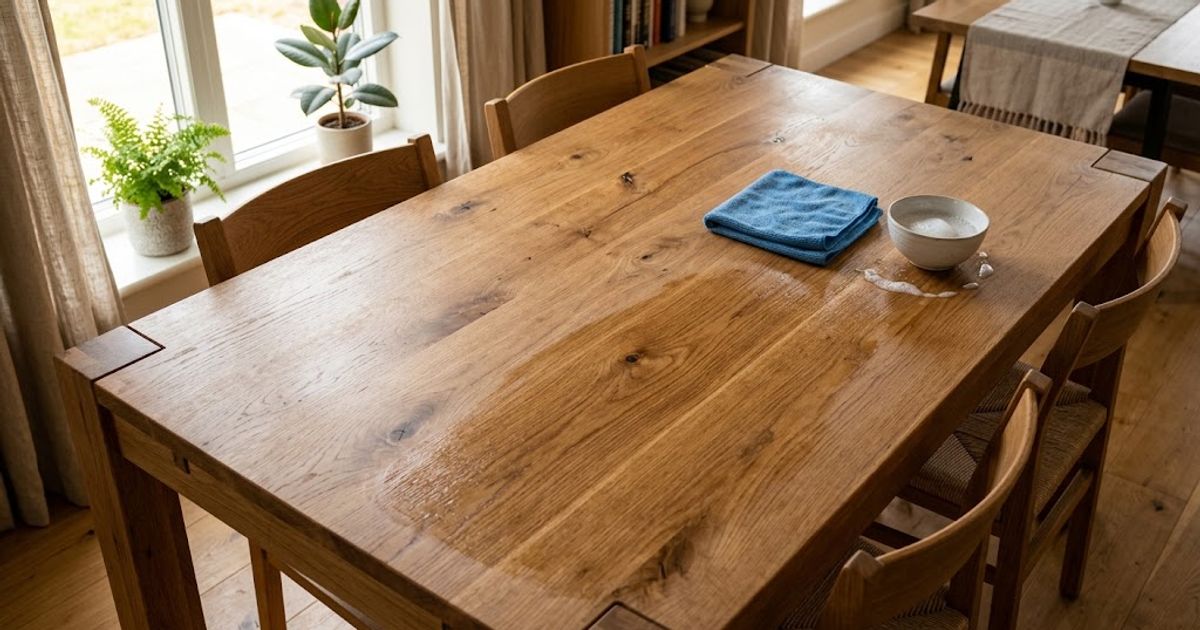
Quick summary: Cleaning a wooden dining table safely comes down to a barely damp microfiber cloth, a few drops of mild dish soap, and drying the surface immediately — never soaking the timber or using harsh chemicals. The right ongoing care beyond that depends on whether your table has an oiled, waxed, lacquered or untreated finish, so it's worth identifying that before you reach for anything stronger than water.
For most finished wooden dining tables, the safest cleaning method is simple: remove crumbs and dust, wipe with a barely damp microfiber cloth and a small amount of mild dish soap, then dry the surface immediately. The important exception is the finish — oiled, waxed, lacquered and untreated wood need slightly different care, which is where most of the mistakes happen.
Avoid these when cleaning a wooden table:
- Don't soak the timber or leave water sitting on the surface
- Don't use bleach or ammonia-based sprays
- Don't scrub with abrasive pads or scourers
- Don't apply furniture polish without checking it's compatible with your finish
- Don't sand or treat a stain before identifying what finish you're working with
What You'll Need
| Item | Why you need it |
|---|---|
| Two microfiber cloths | One for washing, one for drying immediately after |
| Mild dish soap | A few drops in warm water is enough for most everyday grime |
| Soft-bristle brush | For crumbs and dust in carved detail or joints |
| Placemats and trivets | Prevent most stains and heat marks before they happen |
| Furniture oil or wax matched to your finish | For periodic conditioning, not everyday cleaning |
How to Clean a Wooden Dining Table in 5 Minutes
- Remove crumbs and loose dirt with a dry cloth or soft brush.
- Mix a few drops of mild dish soap into warm water.
- Dampen a microfiber cloth and wring it out thoroughly — it should feel barely damp, not wet.
- Wipe with the grain, not across it.
- Dry immediately with a second, clean microfiber cloth.
- Once the surface is completely dry, put placemats and trivets back.
How Often Should You Clean a Wooden Dining Table?
A dry wipe after meals and one proper damp-cloth clean a week covers most households. Melbourne homes can also expose timber furniture to fairly significant seasonal swings in temperature and humidity, particularly in rooms with strong afternoon sun or nearby heating — worth keeping in mind if your table sits near a window or a heater vent, since it can dry out or fade a little faster than expected.
How to Remove Water Rings, Heat Marks and Stains
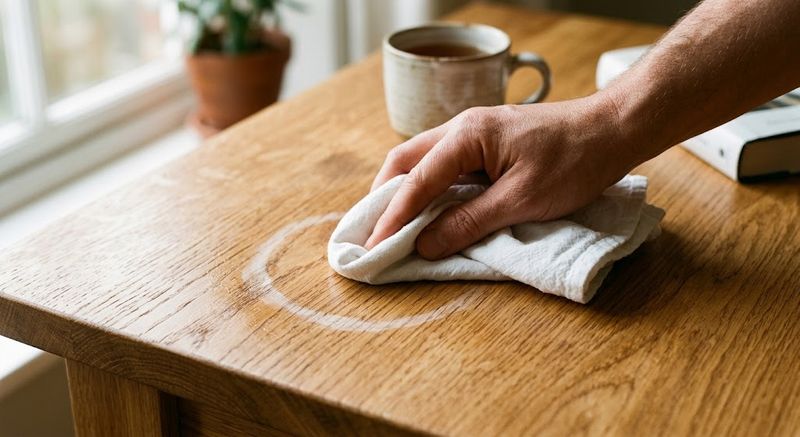
A fresh water ring is usually just moisture trapped under the finish rather than damage to the timber itself. Start conservatively:
- Dry the area thoroughly.
- Gently buff with a soft, dry cloth in the direction of the grain.
- If the mark remains, check what finish the table has before trying anything stronger.
- For a persistent mark, use a treatment matched to that specific finish, or get a professional restorer's opinion for a valuable or older piece.
You'll see toothpaste suggested online as a quick fix for water rings. It's a popular DIY tip, but toothpaste is mildly abrasive and can dull or scratch some finishes, so it's not something we'd recommend as a general treatment — particularly on solid timber worth preserving. The safer path is identifying the finish first and treating accordingly.
Heat marks and deeper stains follow the same logic: gentle buffing first, finish-appropriate products second, professional help for anything that doesn't shift.
How to Tell What Finish Your Wooden Table Has
If you're unsure which finish your table has, look at both its appearance and how the surface feels.
Lacquer or varnish
- Forms a protective film over the timber — may look glossy, satin or matte
- Surface feels smooth and slightly harder underhand
- Water tends to bead on top rather than soaking straight in
Oil finish
- Penetrates the wood rather than sitting on top
- Grain feels more exposed and tactile
- Surface generally looks matte rather than glossy
Wax finish
- Generally applied as a surface coating that gives a soft, warm sheen
- Can feel less "plastic" than a film finish like lacquer
- May show faint buffing marks depending on how it was applied
Not sure at all?
Use the gentlest method — a barely damp cloth and mild soap only — until you've confirmed the finish, and check for any manufacturer or seller information before using a dedicated oil, wax or polish product.
How to Clean Oiled, Waxed and Lacquered Wood
| Finish type | Everyday cleaning | Periodic care | Avoid |
|---|---|---|---|
| Lacquer or varnish | Damp cloth, mild soap, dry immediately | Occasional furniture polish suited to lacquer | Silicone-based sprays, wax build-up |
| Oil (Danish oil, teak oil) | Damp cloth only, dry straight after | Re-oil roughly every 6–12 months | Water sitting on the surface, waxing over oil |
| Wax finish | Dry dusting mostly, damp cloth if needed | Re-wax every few months with a soft cloth | Soap-based cleaners, which can strip wax |
| Raw or untreated wood | Dry dusting and a barely damp cloth only | Consider applying an appropriate finish before regular dining use | Applying any oil or wax product before identifying the timber and confirming it's untreated |
This guide from The Kitchn covers the microfiber-and-mild-soap method well for everyday lacquered and varnished tables. For older or more valuable timber pieces, the Canadian Conservation Institute's guidance on caring for wooden furniture explains why stripping or refinishing an original surface is usually a last resort rather than a first move.
A Note for Secondhand Buyers
Everything above applies just as well to a secondhand table as a new one — a well-maintained oiled or waxed table often just needs the same soap-and-water routine to come back to life. If you're currently shopping rather than cleaning, it's worth knowing what to check on a listing before you commit, since condition, joints and finish all affect how a table will hold up over time. Browsing what's listed near you on Zirkly is a good place to start, and it's worth giving any secondhand piece a proper clean before it comes inside — our guide to cleaning secondhand furniture before you bring it home covers that first deep clean, separate from the ongoing care in this guide.
Final Thoughts
Cleaning a wooden dining table well isn't complicated — a soft cloth, mild soap, drying it straight away, and matching your care routine to the finish will keep most tables looking good for years. That's also what makes a secondhand timber table a genuinely low-risk buy: a table that's been dusted, dried and occasionally conditioned holds up just as well as one bought new. If you have one to pass on, listing it on Zirkly is there when you're ready.
Frequently Asked Questions
What is the best cleaner for a wooden dining table?
For most finished wooden dining tables, the safest general-purpose cleaner is warm water with a few drops of mild dish soap, applied with a barely damp microfiber cloth and followed immediately by a dry cloth. Always check the manufacturer's care instructions if you know the finish.
Can you use dish soap on a wooden table?
Yes, a small amount of mild dish soap diluted in warm water is one of the safer everyday options for most finishes, as long as the cloth is only barely damp and the surface is dried straight after.
How often should I clean a wooden dining table?
A quick dry wipe after meals and a proper damp-cloth clean once a week is enough for most households. Heavier use — young kids, daily homework, frequent guests — might call for cleaning every few days.
Can I use vinegar to clean a wooden table?
It's better not to use vinegar as your default cleaner, particularly if you don't know what finish the table has. A small amount of mild dish soap diluted in water is a safer general-purpose option, and for stubborn grease or marks it's worth checking the care instructions for the specific finish before using anything stronger.
How do I remove a white ring left by a glass or hot mug?
Dry the area thoroughly, then gently buff with a soft cloth in the direction of the grain. If it doesn't shift, check the finish before trying anything else — avoid scraping, sanding or abrasive products until you know what you're working with.
How do I know if a secondhand wooden dining table is in good condition before I buy it?
Check the tabletop for scratches or water stains, test the joints for movement, and ask the seller what finish has been applied and how it's been cared for. Zirkly's in-app chat makes it easy to ask these questions directly before arranging a pickup.
Is it better to buy a solid timber table secondhand or new?
Solid timber holds up well to cleaning, repair and refinishing over decades, which makes a well-cared-for secondhand table a genuinely sound option rather than a compromise — often at a lower price than an equivalent new piece.
Adam
Zirkly Team
Adam turns complex secondhand furniture topics into practical advice for Melbourne buyers and sellers — pricing, safety and the decisions that make buying and selling used furniture clearer.