How to Sell Secondhand Furniture Faster on Zirkly — From the Team That Built It
Most furniture listings fail for fixable reasons. Zirkly's founder shares the exact listing habits that sell fast — including one mistake almost everyone makes.
Selling secondhand furniture in Melbourne shouldn't be hard. We built Zirkly, a local online marketplace for pre-loved furniture, to do one thing well: close the gap between a seller and a nearby buyer who wants exactly that piece. Behind every listing sits a matching engine that actively connects your furniture with buyers searching in your neighbourhood. That means the way you create a listing directly affects how quickly it sells — not because of luck, but because clearer listings give the matching engine more to work with.
Whether you're selling a sofa, a dining table, a wardrobe or an office chair, a well-written furniture listing dramatically increases your chances of finding a local buyer. These tips apply to almost every piece of secondhand furniture, and they're based on patterns we see every week on the platform.
This guide covers everything we have learned from watching listings move through the platform, organised as 11 steps in the order you'll meet them when creating a listing. Some of it applies anywhere you sell used furniture online. Some of it is specific to how Zirkly works under the hood. All of it will help your secondhand furniture sell faster.
1. Start with great photos of your secondhand furniture
Buyers scroll. A photo either stops them or it doesn't, and no amount of description rescues a dark, cluttered image.
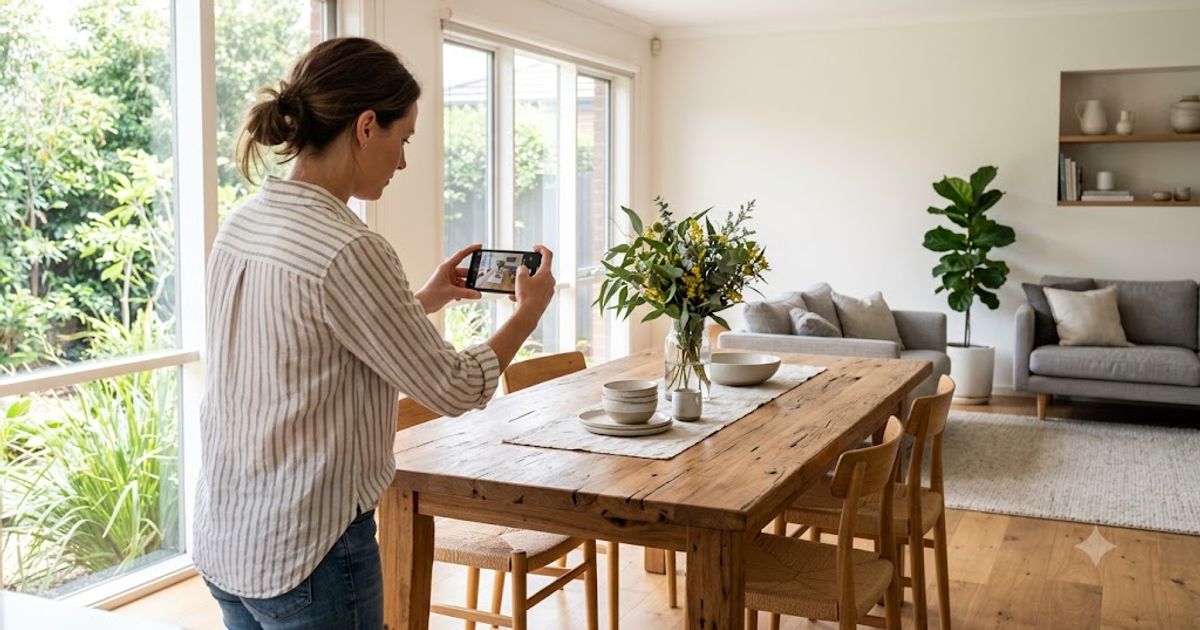
You don't need a professional camera — every modern phone is more than capable. What matters is how you shoot:
- Use natural daylight. Overhead lights at night create yellow tones and harsh shadows.
- Clear the background. The buyer should see the furniture, not your living room.
- Shoot straight on first, then angles and details. The first photo should show the whole piece clearly.
- Show flaws honestly. Buyers who arrive expecting the scratch still buy. Buyers who discover it on pickup walk away.
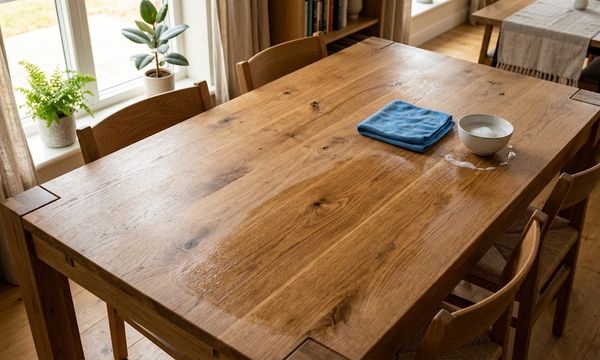
- Wipe it down first. Five minutes with a cloth noticeably improves how a piece photographs — our guide on cleaning secondhand furniture works just as well before you sell as after you buy.
Your first photo is the one buyers see in search results and in their matched suggestions, so make it the strongest one. For a full walkthrough of shooting furniture with just your phone, see our guide on how to photograph secondhand furniture to sell fast.
2. One item, one listing — never combine furniture
This is one of the most common mistakes we see, and it quietly kills sales.
It feels efficient to photograph your dining table with the six chairs, the sideboard and the lamp on top, then list the lot together. It isn't. Here's why:
Zirkly actively matches listings to buyers. Our matching engine reads your listing and connects it with people searching for that kind of piece nearby. When one listing contains a table, chairs, a sideboard and a lamp, the algorithm can't tell what the listing actually is — so it matches poorly with everyone. A listing that is clearly one used dining table matches strongly with every buyer looking for a dining table.
Buyers rarely want your exact combination. Someone wants the table but already has chairs. Someone else wants only the sideboard. Separate listings let each buyer find and buy exactly the piece they want, instead of negotiating a partial sale most won't bother with.
Separate listings multiply your visibility. Five items in one listing is one entry in search results. Five items in five listings is five entries, each matched to its own audience.
The one exception is a genuine set — a dining table sold with its matching chairs as one piece, or a bedroom suite. Zirkly has a dedicated Sets & Bundles category for exactly this. If it's truly a set, list it as a set in that category. If it's just several things you happen to be selling at once, give each its own listing.
3. Select every furniture category that fits
When you create a listing, you can select as many categories as apply — so use them.
A TV unit is Storage & Cabinets, but many buyers browse for it under Tables. An armchair for a child's room belongs in Seating and Kids. A garden bench sits in both Outdoor and Seating. The same logic applies to a chest of drawers, a bedside table, a buffet, a display cabinet or an entertainment unit — most pieces of furniture genuinely belong in more than one category, and a desk with its office chair listed separately reaches both the home-office browser and the seating browser.
Every category you correctly select is another shelf your listing sits on. Buyers browse by category, and the matching engine uses categories as a strong signal for who should see your piece. A listing filed under one narrow category is invisible to everyone browsing the others.
The key word is correctly. Don't tag a bookshelf as Outdoor to chase extra views — mismatched categories create bad matches, annoyed buyers and a listing that underperforms. Select every category that genuinely fits, and no more.
4. Let AI write your furniture listing, or keep it neat yourself
A good listing is scannable, specific and honest. If writing isn't your thing, you don't have to do it — Zirkly's AI listing flow can write the description for you. Tap Auto-fill when creating your listing and review what it produces. It gives you a clean, structured starting point in seconds.
If you'd rather write it yourself, follow the same principles the AI uses:
- Lead with what it is. "Solid oak 6-seater dining table" tells a buyer more in six words than three paragraphs of backstory.
- Short sentences, short paragraphs. Most buyers read on their phone. Walls of text get skipped.
- State the condition plainly. "Excellent condition, one small scratch on the left leg (pictured)" builds trust. Vague claims like "good condition for its age" invite doubt — savvy buyers arrive with our checklist for telling if secondhand furniture is good quality in mind, so get ahead of it.
- Skip the filler. Nobody needs to know it "must go this weekend!!" — the price and the listing say that for you.
A neat listing signals a reliable seller. Buyers are choosing whether to trust a stranger with their Saturday morning, and a tidy, specific description makes that decision easy.
5. Add the furniture details buyers search for
The difference between a used furniture listing that gets matched and one that sits idle is often just detail. Include:
- Dimensions. Width, depth and height, in centimetres. This is the number one question buyers ask, and every message asking for measurements is a delay you could have avoided. Melbourne apartments have narrow hallways and small lifts — buyers need to know whether the piece will fit.
- Colour. "Walnut brown" or "charcoal grey", not just "brown" or "grey". Buyers search by colour, and the matching engine uses it.
- Material. Solid timber, veneer, fabric, leather, metal, rattan. It affects price expectations and search matches.
- Brand, if it has one. Buyers search brand names directly — an IKEA bookshelf, a Freedom sofa or a Fantastic Furniture dining set will surface for those exact searches, and a recognisable brand adds credibility and value. Name it.
- Age and usage. "Two years old, from a pet-free home" answers questions before they're asked.
Every one of these details is a signal. The more accurately your listing describes the piece, the more precisely Zirkly can put it in front of the right buyer.
6. Price your secondhand furniture correctly
Overpriced used furniture doesn't sell — it sits. And every week it sits, it looks staler to buyers who have seen it before.
When you create a listing, Zirkly's AI gives you a price recommendation. Review it seriously before you set your own number. It's easy to price with your heart — you remember what you paid. The buyer doesn't share that history. They're comparing your listing against every similar piece available near them right now.
A few pricing principles that hold up:
- Condition beats original price. What you paid five years ago matters far less than the condition it's in today.
- Price to sell, not to anchor. If you'd genuinely accept $150, listing at $300 doesn't leave "room to negotiate" — it removes you from the search results of buyers filtering under $200.
- Round numbers work. $120 reads cleaner than $117.50.
- Free is a strategy too. If you mainly need the piece gone before a move, a low price or a giveaway clears it in days.
For a deeper look at what secondhand furniture actually sells for, our guide on pricing secondhand furniture in Melbourne breaks it down by category.
7. Keep negotiation on
Zirkly lets you allow offers on your listings — keep it on.
Negotiation isn't buyers trying to rip you off — it's how the secondhand market works, and often how a hesitant buyer talks themselves into a purchase. Someone offering $10 under asking has already decided they want the piece.
Price with a small buffer and decide your walk-away number in advance. A quick "I can do $130" closes sales that a rigid "price is firm" loses. The goal isn't to win the negotiation. The goal is a sold listing and an empty corner of your house. For the full playbook on handling offers, see our guide on negotiating secondhand furniture in Melbourne.
8. Be flexible with pickup times
Your buyer is almost always a local — that's the point of Zirkly. But local doesn't mean available at 2pm on a Tuesday.
When you create a listing, you can set pickup times. Offer as many windows as you reasonably can — weekday evenings plus both weekend days is a strong spread. Rigid pickup windows are one of the quietest deal-killers on any marketplace: a buyer who loves your used sofa but can only collect on Sunday will simply buy the other one, from the seller who said "Sunday works".
9. Offer local furniture delivery if you can
Here's something we see constantly: most Zirkly buyers are in the seller's neighbourhood. Local furniture buyers aren't across the city — they're a few suburbs over, and often closer. A seller in Carnegie is usually handing over to someone browsing second hand furniture in Carnegie or the suburb next door.
That changes the delivery equation completely. Delivering a coffee table 3 kilometres is a 15-minute round trip, not a logistics operation. Most furniture fits in an ordinary car with the seats down — our guide on transporting furniture in a regular car shows what fits in what. Offering delivery — even for a small fee — meaningfully increases your chances of selling, because transport is the biggest hidden barrier in secondhand furniture. Plenty of buyers want your piece but don't have a vehicle that fits it. For larger pieces like sofas, wardrobes and dining tables, "delivery available locally" can be the line that sells it.
If you can't deliver, that's fine — just say so clearly and make pickup as easy as possible.
10. Get paid with PayID, not cash
For years, cash was the default for secondhand sales. We recommend PayID instead, and it's worth understanding why.
PayID payments move instantly between Australian bank accounts, and — this is the important part — the transaction is on paper. There's a record on both sides: who paid, who received, how much and when. If a question ever arises about whether payment happened, the proof exists in both bank accounts. According to Australian Payments Plus, the operator of PayID, payers are also shown the name linked to a PayID before they hit send — which helps protect both sides from mistaken payments. The government's Be Connected guide to PayID notes transfers typically land in under a minute, even between different banks and on weekends.
Cash offers none of that. No record, no receipt, no recourse — plus counting money on your doorstep and the classic "I've only got fifties" moment.
With PayID, the buyer inspects the piece, transfers on the spot from their phone, you watch the payment land, and they take the furniture. Clean, instant, documented. Zirkly's listing flow lets you set your accepted payment options — set PayID as your preference so buyers arrive prepared. And if something about a buyer ever feels off, our guide on how to spot a secondhand furniture scam covers the warning signs.
11. Small habits of successful furniture sellers
Beyond the fundamentals above, a few habits consistently separate fast furniture sellers from slow ones:
- Reply fast. Buyers message several sellers at once, and the first useful reply usually wins the sale.
- Fix before you photograph. A tightened hinge or a fresh coat of oil lifts the price — our guide on upcycling and DIY fixes that add value before you sell covers the quick wins.
- Time it well. Demand for used furniture moves with the rental calendar and the seasons — see the best time to sell secondhand furniture in Melbourne.
- Drop the price rather than let it sit. Buyers nearby can see price drops in their activity feed — a price drop is a fresh signal, not an admission of defeat.
- Measure doorways for large pieces. If your sofa barely fit through your front door, say so.
- Mark it sold promptly. It keeps your profile clean and stops unnecessary messages.
None of these takes more than a minute. Together they're the difference between a piece that sells in three days and one that lingers for three weeks.
Before you publish your listing
Run through this checklist — it takes thirty seconds and covers everything above:
- Clear first photo, taken in daylight
- One item per listing (or a genuine set in Sets & Bundles)
- Every correct category selected
- Dimensions in centimetres
- Material, colour and brand included
- Fair price — AI recommendation reviewed
- Negotiation enabled
- Pickup times set, with evening and weekend windows
- Delivery added, if you can offer it
- PayID selected as your payment preference
If every box is ticked, your listing is giving Zirkly's matching engine everything it needs.
Ready to put this into practice? List your furniture for free on Zirkly — it takes a few minutes, and because Zirkly matches locally, your buyer could be just a few streets away. Browse what's selling near you at second hand furniture in Melbourne.
Frequently Asked Questions
What makes a furniture listing sell faster on Zirkly?
A clear photo taken in daylight, one item per listing, accurate categories, dimensions and colour in the description, a realistic price and flexible pickup times. Listings with all of these give Zirkly's matching engine the clearest possible signals, which means more of the right buyers see the piece sooner.
Should I list a furniture set as one listing or separate listings?
If it's a genuine matching set, such as a dining table with its chairs, list it as one listing in the Sets & Bundles category. If they're separate pieces that don't belong together, create an individual listing for each one. Separate listings match with more buyers and sell faster.
Should I trust Zirkly's AI price recommendation?
Treat it as a strong starting point, not a command. The recommendation gives you an objective anchor free of the attachment you have to what you originally paid. Adjust it for anything the AI can't fully see — a flaw you know about, a sought-after brand or how urgently you need the piece gone.
Is PayID safe for selling furniture?
PayID transfers move directly between Australian bank accounts and create a record of the payment on both sides, including the amount, the date and the accounts involved. That record is exactly what cash lacks, which is why we recommend PayID for secondhand furniture sales.
Do I have to offer delivery when selling on Zirkly?
No, delivery is optional. But because most Zirkly buyers live in your neighbourhood, local delivery is often a short trip, and offering it opens your listing to buyers who don't have a suitable vehicle. For large pieces it can be the deciding factor.
Can I use AI to write my Zirkly listing?
Yes. Zirkly's listing flow includes an Auto-fill option that writes a clean, structured description for you. Review the result, check the details are accurate and adjust anything that needs a personal touch before publishing.
How many categories should I select for my listing?
Select every category that genuinely fits the piece and no more. Accurate categories improve findability because buyers browse by category and the matching engine uses them as a signal. Incorrect categories create bad matches and hurt your listing's performance.
Why isn't my secondhand furniture selling?
It's almost always one of five things: the price is too high for the condition, the first photo is weak, dimensions are missing, several items are combined into one listing or pickup times are too rigid. Fix those in that order — price and photos move the needle most.
Can I edit my Zirkly listing after publishing?
Yes. You can update your listing at any time after publishing — photos, description, price, categories and pickup times. If a listing isn't getting traction, editing is the fix: improve the first photo, add the missing dimensions or adjust the price rather than leaving it to sit.
Should I accept a deposit or reserve furniture for a buyer?
Zirkly doesn't have a deposit or reservation feature, and we recommend keeping it simple: the piece stays available until a buyer collects it and pays in full via PayID at handover. Deposits between strangers create risk on both sides, and requests to pay a deposit before viewing a piece are a known scam pattern.
How long can my listing stay up? Do I need to renew it?
Zirkly listings don't expire and there's nothing to renew. That said, don't let a listing sit untouched for weeks — a price drop or a stronger first photo sends a fresh signal to buyers nearby, and a stale listing at a stale price is usually a pricing problem in disguise.
Sujith
Zirkly Team
Sujith is the Founder of Zirkly — Melbourne's dedicated secondhand furniture marketplace. With over 20 years of experience building digital products and leading product strategy, he writes about the secondhand furniture market, consumer behaviour, and the circular economy. His perspective combines technology, market research, and the experience of building a peer-to-peer furniture platform.