Secondhand Furniture Warranty and Returns: What Melbourne Buyers Should Know Before Paying
Buying secondhand furniture in Melbourne? Learn when Australian Consumer Law applies, whether you can get a refund, and what rights you have with private and business sellers.
Quick summary: Secondhand furniture warranty and return rights in Australia depend largely on who you're buying from, not on whether the item is secondhand. If you're buying from a private individual who isn't running a business, most Australian Consumer Law consumer guarantees don't apply. If you're buying from a business — including a secondhand or vintage furniture store — consumer guarantees still apply, though the item's age, price and condition affect what's reasonable to expect.
What This Means Before You Pay
If you've ever wondered whether you can get your money back on a secondhand couch with a broken frame, the honest answer is: it depends who sold it to you. A warranty is an extra promise a seller chooses to make about a product. Consumer guarantees are different — they're automatic legal rights that can apply when you buy from a business, secondhand or not. For furniture bought secondhand, the more useful question usually isn't "did the seller offer a warranty?" but "was I buying from a private individual or a business?" That distinction shapes almost everything else — returns, refunds, and what a seller has to disclose.
Do Private Sellers Have to Offer a Warranty?
No — and this is where most confusion starts. According to the Australian Consumer Law's consumer guarantees, most standard protections — acceptable quality, fitness for purpose, matching the description — don't apply to one-off private sales between two people where the seller isn't running a business. It's the seller's status that matters here, not the platform: a private sale on Facebook Marketplace or Gumtree is treated the same as a private sale at a garage sale, while a business selling through the exact same marketplace is still bound by consumer guarantees.
This isn't a loophole — it's how the law is written. A private seller clearing out a spare room isn't held to the same standard as a furniture retailer, because they're not selling in trade or commerce. If a frame collapses a week after you buy it from someone's living room, you generally can't demand a refund the way you could from a shop.
What Consumer Guarantees Apply to Private Sales?
Private sales aren't a complete rights vacuum. Even in a private sale, three consumer guarantees still apply: the seller must have the right to sell the furniture (clear title), you're entitled to undisturbed possession of it, and it must not carry any undisclosed debts or charges — for example, a payment plan the previous owner never finished paying off.
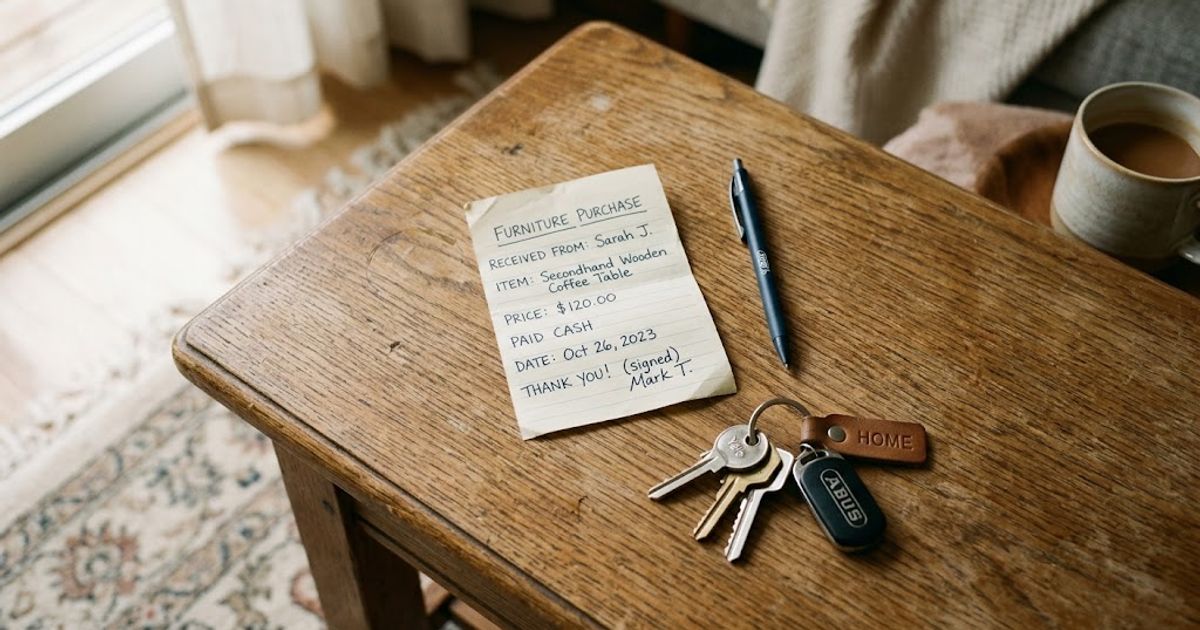
This is one reason Consumer Affairs Victoria advises contacting the seller directly and putting concerns in writing if a problem comes up after a private purchase. There's no formal refund pathway for a change of mind, but a paper trail still matters if a genuine ownership dispute arises. It's also worth checking a piece against the furniture recall registerbefore you commit, since product safety obligations sit apart from the consumer guarantees and apply more broadly.
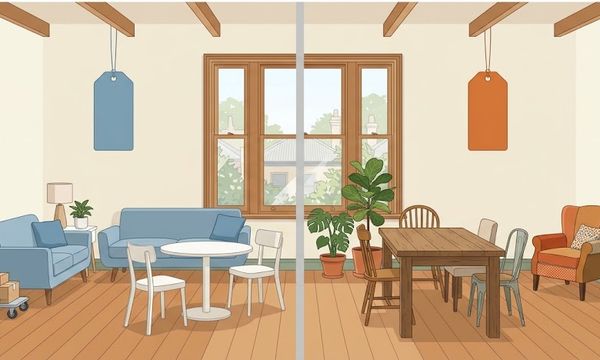
Private Seller vs Business Seller: What Changes?
| What protection applies? | Private seller | Business seller |
|---|---|---|
| Acceptable quality guarantee | Generally does not apply | Applies, taking age, price and condition into account |
| Must match description | Generally does not apply as an ACL guarantee | Applies |
| Fit for disclosed purpose | Generally does not apply as an ACL guarantee | Applies |
| Clear title | Applies | Applies |
| Undisturbed possession | Applies | Applies |
| No undisclosed debts or charges | Applies | Applies |
| Refund if you simply change your mind | Generally no automatic right | Depends on the business's change-of-mind policy |
| Remedy for a genuine consumer guarantee failure | Generally no ACL remedy | Repair, replacement, refund or other remedy may apply |
Consumer Affairs Victoria confirms that secondhand goods sold by a business carry the same legal refund rights as new goods, subject to the nature of the problem and what was disclosed or reasonably apparent at the time of sale.
How Do You Know If a Secondhand Seller Is a Business?
The line between "private seller" and "business" isn't always obvious, especially on marketplaces where anyone can list. A few practical signs someone may be operating as a business:
- They advertise under a business name rather than a personal one
- They provide an ABN or company details in their listing or on request
- They have a large number of similar listings running at once
- They've been selling continuously over an extended period
- They give a shop address or dedicated business contact details
- They appear to buy furniture specifically to resell, rather than clearing out their own home
No single sign necessarily proves someone is operating a business — and if you're unsure, the simplest step is to ask the seller directly before you pay.
Can You Return Secondhand Furniture in Melbourne?
Usually not, if you bought it from a private seller and simply changed your mind. If you bought it from a business, your rights are different, because Australian Consumer Law consumer guarantees apply to secondhand goods sold in trade or commerce.
Private seller: If you bought a sofa, table or wardrobe from a private seller on Facebook Marketplace, Gumtree, or a similar platform, there's generally no automatic ACL right to return it because you've changed your mind or it doesn't suit your space once you get it home.
Business seller: If you bought it from a business, consumer guarantees can still apply even though the furniture is secondhand. The remedy available depends on the problem and whether it amounts to a major or minor failure — the item's age, price, condition, and any faults disclosed before purchase are all relevant.
What Happens If Secondhand Furniture Bought From a Business Is Faulty?
A business selling a $2,000 secondhand designer sofa can reasonably be expected to meet different expectations from a $50 used side table, because the item's age, price, condition, and what the seller told you are all relevant when assessing acceptable quality. If a genuine fault falls short of that standard, you can generally ask the business for a repair, replacement, or refund — start by contacting the seller directly and explaining the problem in writing, since a business can't lawfully claim "no refunds under any circumstances" as a blanket rule.
A Pre-Payment Protection Checklist
Because formal remedies are limited with private sales, prevention matters more than recourse. Before paying for any secondhand piece, it's worth working through a broader secondhand furniture buying checklist alongside these basics:
- Confirm whether the seller is private or operating as a business — check their listing history and ask directly if it's unclear
- Inspect the item in person rather than relying on photos, and check joints, frames, and upholstery for wear
- Ask the seller to confirm in writing that the item is fully paid off and free of any finance arrangement
- Get any promises about condition or history in writing, not just verbal
- For upholstered pieces especially, check for safety and hygiene issues before the piece enters your home
- If buying from a business, ask specifically what their returns policy covers and for how long
- Watch for common secondhand furniture scam patterns before you commit to paying
Buying With More Confidence in Melbourne
None of this is a reason to default to buying new — it's a reason to buy carefully. Secondhand furniture keeps usable pieces out of landfill and is very often better value than new, but going in with clear eyes about what protections do and don't exist puts you in a stronger position either way. Browsing Zirkly's secondhand seating listings lets you see seller history and photos before you commit to a pickup — and if you've got a piece you're ready to move on, you can list it on Zirkly in a few minutes.
Frequently Asked Questions
Do I get a warranty when I buy secondhand furniture from a private seller?
No. Most consumer guarantees, including acceptable quality, don't apply to one-off private sales between individuals where the seller isn't running a business.
Can I return secondhand furniture if I change my mind?
Generally no, if you bought it from a private seller. There's no automatic cooling-off period for a private furniture purchase in Australia.
Can I get a refund for faulty secondhand furniture bought from a business?
Often yes. If the item fails to meet the acceptable quality guarantee, taking its age, price and condition into account, you may be entitled to a repair, replacement or refund.
How do I know if I'm buying from a private seller or a business?
Look for signs like a business name, an ABN, a high volume of similar listings, or ongoing selling activity — and ask the seller directly if it's unclear.
What rights do I have if a business sells me faulty secondhand furniture?
Consumer guarantees still apply, adjusted for the item's age, price and condition — you may be entitled to a repair, replacement, or refund depending on how serious the fault is.
What should I check before paying for secondhand furniture in person?
Inspect the frame, joints and upholstery in person, confirm the item is fully paid off with no outstanding finance, and get any condition promises in writing.
Is there a difference between a warranty and a consumer guarantee?
Yes. A warranty is an extra promise a seller chooses to make, while consumer guarantees are automatic legal rights that can apply when you buy from a business, regardless of whether a warranty is offered.
Sujith
Zirkly Team
Sujith is the Founder of Zirkly, Melbourne's dedicated secondhand furniture marketplace. He writes about Melbourne's secondhand furniture market, consumer behaviour, and the circular economy, drawing on his experience building Zirkly and what helps furniture listings sell across Melbourne.