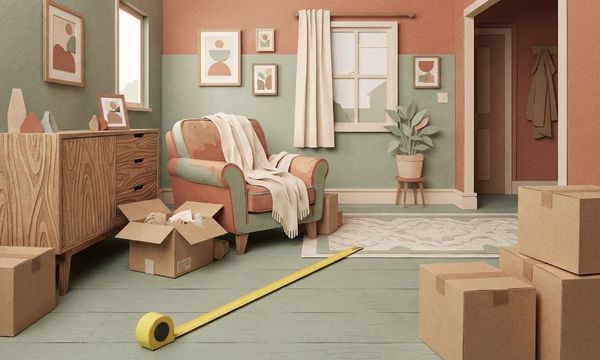
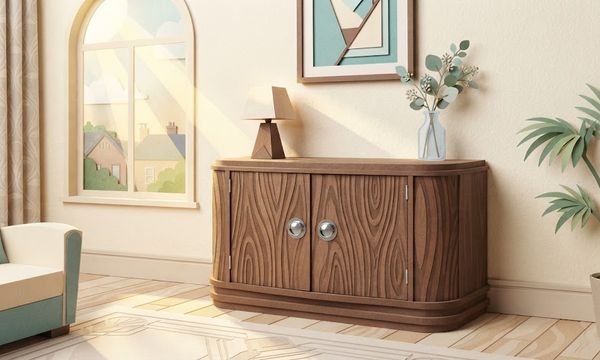
Moving Furniture Into a Melbourne Apartment: Lift Bookings & Bonds
Moving furniture into a Melbourne apartment? Check lift bookings, moving bonds, building rules and furniture dimensions before delivery or pickup.
Quick summary: Moving furniture into a Melbourne apartment comes down to three checks before move day: whether the building needs a lift or loading area booking, whether it asks for a refundable moving bond, and whether each piece fits the lift, corridors and your front door. Building rules set the first two, so the building manager is your first call.
In Victoria, owners corporation rules can regulate how bulky furniture moves through shared areas. Booking requirements, permitted hours and bond amounts vary by building, and we couldn’t find a Victorian government source that sets standard figures. Here’s what Consumer Affairs Victoria says, what to ask before moving day, and how to check that a sofa, bed or wardrobe will fit, whether you’re hiring removalists or collecting from a local seller.
Melbourne Apartment Moving Rules: Who Sets Them?
In Victoria, the body that manages an apartment building’s shared areas is the owners corporation (formerly called a body corporate). Every owners corporation has rules, and if it hasn’t written its own, the model rules in the Owners Corporations Regulations 2018 apply. Consumer Affairs Victoria says registered rules bind tenants and other occupiers as well as owners, and that owners and tenants must be given a copy before they move in. If you’re renting and haven’t seen them, ask your property manager.
Moving furniture is something owners corporations can regulate. According to Consumer Affairs Victoria’s list of what rules can cover, that includes moving furniture and other objects through common property where it affects other users, damage to common property, and fees for use of common property. These rules give a building a basis for managing furniture movements through shared areas, but the exact requirements depend on the building’s own rules and arrangements.
There are limits. Consumer Affairs Victoria’s guidance on drafting rules says it can be fair to require permission before someone moves fixtures or bulky or fragile furniture, because of the risk to common property. A building can’t ban the ordinary day-to-day moving of chairs and tables, though. The same guidance describes rules that allow certain things with consent that won’t be unreasonably withheld.
Do You Need to Book the Lift When Moving Furniture Into an Apartment?
Some buildings run a formal apartment lift booking process for the lift or loading area, and some don’t. Lead times vary by building, and we couldn’t find a Victorian government source that sets a standard one. Get the building’s answer in writing first, then fix your delivery or pickup time around it.
Ask these questions before you confirm anything with a seller, removalist or courier:
| What to ask building management | Why it matters |
|---|---|
| Do I need to book the lift or loading area, and how far ahead? | Without a booking you may be turned away on the day |
| Which days and hours are moves and deliveries allowed? | Sets when you can arrange transport |
| Is there a moving bond, how much, and how is it refunded? | Lets you budget the deposit and know the process |
| Which lift should I use, and what are its car and door dimensions? | Decides what physically fits |
| Is lift padding provided, or do I supply it? | Avoids delays or extra charges |
| Does a single-item delivery need a booking too? | One sofa can count as a move |
| Is proof of the removalist’s insurance required? | Some buildings ask, so check before booking |
If you’re collecting from a seller who also lives in an apartment, the same questions apply at their end. Ask them in Zirkly’s in-app chat whether their building needs a booking to bring the item out, and pick a time that suits both buildings. You can see what’s listed near you, for example second hand furniture in Docklands. For anything bigger than a car boot, our guide to furniture delivery in Melbourne: man with a van, removalist or courier compares the options.
How Moving Bonds Work, and How to Get Yours Back
Where a building asks for an apartment moving bond, it’s typically a refundable deposit held against damage to lifts, corridors and doors. It isn’t the same as your rental bond, which relates to your tenancy. The amount, who holds it and how refunds work are set by the building, and we couldn’t find a Victorian government figure. Any dollar amount you read online describes one building’s policy, not a rule.
Even where no bond applies, the model rules still matter where they apply to your building. Model rule 4.3(1) says an owner or occupier must not damage or alter common property without the owners corporation’s written approval, and rule 4.1(1) says they must not obstruct others’ lawful use of it. Treat the lift and corridors as shared property you’re accountable for. To protect your deposit:
- Ask for the refund process and timeline in writing.
- Take dated photos of the lift, corridor and doors before and after the move.
- Ask whether the building manager does a before-and-after inspection.
- Brief your removalist or helpers on the building’s rules before they arrive.
- Wrap legs, corners and frames so nothing scrapes the lift walls.
What Fits: Lifts, Corridors and Your Front Door
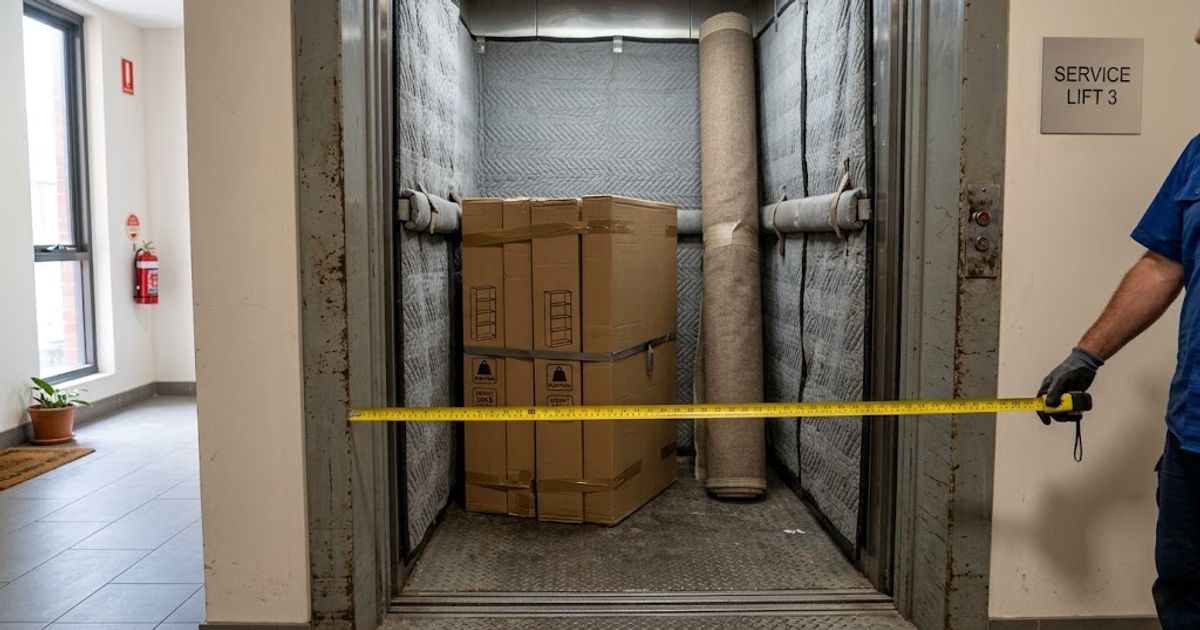
The lift is usually the tightest point on the route, and in a high-rise it isn’t always the only way in. Ask building management which lift to use and whether a service lift or loading area is available. Our guide to measuring doorways for secondhand furniture walks through the full routine. For apartments, measure:
- Lift door: clear opening width and height. It can be narrower than the car.
- Lift car: internal width, depth and height.
- Furniture: maximum width, height and depth, including protruding parts. For sofa dimensions and lift access, include the diagonal depth too.
- Route: corridor widths, tight corners, your apartment entrance and internal turns.
- Disassembly: removable legs, bed frames, shelves and wardrobe doors.
Ask building management whether furniture can be tilted in the lift. A piece that fits inside the lift car may still be impossible to manoeuvre through its door or around a corridor corner. Also compare the furniture’s size with your unit’s footprint, not just the route. Our guide to small apartment and studio furniture covers sizing.
When you’re browsing sofas and other seating on Zirkly, message the seller for the overall width, depth and height, and ask whether it comes apart.
What to Do If a Piece Won’t Fit
Check for a service lift, see whether the piece can be disassembled, or test the stairwell. For upper-floor apartments, ask a specialist about a balcony hoist, which needs planning and a quote in advance. If nothing works, it’s usually better to re-list the piece than force it. Leaving an apartment yourself? Our guide to selling furniture before moving house in Melbourne covers the timeline, and it’s worth asking whether your building treats move-outs differently from move-ins.
Moving furniture into an apartment goes more smoothly when the piece suits the building and the building knows you’re coming. Browse local pieces on Zirkly, and if something you own won’t fit your next place, list it for free on Zirkly so a neighbour can give it a second life.
Frequently Asked Questions
Do I need to book a lift when moving furniture into a Melbourne apartment?
Some buildings require lift or loading-area bookings, while others do not. Check your building’s rules and confirm any booking requirements with the building manager before arranging delivery.
Can an owners corporation restrict moving furniture into an apartment?
An owners corporation can regulate furniture movements through common property, particularly where bulky or fragile items could cause damage. Consumer Affairs Victoria says rules should not prohibit ordinary day-to-day furniture movements, such as moving chairs and tables around.
Do owners corporation rules apply to renters?
Yes. Registered owners corporation rules apply to tenants and other occupiers as well as lot owners. If you have not received the applicable rules, ask your property manager or owners corporation manager.
How much is a moving bond for a Melbourne apartment?
There is no single standard amount that applies to every Melbourne apartment building, and it is separate from your rental bond. Ask your building manager whether a bond is required, who holds it, what deductions are permitted and how refunds are processed.
How do I measure a sofa to see if it fits in an apartment lift?
Measure the sofa’s overall width, depth and height, along with the lift’s clear door opening and internal dimensions. Check corridor turns and the apartment doorway too, and ask whether the sofa’s legs or other components can be removed.
What should I do if furniture won’t fit in the lift?
Check whether a service lift or stairwell is suitable and whether the furniture can be dismantled. For large pieces on upper floors, ask a specialist about a balcony hoist. If no safe option is practical, consider selling or relisting the item.
Who is responsible if something is damaged during my move?
Check your building’s rules and any bond terms. Where the model rules apply, an owner or occupier must not damage or alter common property without written approval. Ask your building manager how damage is handled and whether your removalist carries insurance.
Adam
Zirkly Team
Adam turns complex secondhand furniture topics into practical advice for Melbourne buyers and sellers — pricing, safety and the decisions that make buying and selling used furniture clearer.