What to Do With Old Furniture in Melbourne: Sell, Donate or Hard Rubbish?
Charities decline more furniture than you'd think, and the nature strip can cost you a fine. Here's the decision tree for every piece, in one page.
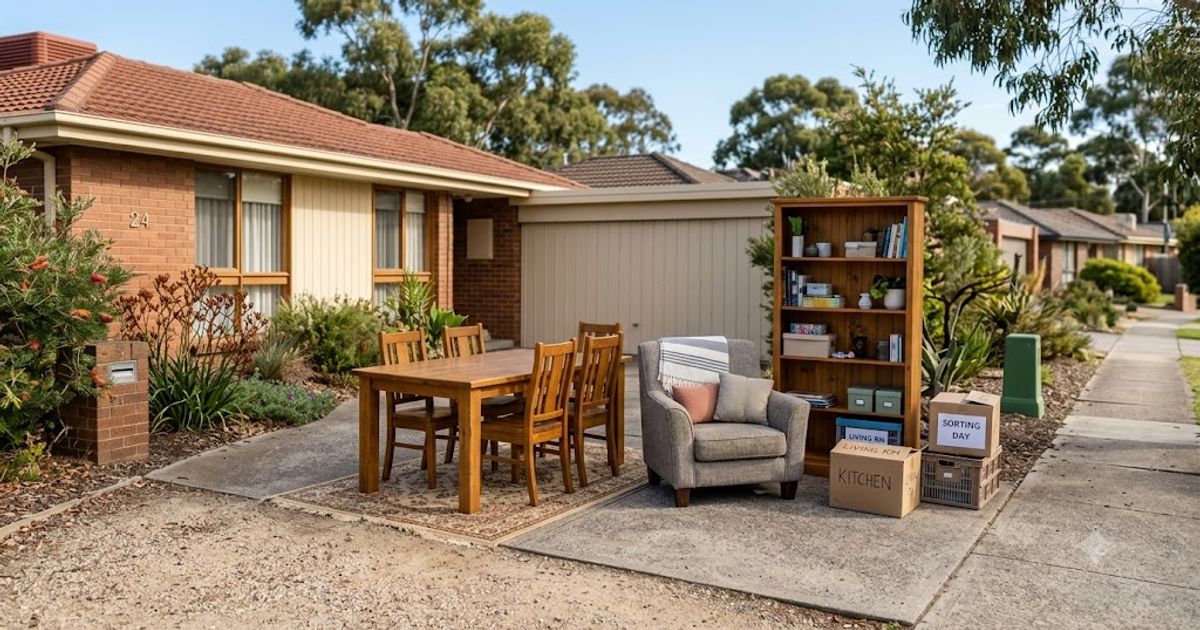
Every piece of unwanted furniture in Melbourne has exactly four exits: someone pays you for it, someone takes it for free, a charity accepts it, or the council collects it. The trick is knowing which exit fits which piece — because sending furniture to the wrong one wastes your time, and in one case can cost you a fine.
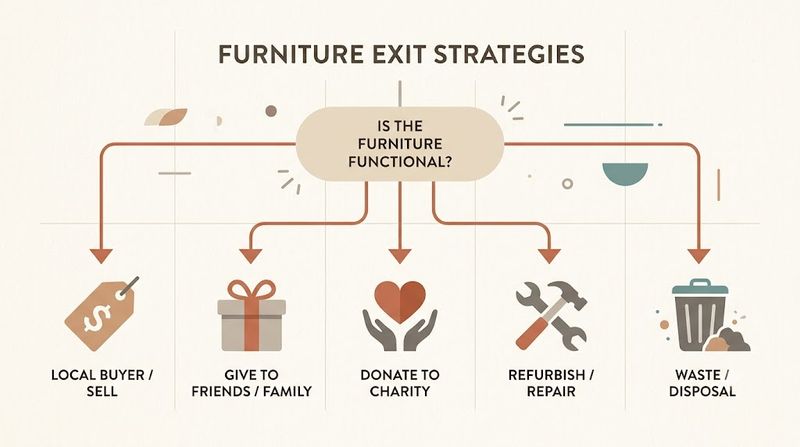
Most people get the sorting wrong in a predictable way. They overestimate what charities will take, underestimate what people will pay for, and treat the nature strip as a free-for-all. But most furniture in Melbourne isn't rubbish — it's simply in the wrong lane. And the lanes matter more than they look: as Planet Ark notes, furniture generally can't be recycled unless it's pure metal, pure plastic or untreated timber, so once a piece leaves the reuse lanes, landfill is usually where it ends up. This guide is the decision tree that keeps it out, one question at a time.
1. First question: is it still functional?
Everything starts here. Can the furniture still do its job — sit, hold, store, support — safely? A dated but sturdy dining table is functional. A bookshelf missing a fixed shelf is functional with an asterisk. A sofa with a snapped frame is not.
If the answer is yes, the piece belongs in the reuse lanes: sell, give away or donate. If the answer is no, skip straight to the hard rubbish section — a broken piece wastes everyone's time in the other lanes, including yours.
Be strict but fair with yourself. Dated is not broken. Unfashionable is not broken. Melbourne's secondhand market absorbs enormous amounts of perfectly functional furniture that owners assumed nobody would want.
2. Sell it: the surprisingly big "someone will pay for this" category
Here's the sorting mistake almost everyone makes — and a pattern we see constantly on Zirkly: assuming the choice is between charity-pristine and worthless. In reality there's a huge middle category — furniture that's too good for the kerb but not showroom enough for a charity's sales floor — and that middle category is exactly what sells locally for cash.
Solid timber pieces, working sofas with honest wear, bookshelves, bedside tables, desks, outdoor settings: if it's clean, safe and does its job, a buyer nearby will pay for it. For timber especially, it's worth knowing what buyers look for — our guide to telling if secondhand furniture is good quality is the checklist they're using on your piece. Condition sets the price, not whether it sells — a piece with a scratch sells at a scratch price. Our guide on pricing secondhand furniture in Melbourne shows how to find the number, and the founder's playbook on selling secondhand furniture faster on Zirkly covers everything from the photo to the PayID handover.
Selling is also the only exit where the furniture leaves under someone else's muscle and money arrives. On Zirkly, listing is free, the AI writes the description for you, and buyers are often only a suburb or two away, which keeps pickup simple for both sides — browse second hand furniture in Ormond for a feel of what moves locally.
If you're clearing furniture against a moving deadline rather than at leisure, the calculus changes with the calendar — our week-by-week plan for selling furniture before moving house is built for exactly that situation.
3. Give it away: fast, free and better than the tip
For functional furniture that isn't worth the selling effort — the $15 bookshelf, the faded but fine outdoor chairs — a free listing is the fastest exit that still keeps the piece in use. Free furniture moves quickly, and the collector carries it out.
Free is not failure. Compare the alternatives honestly: hard rubbish uses one of your limited council collections, and taking furniture to a transfer station isn't free either — disposal fees apply and vary by council and load size, on top of the petrol and the lifting. Both send a usable piece to landfill. A free listing costs nothing, takes minutes and usually resolves within days.
4. Donate it: what charities actually accept
Donation is the exit people feel best about — and the one with the strictest gate. Charities resell what you give them, so they apply retail standards, not recycling standards. Vinnies puts its bar plainly in its own donation guide: if you'd give it to a friend, it's ok to give to Vinnies. Broken, ripped, stained or wobbly pieces don't clear that bar, and drivers can and do decline items at pickup.
Three practical rules save you a wasted booking:
Don't turn up at a store with furniture. Many Vinnies shops can't accept furniture at store level at all — arrange a pickup instead. Salvos Stores runs furniture collection through 13 SALVOS, and not every store takes large items.
Check the exclusions before booking. Both major charities restrict items beyond condition: bunk beds, cots and other children's furniture generally need current Australian safety standard markings, and mattresses are commonly declined.
Clean it first. A ten-minute wipe-down materially changes what a driver accepts — the same preparation that helps a piece sell helps it donate, and our guide to cleaning secondhand furniture works in both directions.
If a charity would decline the piece but it's still functional, that's not a signal to bin it — it's the signal you're holding the middle-category furniture from section two. Sell it or give it away locally instead.
5. Repair it: the borderline pieces worth an hour
Some furniture sits one small fix away from a different exit. A wobbly chair is usually one tightened bolt from sellable. A water-marked timber tabletop is an hour's sanding and oil from charity-grade. Our guide on DIY fixes that add real value before you sell covers which repairs pay for the effort and which don't.
The test is simple: if less than an hour of work moves the piece up a lane — from hard rubbish to giveaway, from giveaway to sale — it's worth the hour. If the fix needs skills, parts or a weekend, treat the piece as what it currently is.
6. Hard rubbish: the last resort, and it needs booking
For furniture that's genuinely broken, unsafe or unsanitary, council hard waste collection is the right exit — with two rules Melbourne residents get wrong constantly.
First, it's booked, not spontaneous. Most metro councils collect bulky items only through a booked service, limit households to a few collections per financial year, and need lead time between booking and collection. Whether you're in Glen Eira, Monash, Boroondara or Merri-bek, the allowances and booking rules differ — check your council's page before you count on it.
Second, the unbooked nature strip is not an option. Kerbside dumping without a booking is illegal across Melbourne and councils issue fines for it — Planet Ark's furniture directory notes the rule and lists legitimate reuse and recycling options for items that can't go in a standard collection.
If you need everything gone in one day — a full house clear-out on a hard deadline — professional furniture removal companies are the other option. They charge for collection, unlike selling or giving items away, but they solve the timing problem the free exits can't, and for some clear-outs the fee is worth the finished afternoon.
One piece of good news for the genuinely dead furniture: some materials still avoid landfill. Metal frames are widely recycled, and Planet Ark's directory lists drop-off options by item type across Melbourne. Every functional piece that stays in the reuse lanes also avoids the emissions of manufacturing its replacement — the full case for that is in our piece on the circular economy and secondhand furniture.
7. The decision at a glance
- Functional and worth something → sell it: free listing, local buyer, cash via PayID
- Functional but low value → give it away free: gone in days, carried out by the collector
- Near-new condition — you'd give it to a friend → donate it: book a charity pickup, never doorstep a store with furniture
- One small fix from a better lane → spend the hour, then re-sort
- Broken, unsafe or unsanitary → book a council hard waste collection early
- Never → the unbooked nature strip: illegal, fineable, and it stays your problem
Work the tree top-down and the default answer for most Melbourne furniture is the one people skip: someone nearby will take it — and often pay for it.
If your furniture landed in the "functional" lane, don't let it drift toward the kerb. List it free on Zirkly — the AI writes the listing in minutes, local buyers find it nearby, and a piece that might have ended up in hard rubbish gets another home instead. See what finds new homes every week at second hand furniture in Melbourne.
Frequently Asked Questions
What furniture will charities not accept?
Charities apply resale standards, so they decline furniture that is broken, ripped, stained, wobbly or unsanitary, and drivers can refuse items at pickup. Children's furniture like cots and bunk beds generally needs current Australian safety standard markings, and mattresses are commonly excluded. The working test most charities use: would you give it to a friend?
Do charities pick up furniture for free in Melbourne?
Yes — the major charities run free furniture collection services, booked in advance by phone or online. Pickups book out and drivers assess condition on arrival, so book early and be realistic about what you're offering rather than risking a declined collection.
What should I do with furniture a charity won't take?
If it's still functional, sell it or list it for free — furniture that misses charity resale standards but still does its job is exactly what sells locally. If it's genuinely broken or unsanitary, book a council hard waste collection or check recycling drop-off options for the materials.
Is it illegal to dump furniture on the nature strip in Melbourne?
Yes. Placing furniture on the kerb without a booked council collection counts as illegal dumping across Melbourne councils and attracts fines. Hard waste collections are booked services with limited allowances per year, so book ahead rather than putting items out and hoping.
How do I get rid of a couch fast in Melbourne?
If it's clean and structurally sound, a free or low-priced local listing usually moves a couch within days, collected by the buyer. If it's damaged, book a council hard waste collection — sofas are accepted in most booked services — and never leave it kerbside unbooked.
Is old furniture worth selling or should I just dump it?
If it's functional, it's almost always worth listing — a listing costs nothing and takes minutes, while disposal costs either a limited council collection or a tip fee. Dated and imperfect furniture sells locally every day; broken furniture is the only category where disposal beats listing.
Can I leave furniture outside before my hard rubbish collection?
Only within the window your council allows, which is typically short — City of Port Phillip, for example, asks that items go out no more than 24 hours before the scheduled collection day. Putting furniture out earlier, or without a booking at all, counts as illegal dumping and can attract fines.
Do councils collect mattresses in hard rubbish?
It varies — Planet Ark notes that not all councils will collect or recycle mattresses, so check your council's accepted-items list before booking. If yours doesn't, Soft Landing, the recycler approved by the Australian Bedding Stewardship Council, runs mattress pickup and drop-off services in Victoria, and dumping a mattress is illegal and fineable everywhere.
Adam
Zirkly Team
Adam focuses on turning complex secondhand furniture topics into practical, actionable advice for Melbourne buyers and sellers. He writes about used furniture pricing, buying guides, marketplace safety, and buying decisions, with a focus on the details that make buying and selling secondhand furniture clearer and more reliable. His guides are built for buyers and sellers who want clear answers, not jargon.