Secondhand Shelving in Melbourne: Laundry & Bathroom Storage
Secondhand shelving in Melbourne can add storage to small laundries and bathrooms. Here's what to check for moisture, rust, size and wall hardware.
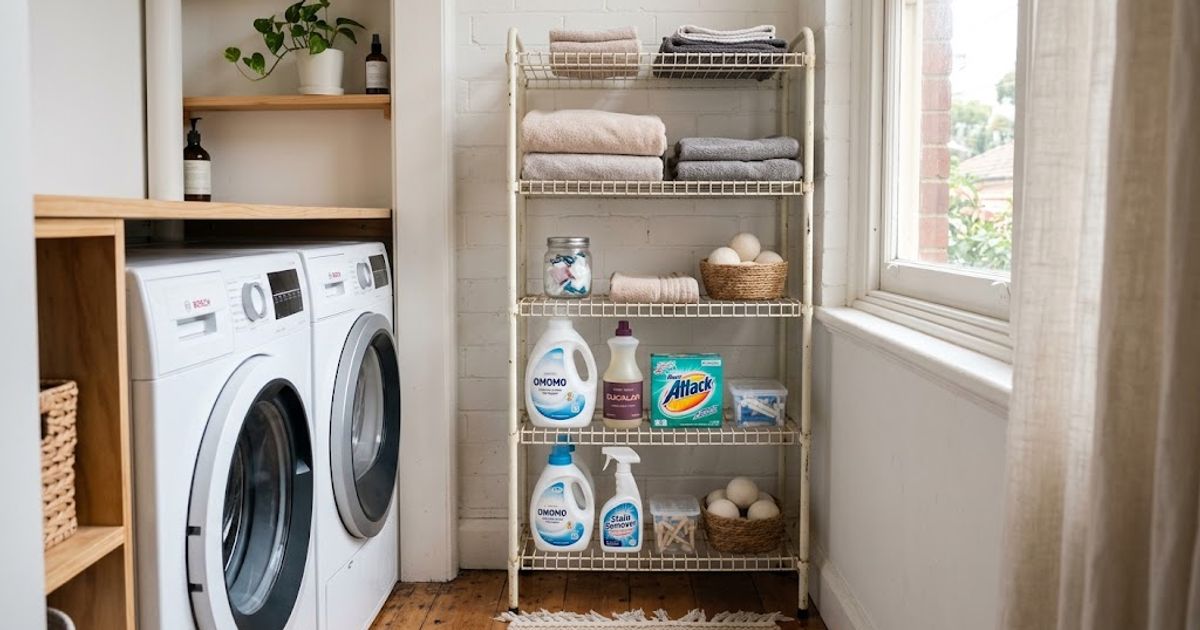
Quick summary: Secondhand shelving in Melbourne is one of the easiest ways to add storage to a small laundry or bathroom without built-in cabinetry — wire racks, ladder shelves and over-appliance units are simple, low-complexity buys where used condition is easy to assess. The main things to check are moisture resistance, rust, wall-mount hardware and whether the depth actually suits a tight footprint.
Secondhand shelving in Melbourne is an easy way to add storage to a small laundry or bathroom without committing to built-in cabinetry. Wire racks, ladder shelves, rolling carts and over-appliance units are generally simple to inspect, easy to transport and often much cheaper than buying new. This guide covers the best shelving types for these two rooms, what to check before buying secondhand, and where to find units locally. For a broader look at getting started with secondhand furniture in Melbourne, that guide covers the fundamentals that still apply here.
Why Secondhand Shelving Works Well in Small Wet Areas
Shelving units for wet areas are mechanically simple compared to upholstered or engineered furniture — there's no foam, no motor, no fabric to assess. A wire rack, a ladder shelf, or an over-toilet unit is either structurally sound or it isn't, and that's usually obvious on inspection. This makes secondhand shelving one of the lower-risk categories to buy used, even for buyers who are cautious about secondhand furniture generally.
Small apartments, older homes and rental properties often have limited built-in storage, making freestanding shelving a practical way to add capacity without renovating. If you're weighing up secondhand against buying new more generally, our guide on what to consider before buying secondhand furniture is a useful starting point.
Best Secondhand Shelving for Small Laundries and Bathrooms
Not every shelving format works in every space. A few categories come up repeatedly in Melbourne listings:
Over-toilet and over-washer units
Straddle the appliance or fixture, using vertical space that's otherwise wasted. Good for bathrooms with no linen cupboard, or laundries where the washer sits under a bench.
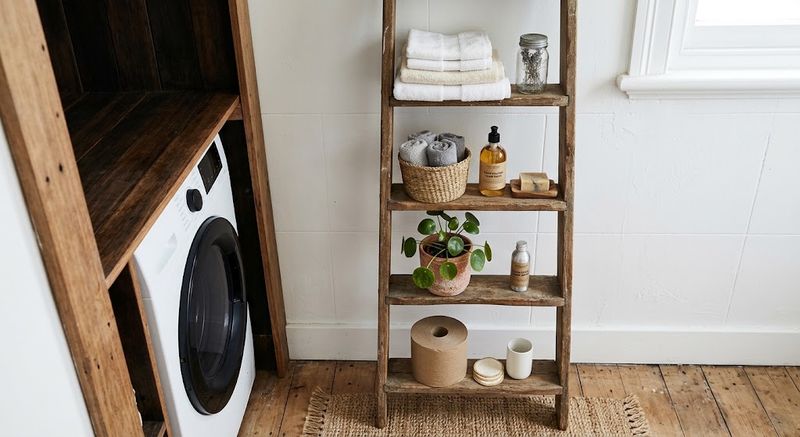
Ladder and leaning shelves
Angled against a wall, no wall-fixing required. Useful in rentals where you can't drill into tiles or plaster.
Wall-mounted floating shelves
The most space-efficient option for a genuinely tight laundry, but only worth buying secondhand if the mounting brackets and hardware are included.
Narrow rolling carts
The most flexible option, since they can move between the laundry and bathroom, which suits a share house or a home with only one wet-area storage problem to solve at a time.
Freestanding shelving units
Useful when you have floor space but don't want to drill into walls. Look for narrow units that leave enough clearance for doors, appliances and walkways.
Browse the storage and cabinets category to filter listings by shelving type, dimensions and material.
What to Check Before Buying Secondhand Shelving
Materials behave differently in a laundry than they do in a bathroom, and both differ from general home storage.
- Moisture damage. Metal, treated timber, and laminate hold up better than raw or particleboard pieces, which can swell, delaminate, or develop a soft, spongy feel after prolonged exposure to humidity. Run a hand along any timber shelf edges before buying — swelling is usually easier to feel than to see. For wet areas, condition matters more than age: a secondhand metal, laminate or properly sealed timber unit can be a good choice, but previous exposure to moisture is exactly why you should inspect it carefully before buying.
- Rust. Chrome wire racks are common secondhand bathroom and laundry buys, but check joints and screw points for surface rust, which suggests the unit previously sat in a genuinely damp spot without ventilation.
- Warping and staining. Dark rings or a slight bow in a shelf board are signs of standing moisture exposure, not just age.
- Weight capacity. A laundry shelf needs to hold detergent bottles, a full basket, or a stack of towels — heavier and more concentrated loads than a bathroom shelf typically carries. Ask the seller what it was used for previously if it's not obvious from the build.
- Wall-mount hardware. If it's a wall-mounted piece, confirm brackets, screws, and wall plugs are included, or budget to buy replacements — a shelf without hardware is really just a board.
- Dimensions and depth. In a narrow laundry or ensuite, depth is usually the constraint, not width. For narrow laundries and bathrooms, start by looking at shelving around 25–30cm deep, then measure the actual clearance you have. A few centimetres can make a big difference when a door, washing machine or toilet is nearby.
Ventilation matters as much as the shelving material itself. Bunnings' guide to controlling mould around the home notes that bathrooms and laundries are among the most common problem areas for mould because moisture and poor airflow combine there. If you're placing shelving near a shower recess or dryer outlet, the Victorian Government's Better Health Channel guidance on mould is worth a read before you commit to a fixed location. If you'd rather furnish an entire small footprint at once, our tiny home furniture guide covers space-saving choices beyond just shelving.
Laundry vs Bathroom Shelving: What's Different?
| Factor | Laundry | Bathroom |
|---|---|---|
| Typical load | Detergent, baskets, cleaning supplies | Toiletries, towels and bathroom supplies |
| Moisture exposure | High, particularly around dryers and wet floors | High, particularly around showers and baths |
| Best materials | Metal, laminate, treated/sealed timber | Metal, laminate, sealed timber |
| Common unit types | Over-washer, narrow shelving, rolling cart | Over-toilet, ladder shelf, floating shelf |
| Main concern | Condensation, spills and heavier loads | Humidity, splashes and frequent access |
Where to Find Secondhand Shelving Near You in Melbourne
If you're looking for secondhand shelving near you in Melbourne, local pickup is usually the easiest option. Shelving is bulky and awkward to ship, while buying locally lets you inspect the unit before committing and avoid delivery costs. Search listings by suburb rather than relying on citywide filters — buyers in areas like Rockbank will find turnover is steady in bathroom and laundry storage specifically, since it's exactly the kind of item people replace when doing a small reno rather than a full furniture clear-out.
Selling Your Old Laundry or Bathroom Shelving
If you're replacing your laundry or bathroom shelving, don't assume the old unit needs to go to landfill. Functional shelving is often exactly the kind of bulky household item another local buyer is looking for — clean it, note the dimensions and any included hardware clearly, and it's a straightforward sell. For more everyday pieces worth passing on, see our guide to secondhand home accessories in Melbourne. In Glen Eira, unwanted shelving that's genuinely beyond reuse can go through the council's booked hard rubbish collection, which allows each household three free collections per financial year — but that should be the last resort after checking whether it's still sellable or donatable.
Ready to declutter or upgrade your wet-area storage? List your secondhand shelving on Zirkly and pass it on to someone furnishing a small space nearby.
Frequently Asked Questions
Is secondhand shelving safe to use in a bathroom or laundry?
Yes, provided the material is moisture-tolerant (metal, laminate, treated or sealed timber) and shows no signs of swelling, delamination, or rust. Raw particleboard is the main material to avoid for wet areas.
What's the best material for secondhand laundry shelving?
Metal (chrome or powder-coated) and treated timber tend to hold up best against detergent spills and dryer condensation. Check joints and screws for rust before buying.
Where can I buy secondhand shelving near me in Melbourne?
Local listings filtered by suburb, such as Ormond, or the storage and cabinets category, are the most direct way to find nearby pickup options — often at a much cheaper price than buying new.
How deep should shelving be for a small laundry?
As a starting point, look at shelving around 25–30cm deep, then measure your actual clearance. A few centimetres can make a big difference when a door, washing machine or toilet is nearby.
Can I mount secondhand wall shelving in a rental property?
Check your lease and ask your landlord or property manager before drilling into walls. Freestanding or leaning shelves are usually the simpler option for renters because they don't require permanent fixings.
What should I check before buying a secondhand over-toilet unit?
Confirm it fits your cistern height and toilet width, check for rust or water staining on the lower shelves, and make sure any included brackets match your wall type.
What can I do with old shelving in Glen Eira if it can't be sold or donated?
Glen Eira residents can book a free hard rubbish collection — up to three per financial year — through the council's booked collection service, but this should only be used once resale or donation options are ruled out.
Adam
Zirkly Team
Adam turns complex secondhand furniture topics into practical advice for Melbourne buyers and sellers — pricing, safety and the decisions that make buying and selling used furniture clearer.