Secondhand Furniture for Airbnb & Short-Stay Properties in Melbourne
Furnishing an Airbnb or short-stay property in Melbourne? Learn which furniture to buy secondhand, what to avoid, how to guest-proof your property and where to source it locally.
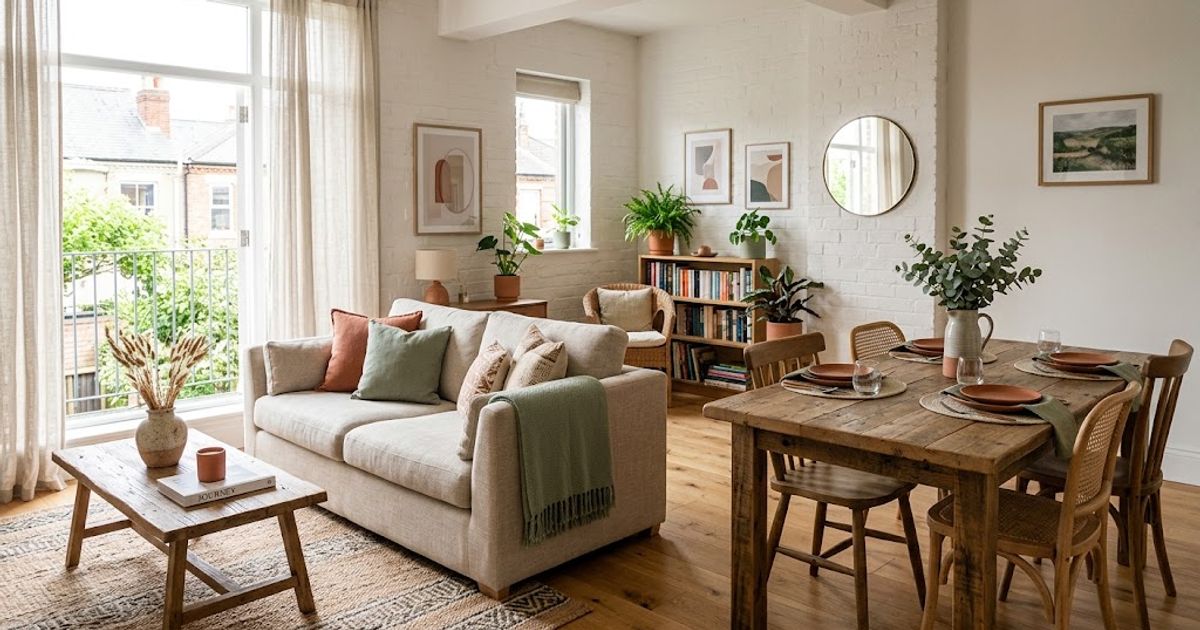
Quick summary: Furnishing an Airbnb or short-stay property in Melbourne doesn't have to mean buying everything new. Secondhand furniture suits short-stay properties well because it's durable, easy to replace piece by piece, photographs well for listings, and doesn't cost a fortune when guests inevitably cause some wear.
Is secondhand furniture suitable for an Airbnb in Melbourne? For most of the property, yes. Furnishing a home you live in and furnishing a home strangers stay in for a few nights are different jobs — a short-stay property sees more wear in a year than most family homes see in a decade, with no one around to catch a scuff before it becomes a stain. Buying new for that kind of turnover is expensive to set up and expensive to replace, item by item, every time something takes a hit. Secondhand furniture, bought with the right guest-proofing in mind, solves both problems. If you're furnishing for one long-term tenant rather than rotating guests, our guide to furnishing a rental property covers that angle instead.
Why Secondhand Furniture Works for Short-Stay Properties
A short-stay property isn't furnished once — it's furnished, then partially refurnished every time something wears out or starts looking tired in photos. New furniture makes that expensive twice over: once at setup, and again every time a single piece needs replacing at full retail price. Secondhand furniture costs less at setup, and replacing one worn dining chair or a stained rug doesn't mean paying new-set prices for something you only need one of. It also removes the sting of new furniture taking a hard hit in month two — a $40 secondhand side table getting scratched is a shrug; a $400 new one is a genuine loss.
What Makes Furniture "Guest-Proof"?
"Durable" for a family home and "durable" for a short-stay property aren't the same test. A guest checking out in two days may not treat a coffee table with the same care you'd expect in your own home. Buying guest-proof furniture means prioritising a few specific things:
- Easy-clean surfaces over precious ones — laminate, sealed timber and powder-coated metal wipe clean; unsealed timber, pale fabric upholstery and delicate finishes show every mark
- Simple, replaceable pieces over statement ones — a plain dining chair is easy to match or swap; a unique vintage chair from a set of six leaves you short if it doesn't survive
- Nothing sentimental or genuinely precious — if losing a piece to damage would actually bother you, it doesn't belong in a guest property
- Solid construction over veneer or particleboard — flat-pack pieces built for one careful home rarely survive repeated bumps and different assembly habits
A quick guest-proof test. Before buying a secondhand piece for a short-stay property, ask:
- Can it be cleaned quickly?
- Will a scratch or stain ruin it?
- Can I replace it easily if it's damaged?
- Is it stable enough for frequent, varied use?
- Does it photograph well?
- Can I find a similar replacement locally if needed?
- Is it worth repairing, or easy to resell and replace?
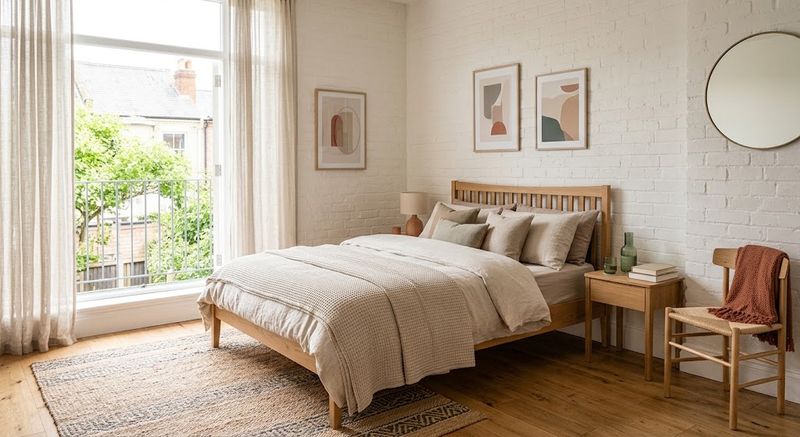
What to Buy Secondhand vs What's Worth Buying New
Most of a short-stay property furnishes well secondhand. A smaller group of items is worth buying new — not for hygiene reasons, but because they're cheap, quick to replace between guests, and don't benefit from being pre-loved.
Good secondhand buys: dining tables and chairs, sofas, coffee tables, side tables, bed frames, bedside tables, TV units, bookshelves, desks, outdoor furniture, decorative pieces, and mattresses (inspected the same way as any secondhand mattress — check for stains, odour, sagging and pests before buying).
Usually simpler to buy new: bed linen, doona covers, pillowcases, towels and other soft goods that touch skin directly and wash in minutes between guests. These aren't a hygiene compromise on furniture — they're just quick, cheap, and easiest to keep in rotation as fresh new stock.
Furniture to Avoid in a Short-Stay Property
A few red flags are worth walking away from regardless of price: heavily stained upholstery, strong lingering odours, unstable or wobbly chairs, damaged bed frames, chipped glass tabletops, unsealed timber in bathrooms or outdoor-facing areas, furniture with missing hardware, fabrics that are genuinely hard to clean, any sign of pests, and anything so expensive or sentimental that damage would actually upset you.
Styling Secondhand Furniture for Listing Photos
Guests book on photos before anything else, and secondhand furniture photographs well once it's styled with intent:
- Pick one palette and stick to it — neutral bases (timber tones, white, grey, black) mixed secondhand from different sources still read as cohesive if the colour story is consistent
- One or two "hero" pieces per room — a solid dining table or a well-shaped sofa does more for photos than several smaller items competing for attention
- Condition matters more than age — a 10-year-old sofa in good nick photographs better than a two-year-old one that's starting to sag
- Match textiles last — cushions, a throw and a rug are the cheapest way to unify secondhand pieces, and the easiest to refresh seasonally without touching the furniture itself
Furnishing Room by Room
Bedroom — the bed frame and mattress take the heaviest use in the property. A sturdy secondhand frame with good joinery holds up well; inspect any secondhand mattress carefully before buying.
Living and dining — highest photo value and highest wear. A solid table with simple chairs and a durable, easy-clean sofa fabric both do well here.
Kitchen — guests use kitchens harder than their own; stick to sturdy storage and seating over delicate finishes near cooking surfaces.
Bathroom — keep any freestanding shelving or stool in moisture-tolerant materials.
Outdoor — if the property has a balcony or yard, treat it the same as any other secondhand purchase: materials rated for outdoor exposure hold up far better than untreated timber or natural rattan.
Furnishing Multiple Airbnb Properties
Hosts furnishing more than one property are effectively buying in bulk — and buying secondhand as a bundle rather than piece by piece is often faster and cheaper than negotiating a dozen separate listings.
Set a repeatable furniture standard. For multiple properties, picking one sofa style, one dining-chair style, two or three bed-frame options, and a consistent bedside-table and colour palette across all of them means a damaged piece can be swapped for something close to matching, instead of a one-off hunt for a replacement every time something breaks.
Melbourne Short-Stay Rules to Check Before Furnishing
Furnishing decisions sit downstream of a few compliance basics worth knowing before you spend anything.
Short stay levy. Since 1 January 2025, Victoria's short stay levy has applied to stays of less than 28 consecutive days, calculated at 7.5% of the total booking fee, with exemptions in some circumstances. Where a booking comes through a platform like Airbnb, the platform generally pays the levy; hosts taking direct bookings may need to register and pay it themselves.
Owners corporation rules. If you're furnishing an apartment, check the building's owners corporation rules first. Since 1 January 2025, Victorian owners corporations can pass rules banning short-stay accommodation in specific lots by special resolution, subject to the exceptions that apply.
Local council requirements. Rules and planning requirements can vary by municipality, so check with the relevant Melbourne council before committing to a short-stay setup.
Where to Find Secondhand Furniture in Melbourne
Beyond browsing secondhand furniture on Zirkly, filtering by suburb and category makes it realistic to furnish an entire property from local, in-person pickups rather than juggling deliveries across the city. Hosts furnishing a property in Bentleigh or a nearby suburb can search that area specifically and compare listings side by side — useful when you're buying a dozen items, not just one sofa. Chatting directly with sellers also makes it easy to ask the guest-proofing questions that matter most: how the piece has actually held up, not just how it looks in photos. For furnishing decisions beyond the short-stay angle, our complete guide to buying secondhand furniture in Melbourne covers the wider buying process.
| Approach | Setup cost | Replacing one damaged item | Guest-proof suitability |
|---|---|---|---|
| Buying new, full sets | High upfront | Full retail price, often matched-set constraints | Untested — first hit is the test |
| Buying secondhand, piece by piece | Lower upfront | Low cost, easy to source a replacement | Inspected and proven before you buy |
| Buying secondhand bundles | Often lower per item | Depends on matching availability | Fast way to furnish a whole room at once |
Furnishing a short-stay property isn't about buying less — it's about buying differently: pieces that clean up easily, photograph well against a consistent palette, and cost little enough to replace or resell without a second thought.
Ready to furnish your next short-stay listing? Browse secondhand furniture near you on Zirkly.
Frequently Asked Questions
Is secondhand furniture a good idea for an Airbnb or short-stay property?
Yes — secondhand furniture is often the better choice for short-stay properties, because guest turnover means furniture takes more wear than in a typical home, and replacing an inexpensive secondhand piece costs far less than replacing new furniture at retail price.
What furniture holds up best to constant guest turnover?
Solid, simple pieces in durable materials — sealed timber, laminate, powder-coated metal, easy-clean upholstery — generally outlast anything delicate, unsealed, or part of a hard-to-match set.
Should I buy a secondhand mattress for an Airbnb?
Yes, treated the same as any secondhand mattress purchase — check for stains, odour, sagging and pests before buying. There's no reason to buy new here specifically for a short-stay property; the same inspection checks that apply everywhere apply just as well.
What furniture should I avoid in a short-stay property?
Heavily stained upholstery, strong odours, unstable chairs, damaged frames, chipped glass, unsealed timber in wet areas, missing hardware, hard-to-clean fabrics, and anything sentimental or too expensive to risk on guest use.
How do I make secondhand furniture look good in listing photos?
Stick to one consistent colour palette across pieces sourced from different places, choose one or two larger "hero" pieces per room, and use cushions, throws and a rug to visually tie mismatched secondhand furniture together.
Do I need to register or pay a levy to run a short-stay property in Melbourne?
Victoria's short stay levy of 7.5% has applied to bookings under 28 consecutive days since 1 January 2025 — check the State Revenue Office's short stay levy guidance for registration and exemption details specific to your situation.
Can an owners corporation stop me from running a short-stay property?
Owners corporations in Victoria can pass rules banning short-stay use in specific lots by special resolution — check with your building's owners corporation before furnishing a strata property specifically for short-stay use.
How is furnishing a short-stay property different from furnishing a long-term rental?
A short-stay property needs furniture that survives far more frequent turnover and photographs well for listings, while a long-term rental prioritises furniture suited to one tenant's daily use over a longer period — see our guide to furnishing a rental property for the long-term angle.
Adam
Zirkly Team
Adam turns complex secondhand furniture topics into practical advice for Melbourne buyers and sellers — pricing, safety and the decisions that make buying and selling used furniture clearer.