Furniture Waste in Australia: The Real Numbers Behind Landfill (and How Zirkly Fits In)
Australia's secondhand goods market is worth $62 billion — yet thousands of tonnes of reusable furniture still go to landfill every year. Here's what the actual landfill data shows, where the numbers fall short, and where Zirkly fits in.
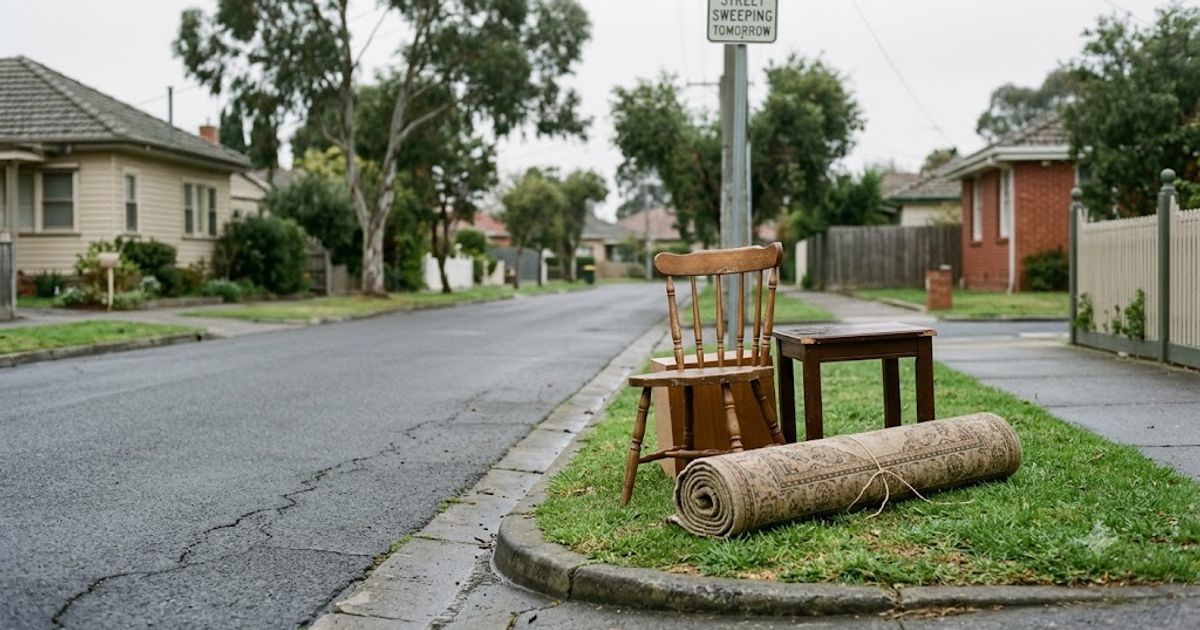
Quick summary: Australia's secondhand goods market is now worth $62 billion, up 29% in two years — yet an estimated 4,900–7,400 tonnes of genuinely reusable wooden furniture still goes to landfill every year through hard waste alone, and that's almost certainly an undercount once other materials are factored in. The gap between a thriving resale market and furniture still hitting the kerb is exactly where a platform like Zirkly fits.
How big is Australia's secondhand furniture market?
Start with the bigger number, because it's the one that actually sets the scale of the opportunity. Australia's secondhand goods market is now valued at $62 billion, up 29% in two years, according to Gumtree's Trading in the Circular Economy report. That's not a furniture-specific figure — it spans the whole preloved economy — but it's the clearest evidence that resale isn't a fringe behaviour in Australia. It's a genuinely large, fast-growing market, and furniture is one of its core categories.
Set against that backdrop, the furniture-specific landfill numbers below look less like "furniture waste is a small problem" and more like "a small but real leak in an otherwise fast-growing resale economy" — exactly the gap a hyperlocal furniture marketplace exists to close.
For the fuller picture on Australia's circular economy — circularity rate, national targets, the Productivity Commission's 2025 Inquiry — see what the circular economy actually means for Australia, which covers that ground in depth. This post focuses specifically on the landfill side: what actually gets thrown out, and why.
Furniture waste statistics in Australia
Nationally, an estimated 4,900–7,400 tonnes of genuinely reusable wooden furniture goes into hard waste collections across Australia each year — a figure built by scaling state-level hard waste data (using Victoria and NSW as the base) against national population and waste-generation figures. Council audits used to build that estimate found furniture makes up anywhere from under 2% to over a third of hard waste by weight, depending on the council and year, with the reusable wooden-furniture share settling closer to 1–1.5% once broken or unsellable pieces are excluded.
Victoria's own contribution is significant on its own: Sustainability Victoria collects hard waste data from the councils that offer a kerbside service — just over half of them — and the total comes to 112,036 tonnes a year. That's kerbside hard waste alone, before anything picked up privately, dumped illegally, or taken directly to a tip.
Commercial furniture adds its own layer nationally. An estimated 30,000 tonnes of commercial office furniture — much of it still usable — ends up in Australia's waste stream every year, largely from office moves and lease turnovers, according to a National Product Stewardship Investment Fund estimate cited in Feast Watson-commissioned research.
For scale, the Department of Climate Change, Energy, the Environment and Water's National Waste Report puts Australia's total waste generation at 75.6 million tonnes in 2022–23 — useful context, even though furniture disposal isn't broken out within it.
A note on what these numbers do and don't cover
Worth being direct about this: the 4,900–7,400 tonnes figure above covers solid wooden furniture disposed of via kerbside hard waste collection specifically — it's the only furniture-waste estimate built from real Australian audit data rather than repeated-but-unverifiable blog figures. It does not include upholstered furniture, metal-framed furniture, furniture taken directly to tips rather than collected kerbside, or illegal dumping.
Several other figures circulate online for non-wood furniture waste — claims like "800,000 tonnes of office furniture a year" or "85% of furniture goes to landfill" — but they trace back either to a small Sydney-only household survey treated cautiously by the same researchers who built the wood estimate, or to what appears to be a US EPA figure being repeated as if it were an Australian one. Neither holds up as a citable Australian statistic, so they're left out here rather than repeated as fact. The honest conclusion is that Australia's true furniture-waste volume, across all materials, is very likely higher than 4,900–7,400 tonnes — but no reliable national data exists yet to say by how much.
Why so much furniture still ends up in landfill
The reasons rarely come down to furniture actually being broken. The recurring drivers identified in council audits and resale research across Australia are:
- Moving house, downsizing into a secondary dwelling, or converting to mobile living — furniture that doesn't fit the next place gets ditched rather than resold. This shows up around student semester turnover, but also when people furnish a granny flat or secondary dwelling or a tiny home or van conversion — both situations where standard-sized furniture simply doesn't fit and gets discarded rather than passed on
- No transport — a piece is sellable, but getting it to a buyer feels harder than booking a hard rubbish collection
- No easy buyer nearby — general marketplaces cast a wide net but aren't built for genuinely local, fast pickup
- Not knowing it has resale value — older or slightly worn pieces get treated as "past it" when they're still exactly what someone is searching for
- Genuine breakage — the smaller share, but the one category where hard rubbish or recycling is the right call
Unwanted furniture and broken furniture are two very different problems with two very different solutions — and the data suggests most furniture disposal in Australia is really the first, not the second.
Where does secondhand furniture actually go?
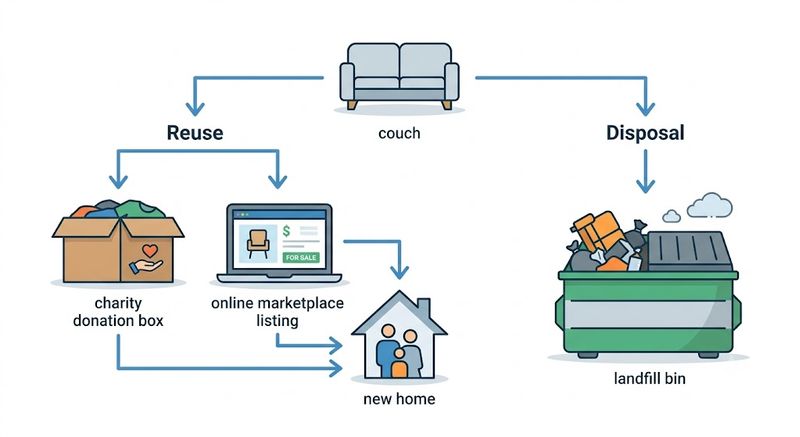
Here's the part that should reframe the conversation: survey data suggests most furniture in Australia isn't going to landfill anymore. According to Gumtree/Planet Ark research, 86% of respondents said they'd saved a pre-loved item from landfill in the previous year by selling it, saving an average of around 16 items each — roughly 110 million items kept out of landfill nationally in a single year, according to the same study.
Where Melbourne fits into the national picture
Melbourne sits inside Victoria's 112,036-tonne hard waste figure — one of the largest single state contributions to the national estimate. What's specific to a city like Melbourne is density: more apartments, more share houses, more people moving in and out of rentals every year — often the exact moment furniture becomes disposable by default, as covered in our guide on downsizing and which furniture to keep.
That density cuts both ways, and it's a pattern that holds in dense pockets of any Australian capital, not just Melbourne. A piece of furniture that no longer fits someone's studio apartment is more likely to find a buyer nearby than in a regional town — and the gap between "furniture that's still good" and "furniture that gets thrown out" tends to be a logistics problem, not a quality one. In suburbs like Carnegie, that logistics gap is exactly what a hyperlocal marketplace is built to close — and it's the same problem Zirkly is built to solve as it expands beyond Melbourne.
How Zirkly fits into the circular economy
Zirkly exists because of a version of this exact problem: furnishing a home from scratch after moving to Australia, and running into how hard it still was to find good secondhand furniture nearby, quickly, from someone who actually lived close enough to make pickup easy. That's the gap between a $62 billion resale market and the tonnes of still-usable furniture that end up in hard waste anyway — most of that gap isn't unwillingness to resell, it's friction.
That's the specific problem a hyperlocal marketplace is built to close: making it as fast to list a chair for sale as it is to drag it to the kerb. It's also why selling furniture as a set or bundle works well for people clearing out multiple pieces at once — a whole room's worth of furniture is far easier to move on together than piece by piece, and every listing that finds a buyer is one less item heading for landfill the hard way, whether that listing is in Melbourne or wherever Zirkly's local footprint reaches next.
Ways to keep furniture out of landfill
- Sell locally — best for anything in good condition, and keeps it out of landfill
- Donate — best for usable, lower-value items, and keeps it out of landfill
- Give away — best for low-value but still-functional pieces, and keeps it out of landfill
- Recycle — best for damaged timber or metal, and sometimes keeps materials out of landfill
- Hard rubbish collection — best reserved for genuinely broken items, since most of what's collected this way still ends up in landfill
For items that aren't sellable, our guide on what to do with old furniture in Melbourne covers council collections and donation points in detail — most of the same logic applies to councils across Australia, even where the guide's specific examples are Melbourne-based. For pieces likely to sell, our breakdown of what secondhand furniture actually sells in Australia is worth checking first — and if the move involves furnishing a student share house, the same list-before-you-bin principle applies just as much on the way out as it does on the way in.
Furniture waste in Australia: at a glance
- Australia's secondhand goods market is now valued at $62 billion, up 29% in two years, according to Gumtree's Trading in the Circular Economy report.
- An estimated 4,900–7,400 tonnes of genuinely reusable wooden furniture is disposed of nationally every year, according to council hard waste audits reviewed in 2022 research — a wood-only, kerbside-only figure, and likely an undercount of the true total.
- Victorian councils collect 112,036 tonnes of hard waste annually, per Sustainability Victoria.
- Survey data shows 86% of respondents have saved a pre-loved item from landfill by reselling it, according to a 2021 Gumtree/Planet Ark study.
- That resale behaviour adds up to roughly 110 million items saved from landfill nationally per year, per the same Gumtree/Planet Ark research.
- An estimated 30,000 tonnes of commercial office furniture — much of it still usable — ends up in the waste stream every year, according to a National Product Stewardship Investment Fund estimate cited in the same Feast Watson-commissioned research.
- Total waste generation reached 75.6 million tonnes in 2022–23, according to the National Waste Report (DCCEEW).
Conclusion
The numbers tell a genuinely encouraging story with one real gap in it. Australia's secondhand economy is worth $62 billion and growing fast — resale is now the default response for most people who no longer need a piece of furniture. But thousands of tonnes of reusable furniture, by even the most conservative and narrowly-scoped estimate available, still go to landfill across Australia every year. The opportunity isn't to convince people resale is worth it — the $62 billion market shows they're already convinced. It's closing the remaining gap between wanting to resell and actually being able to, easily, locally. Every successful local resale helps move Australia one step closer to closing it.
Frequently Asked Questions
How much furniture waste does Australia actually produce each year?
There's no single official figure for furniture specifically. The most defensible available data point is an estimated 4,900–7,400 tonnes of genuinely reusable wooden furniture disposed of nationally each year through kerbside hard waste — though this is a wood-only figure and the true total across all materials is likely higher.
Is furniture waste actually getting worse in Australia?
The data suggests the opposite for resale-driven waste — the online secondhand furniture market grew 89% over the decade to 2021, and Australia's broader secondhand goods market has grown 29% in the past two years alone to reach $62 billion.
Is furniture recyclable in Australia?
Solid wood and metal-framed pieces can sometimes be recycled through specialist waste services, but most upholstered or mixed-material furniture isn't easily recyclable once discarded — which is why reselling or donating a usable piece matters more than recycling it.
Why isn't there better data on furniture waste specifically?
Australia's national and state waste reporting groups furniture into a broad "organics" or "timber" category alongside garden waste and construction materials, rather than tracking it as its own product line — and the little furniture-specific data that does exist is largely limited to solid wooden furniture.
Is office furniture a bigger problem than household furniture?
By volume it's smaller — an estimated 30,000 tonnes a year nationally — but a higher proportion is reportedly in still-usable condition, since it's often discarded due to office moves or lease changes rather than wear.
What happens to furniture that goes to landfill instead of being resold?
Most solid wood and upholstered furniture isn't easily recyclable once it's mixed materials, so landfill is typically the end of the line rather than a step toward recycling.
Can hard rubbish furniture be reused?
Often, yes — a meaningful share of what ends up at the kerb on hard rubbish day is still usable, which is exactly why listing it for sale beforehand is worth trying first.
Where can I dispose of old furniture responsibly in Australia?
Most Australian councils offer hard waste collection alongside donation and drop-off information; our guide on what to do with old furniture covers the specific options for Melbourne in detail, and the same categories of options (donate, sell, recycle, hard waste) apply nationally.
How can I make sure my furniture doesn't end up in landfill?
List it for sale before it becomes a hard-waste problem — pieces in genuine demand (chairs, dining tables, office furniture) tend to move quickly when priced sensibly and listed locally, in a market that's already proven to be large and growing.
Sujith
Zirkly Team
Sujith is the Founder of Zirkly, Melbourne's dedicated secondhand furniture marketplace. He writes about Melbourne's secondhand furniture market, consumer behaviour, and the circular economy, drawing on his experience building Zirkly and what helps furniture listings sell across Melbourne.
More from Insights
Secondhand Bedroom Furniture in Melbourne: What to Do With It After a Wardrobe Clean-Out
22 Aug 2026
Granny Flat Furniture Melbourne: A Secondhand Guide to Furnishing a Secondary Dwelling
31 July 2026
Second Hand Furniture Bundle Deals in Melbourne: Are They Worth It?
30 July 2026