Selling Second Hand Electrical Items in Victoria: Lamps, Lights and Powered Furniture
Selling a second hand lamp or powered furniture in Victoria? Private sellers must either test and tag it to AS/NZS 5761 or label it as second-hand and untested. Here’s what to write on the tag and in your listing.
Quick summary: Selling second hand electrical items in Victoria, including lamps and powered furniture, involves specific safety requirements for private sellers as well as businesses. For in-scope second-hand equipment, Energy Safe Victoria allows two routes: testing and tagging to AS/NZS 5761, or labelling the item as second-hand or “used” and providing information that it has not been tested for safety. The item must still be electrically safe before sale.
Last reviewed: 13 October 2026, against Energy Safe Victoria’s current guidance.
A table lamp from the spare room, an electric recliner, a bedside table with a built-in charger: most people list these like any other piece of furniture, and nothing in a listing form hints that there’s more to it. In Victoria there is. The state’s electrical safety regulator addresses its second-hand rules to organisations and individuals alike, so a one-off home seller is covered. This guide explains what counts as electrical equipment, the two permitted ways to sell it, and what to put on the tag and in the listing. If you’re on the buying side instead, our guide to secondhand rugs, mirrors and lighting in Melbourne covers what to check before you pay.
Do You Need to Test and Tag Second Hand Electrical Items Before Selling?
Not always, because testing is one of two options. ESV says organisations and individuals who supply or offer to supply second-hand electrical equipment must be aware of their obligations under electricity safety legislation, and that failing to follow the supply regulations is a criminal offence. For in-scope second-hand equipment, what you have to do depends on whether the item has been tested:
- If it has been tested, the testing and tagging must follow AS/NZS 5761.
- If it hasn’t, it must be labelled or tagged as second-hand (or marked “used”) and come with information stating that it hasn’t been tested for safety.
Standards Australia describes AS/NZS 5761 as covering the procedures applied to household and similar electrical equipment before it is offered for sale. It is a separate standard from AS/NZS 3760, which covers in-service testing of electrical equipment more generally, so if you pay for testing, ask the tester whether it is done to AS/NZS 5761 specifically.
Second Hand Electrical Equipment Regulations in Victoria: What Counts as In-Scope?
ESV’s second-hand requirements apply to “in-scope” equipment: electrical equipment rated at 50 to 1000 volts AC (or 120 to 1500 volts DC) and designed or marketed for household, personal or similar use. Mains-powered household items such as lamps fall within that range. Common examples in a furniture sale include:
- Table, floor, desk and bedside lamps
- Pendant and wall lights
- Power boards and extension leads
- Electric recliners and adjustable beds
- Sit-stand desks
- Furniture with built-in power or charging, such as a bedside table with a powered socket
Battery and low-voltage items sit in a separate category. ESV defines extra low voltage as below 50 volts AC or 120 volts DC, and says all electrical equipment, including extra low voltage items, must be electrically safe before it’s offered for sale. Its main selling page doesn’t spell out second-hand labelling for these, and some products mix the two, such as a lamp with a plug-in power adapter. If you’re unsure which category an item falls into, ask ESV directly (contact details are in the FAQs below).
“Second-hand” in ESV’s definition means equipment that has previously been supplied or sold. The definition lists three exclusions: items acquired for production or manufacture, items acquired for re-supply by someone other than a second-hand dealer, and items returned to a supplier for a refund or exchange. Age isn’t one of them.
Two Ways to Sell a Second Hand Lamp or Electrical Item in Victoria
Route 1: test and tag it. Have the item tested and tagged to AS/NZS 5761. ESV’s buyer guidance says second-hand electrical equipment should be tested and tagged by a qualified repairman or a licensed electrician, so look for someone who does this work and confirm the standard before you book.
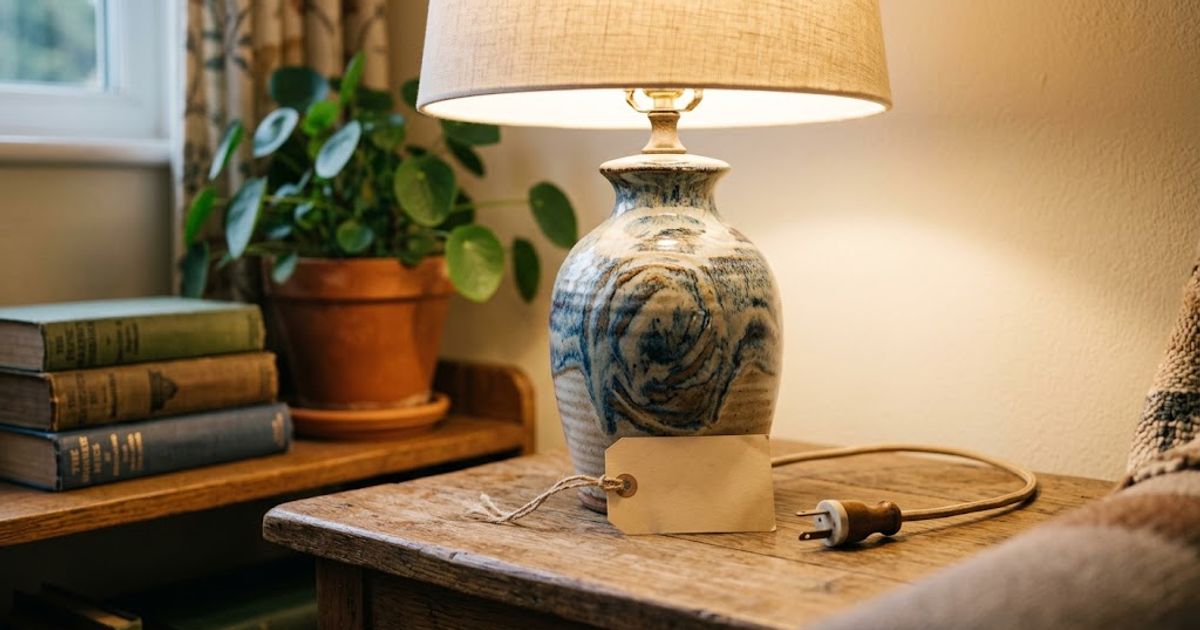
Route 2: label it as untested. Attach a label or tag marking the item as second-hand (or “used”), and provide information stating that it hasn’t been tested for safety. ESV’s page includes a sample second-hand label.
Both are permitted routes, and neither replaces the basics. ESV says all electrical equipment must be electrically safe before it’s offered for sale, so an untested label isn’t a way to sell something you know is faulty. Don’t call an item “tested” unless it has been tested to the standard. Plugging it in to see the light come on isn’t a safety test.
What to Write on an Untested Electrical Equipment Label and in Your Listing
ESV asks for the label or tag on the item and for the information to accompany it. The wording below is a plain-language suggestion that matches what ESV asks for, not ESV-issued text.
- On the tag: Second-hand. Not tested for electrical safety.
- In the listing: Second-hand electrical item, not tested for electrical safety. Sold as is. Please have it checked by a qualified person before use.
Attach the tag to the cord or base where the buyer will see it, and put the statement in the description itself rather than leaving it for pickup day. Take a close-up photo of the tag, as our guide to photographing furniture to sell explains for any detail a buyer needs to see, and our guide to writing a listing that gets replies covers how to describe condition clearly.
Say a lamp “works” only if you’ve seen it work, and describe that as a plug-in check, not a safety test. On Zirkly, buyers can message you before pickup to ask whether an item has been tested, and pickup happens in person at the seller’s address, so the buyer sees the tag before paying.
Check the Item Before You List It
ESV says never to use electrical equipment that is damaged or ageing, and to throw away old extension cords, power boards and anything with a frayed cord. That applies when you’re the seller too. Before listing, look at:
- The cord: fraying, cracks, exposed wire or a taped repair
- The plug: cracks, loose pins or scorch marks
- The switch: anything loose, cracked or stiff
- The fitting: a cracked lamp holder or brittle, discoloured insulation
If something fails the check, get it repaired by a qualified person before you list it, or leave it out of the sale. Then run the brand and model through the national recalls database; our furniture recall check guide shows how.
Estate Clear-Outs, Vintage Lamps and Items You Bought to Resell
Vintage lamps. Age doesn’t create an exemption: a vintage lamp is second-hand under ESV’s definition like any other, and older cords and fittings deserve the closest look.
Estate clear-outs. Executors and family members selling a loved one’s lamps are individuals supplying second-hand equipment too. Most estate lamps will be untested, so the label route is usually the one that applies. Our guide to selling furniture from a deceased estate covers the wider process.
Items bought to resell. ESV’s second-hand definition excludes equipment acquired for re-supply by someone who isn’t a second-hand dealer. That doesn’t make such items exempt from electrical safety rules; it means they fall outside the second-hand labelling route, so don’t assume it applies. If you buy electrical items to flip, check with ESV before you list, and see our guide to buying, restoring and reselling furniture for the rest of the picture.
Hardwired lights. If a pendant or wall light is hardwired, have a licensed electrician disconnect the fitting rather than pulling it down yourself.
Checklist for Listing a Second Hand Electrical Item on Zirkly
- Mains-powered? Treat it as covered by the second-hand rules.
- Battery or low-voltage? It must still be electrically safe, so ask ESV about labelling.
- Inspect the cord, plug, switch and fitting.
- Choose your route: test to AS/NZS 5761, or label as second-hand and untested.
- Attach the tag and photograph it.
- Put the second-hand, untested statement in the description.
- Say “works” only if you’ve seen it work.
- Run the brand and model through the recalls database.
To see how other sellers describe lamps and lighting, browse the Accessories category. If you’re selling in Melbourne’s west, Zirkly’s Point Cook page shows what other sellers have listed nearby.
Selling Second Hand Electrical Items in Victoria: The Short Version
Selling second hand electrical items in Victoria means choosing one of two routes, test and tag to AS/NZS 5761 or label the item as second-hand and untested, and making sure it’s electrically safe either way. Say so on the tag and in the listing, because working isn’t the same as tested.
Ready to list a lamp or a powered piece? List it free on Zirkly, add the second-hand statement to your description, and let local buyers know exactly what they’re getting.
Frequently Asked Questions
Do I need to test and tag a lamp before selling it in Victoria?
Not always. ESV sets two options for second-hand electrical equipment: have it tested and tagged to AS/NZS 5761, or label it as second-hand (or “used”) and provide information that it hasn’t been tested for safety.
Do these rules apply to private sellers or only businesses?
ESV’s guidance on selling second-hand electrical equipment is addressed to organisations and individuals, so private sellers are covered.
What does an untested label need to say?
ESV says the item must be labelled or tagged as second-hand, or with the word “used”, and accompanied by information stating that it has not been tested for safety. ESV’s selling page includes a sample label.
What is AS/NZS 5761?
It is the Australian and New Zealand standard for inspecting and testing second-hand electrical equipment before it is sold. It is separate from AS/NZS 3760, which covers in-service testing more generally.
Can I sell a second hand lamp with a frayed cord?
ESV says never to use damaged electrical equipment. Have the cord repaired by a qualified person before you list the lamp, or leave it out of the sale.
Do vintage lamps need to be tested before I sell them?
ESV’s definition of second-hand equipment has no age exemption, so a vintage lamp follows the same two routes: test and tag it, or label it as second-hand and untested.
Do battery or USB powered lights follow the same rules?
ESV treats extra low voltage and battery-operated equipment separately and says it must be electrically safe before it is offered for sale. Its main selling page doesn’t set out second-hand labelling for these items, so ask ESV if you’re unsure.
Who can I ask if I’m not sure what applies to my item?
ESV’s electrical equipment safety enquiries line is 1800 800 158 or 03 9203 9700, and its email is electricalequipmentsafetyenquiries@energysafe.vic.gov.au.
Adam
Zirkly Team
Adam turns complex secondhand furniture topics into practical advice for Melbourne buyers and sellers — pricing, safety and the decisions that make buying and selling used furniture clearer.