Secondhand Office Furniture Melbourne: Fitting Out a Coworking Space or Small Business on a Real Budget
A practical, cost-first guide to sourcing secondhand and used office furniture in Melbourne for coworking spaces, studios and small business fit-outs — what to buy, what to check, and how the tax treatment actually works.
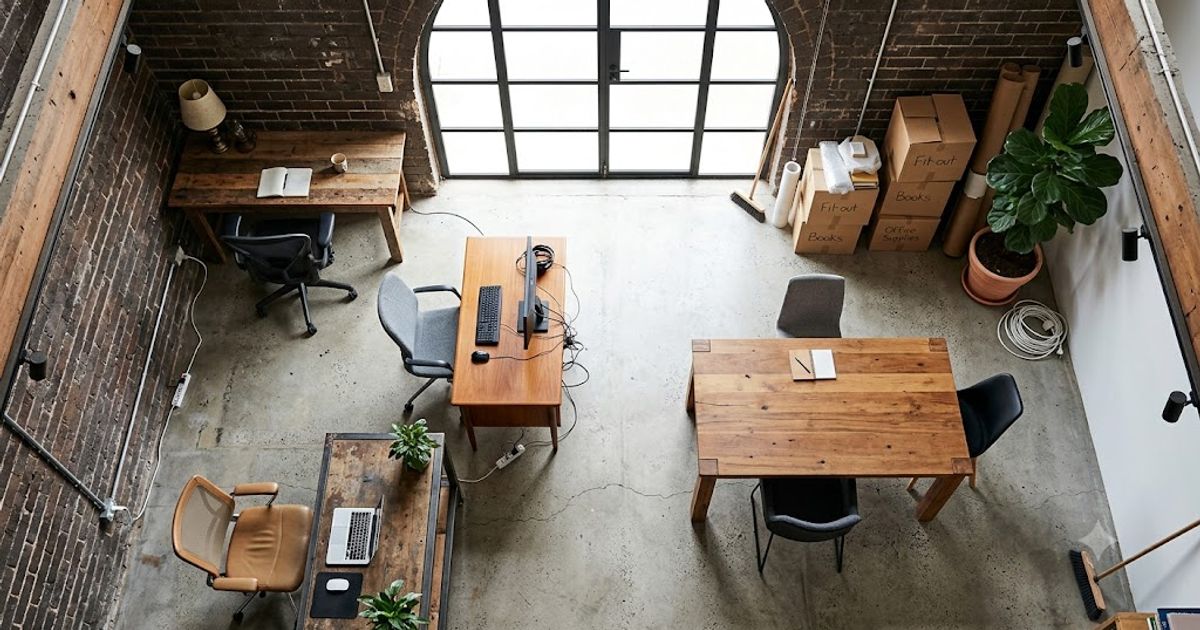
Quick summary: Secondhand office furniture can significantly reduce the cost of fitting out a Melbourne business or coworking space. Desks, task chairs, storage, meeting tables and other durable commercial furniture are often available locally in matching batches, particularly when businesses relocate, downsize or close. Eligible business purchases may also qualify for depreciation deductions under the tax rules applying to the relevant financial year.
Most guides to buying secondhand furniture in Melbourne are written for a household move. Almost none of them are written for the person opening a coworking space, kitting out a five-desk studio, or replacing a tenant's abandoned office furniture before a new lease starts. That's a gap, because the case for used office furniture is arguably stronger for a business than a lounge room — you're usually buying multiples of the same item, on a tighter timeline, with an eye on cash flow rather than sentiment. This guide covers secondhand office furniture Melbourne businesses can actually use.
Why buy secondhand office furniture for a Melbourne business?
The starting assumption in most fit-out guides is that new furniture is the safe, professional default and secondhand is the fallback if the budget doesn't stretch. For a business, that assumption doesn't hold up well. Office furniture — desks, task chairs, filing cabinets, meeting tables — is some of the most durable, least fashion-sensitive furniture there is. A good-quality five-year-old ergonomic chair or a solid laminate desk can still perform perfectly well in a busy office, and a shared open-plan space rarely needs a showroom-matched look the way a client-facing reception area might.
There can also be a tax advantage to buying secondhand. Business furniture used to produce assessable income may qualify for depreciation deductions, and eligible small businesses may be able to access the instant asset write-off where the relevant rules and thresholds are met. Importantly, buying an asset secondhand doesn't automatically prevent it from being depreciable — the treatment depends on the asset, how it's used, its cost and the tax rules applying when it's purchased. Check the current ATO rules or speak with an accountant before relying on a particular deduction.
None of this means new office furniture is never the right call — a handful of specialised items, like a reception desk built to a specific brand spec, may not turn up secondhand often. But for the bulk of what fills a coworking space or small office, secondhand should be the first place you look, not the fallback.
What office furniture does a small business fit-out need?
Before sourcing anything, it helps to separate a fit-out into three tiers, because the buying strategy differs for each:
- The volume tier — individual workstation desks, task chairs, and simple storage. This is where the biggest savings sit, because you need many of the same item and secondhand supply is deep.
- The shared tier — one or two meeting tables, a boardroom set, a communal kitchen or breakout table. Fewer pieces, but they set the tone of the space, so condition and coordination matter more.
- The specialised tier — reception furniture, acoustic booths, server racks, anything genuinely bespoke. This is the smallest category and the one most likely to involve buying new.
Desks and chairs typically make up a large proportion of the furniture required in a coworking or open-plan office, which is exactly where secondhand supply is strongest.
What office furniture is best to buy secondhand?
| Furniture | Secondhand suitability | What to check |
|---|---|---|
| Office desks | Excellent | Stability, surface wear, cable management |
| Task chairs | Excellent | Gas lift, tilt mechanism, fabric condition |
| Filing cabinets | Excellent | Drawer glide, locks, rust |
| Meeting tables | Excellent | Surface, joints, size for the room |
| Meeting chairs | Excellent | Frame, upholstery |
| Storage units | Excellent | Stability, shelving, anchoring |
| Reception desks | Depends | Size, condition, branding fit |
| Acoustic pods | Depends | Condition, ventilation, electrics |
Buying office furniture in bulk: desks, chairs and matching sets
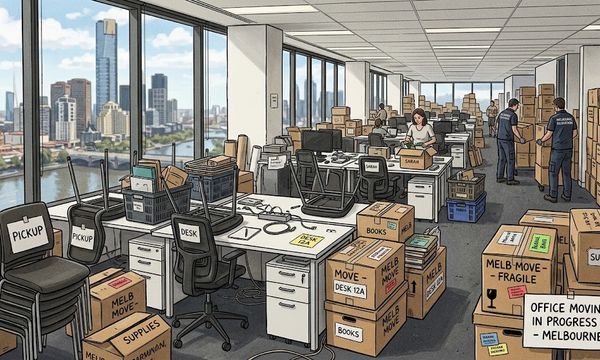
If you're searching for used office furniture in Melbourne, don't limit yourself to individual desks and chairs. Office relocations and business closures can produce complete batches of matching furniture in one transaction — sometimes listed as a bundle rather than item by item, worth checking for specifically if you need six or more of the same piece.
Where a genuine matched set isn't available, deliberate non-matching works well too: one consistent chair (even if desks vary slightly) or one consistent desk finish reads as an intentional open-plan look rather than mismatched leftovers. If ergonomic consistency matters more than visual matching, prioritise the chairs — see our guide to setting up a secondhand home office for the specific mechanisms worth checking on a task chair, which apply whether you're buying one or fifteen.
Office relocations, lease expiries and business closures can create short-lived batches of matching furniture, so it pays to watch local listings regularly rather than assume stock will still be there in a fortnight.
How much office furniture do you need?
These are illustrative starting points, not fixed rules — actual needs vary by layout and role mix.
| Office size | Typical setup |
|---|---|
| 2–4 people | 2–4 desks, chairs, basic storage |
| 5–10 people | Workstations, one meeting table, storage |
| 10–20 people | Workstations, meeting area, breakout/kitchen furniture |
| Coworking space | Workstations, hot desks, meeting rooms, breakout areas |
What to check before you buy
A household buyer inspecting a single dining chair has more slack than a business buying fifteen task chairs employees will sit in for eight hours a day. A few checks are worth treating as non-negotiable:
- Chair mechanisms — gas lift, tilt tension, and height adjustment should move freely.
- Desk stability — check for wobble at each leg and that any height-adjustment mechanism works.
- Storage locks and rails — drawers should glide and lock cleanly.
- General compliance — anything freestanding and tall should have a stable base and ideally be wall-anchored; our furniture recall and safety check guide covers what to look for before bringing any secondhand piece into a workplace.
- Odour and surface wear — smoke smell or heavy staining on fabric chairs is harder to fix than it looks and is fair reason to negotiate.
New vs secondhand office furniture
| Factor | Usuall new | Usually secondhand |
|---|---|---|
| Reception desk / branded fit-out pieces | Common | Less common |
| Office desks & task chairs | Common | Common |
| Meeting table & chairs | Common | Common |
| Filing cabinets & storage | Common | Common |
| Tax treatment | Depends on current rules | Depends on current rules |
| Lead time | Often weeks for made-to-order pieces | Often days, subject to availability |
Why Melbourne's suburban office market matters
Flexible workspace in Australia is increasingly expanding beyond traditional CBD locations, with operators looking at suburban and regional areas closer to where people live and work.
For Melbourne businesses, that matters because office moves, downsizing, new coworking sites and changing workspace needs all put usable desks, office chairs, storage and meeting furniture back into the local secondhand market. That creates an advantage for buyers who are flexible about brand and willing to buy locally — instead of ordering an entire fit-out from one supplier, you can often source matching or complementary furniture from businesses moving out of nearby premises. For Zirkly, that's exactly the opportunity: furniture no longer needed by one Melbourne business becoming useful to another nearby.
Where to find secondhand office furniture in Melbourne
A coworking operator opening in Moorabbin, for example, sits close to genuine day-to-day desk and chair supply rather than needing to freight furniture in from interstate — the same is true across most of Melbourne's inner and southeastern suburbs.
Looking for secondhand office furniture in Melbourne? If you're fitting out an office, coworking space or small business, browse listings on Zirkly and filter by furniture type and suburb to see what's genuinely available nearby.
Conclusion
Secondhand office furniture in Melbourne isn't a compromise for a business fit-out — for the desks, office chairs and storage that make up most of any coworking space or small office, it's usually the more sensible default. Start with the volume tier, check mechanisms and stability before buying multiples, and treat new furniture as the exception for the handful of specialised pieces that genuinely need it — not the starting point.
Frequently Asked Questions
Is secondhand office furniture tax deductible for a small business in Australia?
Business furniture used to produce assessable income may qualify for depreciation deductions, and eligible small businesses may be able to access the instant asset write-off, subject to the rules and thresholds applying in the relevant financial year. Buying secondhand doesn't automatically rule this out — check the current ATO rules or speak with an accountant.
Is used office furniture cheaper than new?
In many cases, yes. The largest savings are often on desks, task chairs, filing cabinets and meeting tables, though actual price depends on brand, age, condition, quantity and local supply.
Can I buy a matched set of desks or chairs secondhand?
Yes — office closures, relocations and downsizes regularly list matched sets, sometimes as a single bundle listing.
What should I check before buying secondhand office chairs in bulk?
Test the gas lift, tilt tension and height adjustment on each chair individually — don't assume uniform condition across a batch, even if listed together.
Is secondhand furniture appropriate for a client-facing office, or only internal work areas?
Both, depending on condition and coordination. A consistent chair or desk finish across a room reads as intentional design rather than mismatched.
Do I need to check secondhand office furniture for safety compliance?
Yes — tall, freestanding storage should have a stable base and ideally be wall-anchored, and any item with a mechanical part should be tested before daily use.
Where can I buy secondhand office furniture in Melbourne?
Supply tends to follow where small businesses and coworking spaces are opening and closing, which in practice means genuine local listings rather than freight-in furniture — search by suburb and furniture type to find what's actually nearby.
How many desks and chairs does a small office fit-out typically need?
It depends on the layout and team size — a 2–4 person office generally needs a handful of desks and chairs plus basic storage, while a coworking space needs workstations, hot desks and shared meeting or breakout furniture.
Should I buy new furniture for any part of an office fit-out?
It can make sense for a small number of specialised or branded items, like a custom reception desk, where secondhand supply is thinner. For most of a fit-out — desks, chairs, storage, meeting furniture — secondhand is worth checking first.
Sujith
Zirkly Team
Sujith is the Founder of Zirkly, Melbourne's dedicated secondhand furniture marketplace. He writes about Melbourne's secondhand furniture market, consumer behaviour, and the circular economy, drawing on his experience building Zirkly and what helps furniture listings sell across Melbourne.