Secondhand Marble Dining Tables in Melbourne: What to Check Before You Buy
Buying a secondhand marble dining table in Melbourne? Check chips, etching, stains, the base and the weight, and learn how to move a stone top safely.
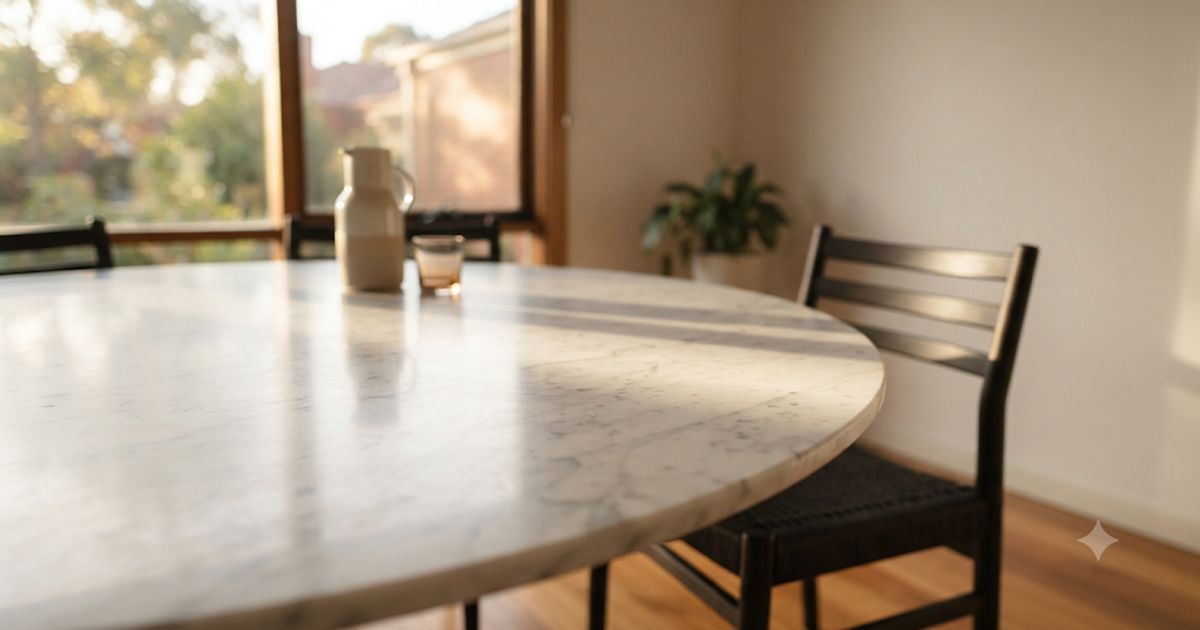
A marble dining table can look like a showpiece and still be a poor buy, because the problems are hard to see in a listing photo. Chips hide on underside edges, etching looks like a harmless dull patch, and the weight only becomes obvious when you try to lift it. This guide covers what to check on a secondhand marble or stone-top table in Melbourne: what the top is really made of, chips and cracks, stains and etching, the base, and how to move it. For sizing, seat counts and clearance, see our secondhand dining tables and chairs buyer's guide.
Quick summary: Before buying a secondhand marble dining table, check four things in person: that the top is real marble rather than engineered stone or a printed look-alike, chips and cracks along edges and corners, dull etched patches and dark stains, and how the top attaches to the base. Plan the move before you pay, because a stone top is heavy and usually needs two people and padding. Never cut, drill or grind an engineered stone top yourself.
Is It Real Marble, Engineered Stone or a Look-Alike?
Not every stone-look table is marble. The Natural Stone Institute classes marble as calcareous stone, made mainly of calcium carbonate, which is sensitive to acidic solutions. Other tops sold as marble-style include engineered stone, porcelain or sintered stone, and printed laminate or veneer over a board.
No home test is conclusive, so ask the seller what the top is made of and whether they have the receipt, brand or product name. Our advice for the inspection: look at the edge and underside, where a thin stone layer or printed surface may show a different material underneath. Natural veining varies across the surface, while a pattern that repeats can suggest a manufactured product. Treat these as clues, not proof.
Engineered Stone Tops: Check What You're Buying
Engineered stone is a different material from marble. WorkSafe Victoria defines it as an artificial product containing 1 per cent or more crystalline silica, and says Victoria's ban on engineered stone benchtops, panels and slabs, in place since 1 July 2024, does not apply to natural stone. The page doesn't say how the ban applies to a second-hand furniture top, and not every product sold as quartz will necessarily meet the definition, so if the top isn't marble, ask the seller for the product details. This isn't legal advice.
Our practical advice: don't cut, drill, sand or polish an engineered stone top at home, and leave chip repairs to a professional. WorkSafe lists cutting, grinding and abrasive polishing as processes that generate crystalline silica dust.
How to Check a Marble Table for Chips and Cracks
Inspect the table in daylight, with light coming across the surface from a window rather than straight down. Raking light shows chips, ridges and repairs that overhead light hides. Then check:
- Edges and corners. Run a fingertip along every edge and corner, including the underside lip. Edges are where chips usually happen.
- Cracks. Look for hairlines across the top, especially near where it meets the base and across its narrowest section. A crack running through the stone is a structural concern, not a cosmetic one.
- Repairs. A filled chip can show as a patch that is slightly different in colour, glossier or duller, or feels different under your finger. Ask whether the table has been repaired.
The Natural Stone Institute says deeper scratches and nicks should be repaired and re-polished by a professional. A chip or deep scratch isn't automatically a deal-breaker, but price it as a repair you may need to pay for.
Stains vs Etching: Which Marks Matter?
These look similar but are different problems. The Natural Stone Institute says etch marks are caused by acids left on the surface, and that some materials etch the finish without leaving a stain while others do both. On a dining table, think of a dull ring where a glass of wine or a lemon-based drink sat. For etched areas you can't remove, it advises contacting a stone dealer or professional restorer.
A stain is liquid that has soaked into the stone. The Institute describes oil-based stains as darkening the stone, and metal stains as orange-brown or green-brown marks that follow the shape of the object, such as a flower pot or metal furniture. It says deep-seated rust stains are extremely difficult to remove and the stone may be permanently stained.
Our rule of thumb: a dull patch that looks fine from directly above but obvious at an angle is likely etching, while a coloured patch that follows an object's outline is likely a stain. Check the centre, where vases and bowls usually sit. Mild marks are common on used marble, so decide whether you can live with them and price accordingly.
Weight, Base and Stability
Marble tops are heavy, and thickness matters as much as size. Ask for the top's dimensions, thickness and weight if the seller knows them, and whether the top lifts off the base. Our advice for the in-person check:
- Press gently on each corner and the centre. The top shouldn't shift, rock or slide.
- Check the base is solid and level on a flat floor. A wobbly base under a heavy top is a safety risk.
- Ask how the top is fixed to the base, such as brackets or adhesive, and check nothing looks cracked or loose.
How to Move a Marble Table Safely
Plan the move before you pay. This is general guidance, not a stone-handling specification, so confirm the right method for your top with the seller, a removalist or a stone professional:
- If the top and base separate, take them apart.
- Bring two people and moving blankets, and carry the top on its edge rather than flat, which is commonly advised for stone tops. Don't lift it by the overhang.
- Pad the corners and edges, and keep the top upright against a padded support in the vehicle, strapped so it can't shift.
- Measure doorways, stairwells and your vehicle first.
If it won't fit in your car, compare man with a van, removalist and courier options, and tell the mover it's stone and give them the weight and dimensions.
Caring for Marble After You Bring It Home
The Natural Stone Institute's care advice is simple. Use coasters under all glasses, particularly those containing alcohol or citrus juices, and use trivets or mats for hot items. Blot spills straight away rather than wiping them. Clean with a neutral cleaner, stone soap or mild liquid dishwashing detergent and warm water, then rinse and dry with a soft cloth.
It also warns that products containing lemon, vinegar or other acids may dull or etch calcareous stones, and that scouring powders can scratch. On sealing, it says the products used are impregnators that make stone more stain resistant, not stain proof.
Questions to Ask the Seller
- What is the top made of, and do you have the brand, product name or receipt?
- Has the top ever been chipped, cracked or repaired?
- Has it been sealed or refinished, and when?
- What are the dimensions, thickness and weight?
- Does the top come off the base, and how is it fixed?
- Are there any rings, stains or marks I should know about?
Buy or Sell Secondhand Marble Tables in Melbourne
Browse secondhand furniture in Melbourne on Zirkly, chat with sellers before you travel, and ask for close-up photos of the edges, corners and underside. Have a marble or stone-top table to pass on? List it on Zirkly with photos of the whole table, close-ups of any chips or marks, and its measurements and weight, so buyers know what they're picking up.
Frequently Asked Questions
How can you tell if a table is real marble?
No single home test is conclusive. Ask the seller for the brand, product name or receipt, and look at the edge and underside for a different material under a thin stone or printed layer. Natural veining varies across the surface, while repeating patterns can suggest a manufactured product.
Is a secondhand marble table with chips or etching still worth buying?
It can be, depending on where the damage is and how much it bothers you. Light etching is common on used marble. A chip or deep scratch may need professional repair and re-polishing, so factor that cost into the price.
Can you remove stains and water rings from marble?
It depends on the mark. A ring left by acid is usually etching rather than a stain, and the Natural Stone Institute advises contacting a stone dealer or professional restorer for etched areas you can't remove. Deep rust stains can be permanent. Avoid acidic cleaners and scouring powders.
How much does a marble dining table weigh?
It varies with the size and thickness of the top, so ask the seller for the weight if they know it. Treat any solid stone top as a two-person lift, and plan the move before you buy.
How do you move a marble table?
Confirm the handling method with the seller, a removalist or a stone professional. Commonly, you take the top off the base if it separates, use two people and moving blankets, and carry the top on its edge rather than flat. Pad the corners and keep it upright and strapped in the vehicle. Measure doorways and stairs first.
Is engineered stone the same as marble?
No. Marble is natural stone. WorkSafe Victoria defines engineered stone as an artificial product containing 1 per cent or more crystalline silica, and says its Victorian ban doesn't apply to natural stone. Don't cut, drill or polish an engineered stone top at home.
Should a secondhand marble table be sealed?
Ask the seller whether it has been sealed. The Natural Stone Institute says stone sealers make stone more stain resistant, not stain proof. Your stone supplier can advise on the right product and how often to reapply it.
Where can you buy or sell a secondhand marble dining table in Melbourne?
On Zirkly, you can browse local secondhand furniture by suburb and category, chat with sellers and arrange pickup. If you're selling, list the table with clear photos, measurements, weight and an honest note about any chips, repairs or marks.
Adam
Zirkly Team
Adam turns complex secondhand furniture topics into practical advice for Melbourne buyers and sellers — pricing, safety and the decisions that make buying and selling used furniture clearer.